
Few breeds embody the phrase “dog” as completely as the German Shepherd Dog. Courageous, confident, and famously intelligent, it is widely regarded as one of dogkind’s finest all-purpose workers — a herder turned police dog turned devoted family guardian. Whether you first met the breed patrolling an airport, guiding a handler across a crosswalk, or sprawled across your neighbor’s couch, the same qualities keep surfacing: loyalty that borders on devotion, a mind that never stops working, and a noble silhouette that is instantly recognizable. This guide covers the breed’s traits, history, care requirements, and the honest realities of living with one, so you can decide whether this remarkable dog belongs in your life.
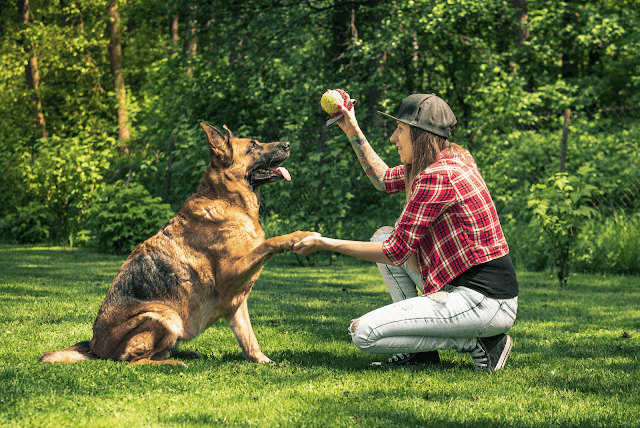
Table of Contents
- German Shepherd Dog at a Glance
- Breed Traits and Characteristics
- Size and Life Expectancy
- History and Recognition
- The Modern German Shepherd: Working Roles
- Health: What Owners Should Watch For
- Grooming: Living With the Double Coat
- Exercise Requirements
- Training and Socialization
- Nutrition: Feeding a Large Working Breed
- Is a German Shepherd Right for You?
- Finding a German Shepherd Dog
German Shepherd Dog at a Glance
| Attribute | Detail |
|---|---|
| Height | Males 24–26 in · Females 22–24 in |
| Weight | Males 65–90 lbs · Females 50–70 lbs |
| Life expectancy | 7–10 years |
| Coat | Dense double coat, medium length |
| Common colors | Black and tan, sable, all black, all white (see note below) |
| Energy level | High — 1.5 to 2 hours of activity daily |
| AKC popularity | 4th of 200 recognized breeds |
| Best for | Active owners, families with routine, working homes |
Breed Traits and Characteristics
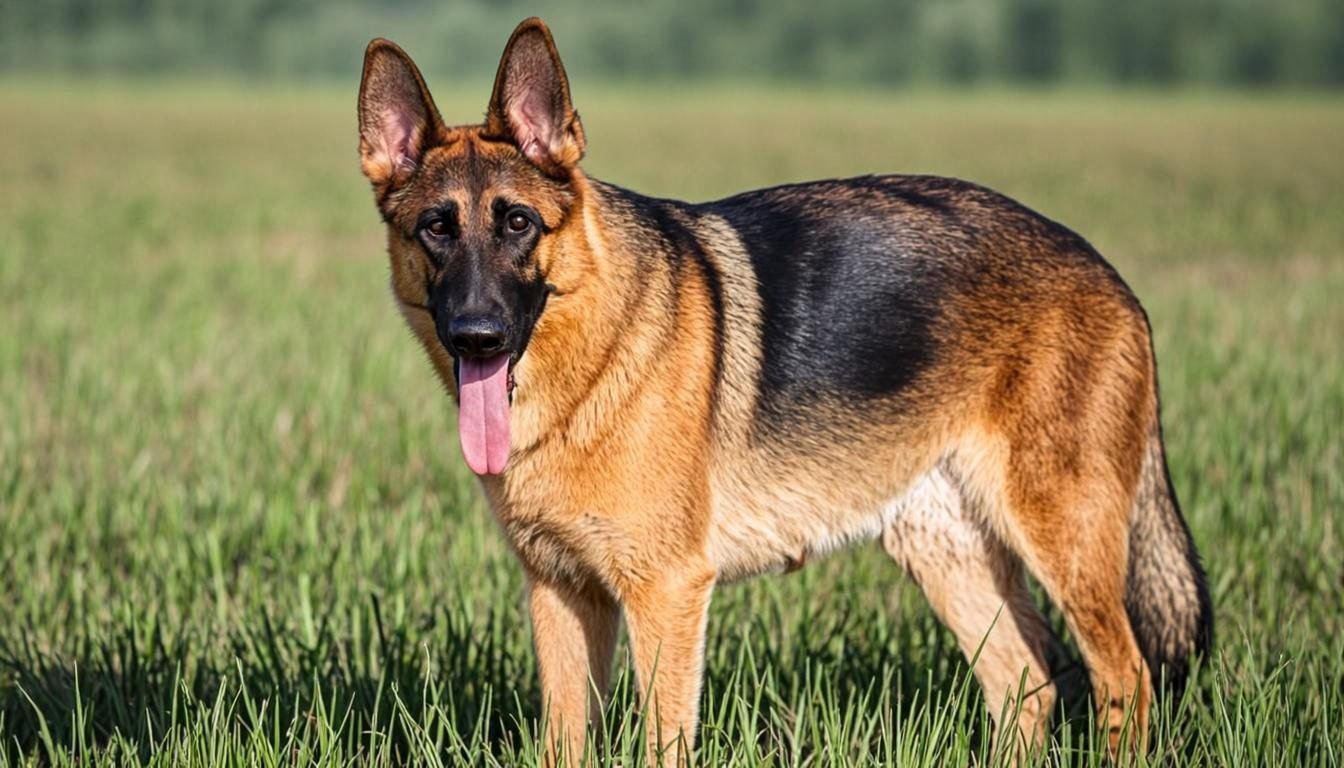
The German Shepherd Dog is a muscular and well-proportioned breed that can stand as high as 26 inches at the shoulder. Its appearance is defined by smooth, graceful curves rather than exaggerated angles, giving it an elegant outline built for endurance. The natural gait is a free-and-easy trot that can be elevated to impressive speeds when necessary — a direct inheritance from its origins as a trotting herding dog expected to move livestock all day.
While their physical attributes are remarkable, it is the German Shepherd’s character that truly sets it apart. Known for loyalty, courage, and confidence, German Shepherds possess a remarkable ability to learn and execute commands for a wide range of tasks, and they are famously willing to put themselves between danger and the people they love. That same seriousness is why the breed dominates roles that most dogs cannot hold down: police patrol, military detection, search and rescue, and service work.
Temperament: what “confident but reserved” really means
German Shepherds make excellent family pets, displaying gentleness and devotion toward their own households. With strangers, however, there is a certain aloofness — this is a breed that observes before it accepts, and it will not form immediate, indiscriminate friendships. Breed fanciers call this reserve part of the breed’s distinctive charm; trainers call it a trait that must be managed through socialization.
A well-bred, well-socialized Shepherd is watchful and measured, never frantic or hostile without cause. If you want a dog that greets every visitor like a long-lost friend, this is not your breed; if you want a dog that quietly assesses every situation and always knows where its family is, few breeds do it better.
Size and Life Expectancy
German Shepherds are sexually dimorphic: males typically stand 24 to 26 inches at the shoulder and weigh 65 to 90 pounds, while females stand 22 to 24 inches and weigh 50 to 70 pounds. Full height arrives around 10–12 months, but the breed fills out slowly — chest and head finish developing closer to two or even three years of age. That slow maturation matters during puppyhood: forced running, repetitive jumping, and overfeeding during the growth year all stress joints that are not finished forming.
On average, German Shepherds live 7 to 10 years, a figure shaped primarily by the joint and degenerative conditions discussed below. Owners who keep their dogs lean, condition them with regular low-impact exercise, and stay on top of veterinary screening consistently report dogs thriving at the upper end of that range — our deeper look at German Shepherd lifespan breaks down the factors that add years.
History and Recognition
The German Shepherd Dog’s story begins in the late 19th century. Captain Max von Stephanitz, a German cavalry officer, attended a dog show in 1899, fell in love with a striking yellow-and-grey herding dog named Hektor Linksrhein, and bought him on the spot. Renamed Horand von Grafrath, he became the first dog registered in the new breed book of the Verein für Deutsche Schäferhunde (SV), the club von Stephanitz founded to standardize the breed. His stated goal was a dog of consistent structure, impeccable character, and genuine working ability — a philosophy that still separates serious German breeding programs from purely cosmetic ones, as our comparison of German versus American bloodlines explains.
The breed crossed the Atlantic quickly and was officially recognized by the American Kennel Club in 1908. Hollywood accelerated its fame: Strongheart and later Rin Tin Tin turned the Shepherd into America’s first canine movie star, and returning servicemen from both World Wars brought home stories of Shepherds delivering messages under fire and locating the wounded.
Popularity dipped when anti-German sentiment pushed the name “Alsatian” in Britain and parts of the United States, then soared again through the mid-20th century. Today the breed ranks 4th of 200 in AKC registrations — remarkable for a dog this demanding — and its influence runs through dozens of popular mixes that carry its genes worldwide.
The Modern German Shepherd: Working Roles
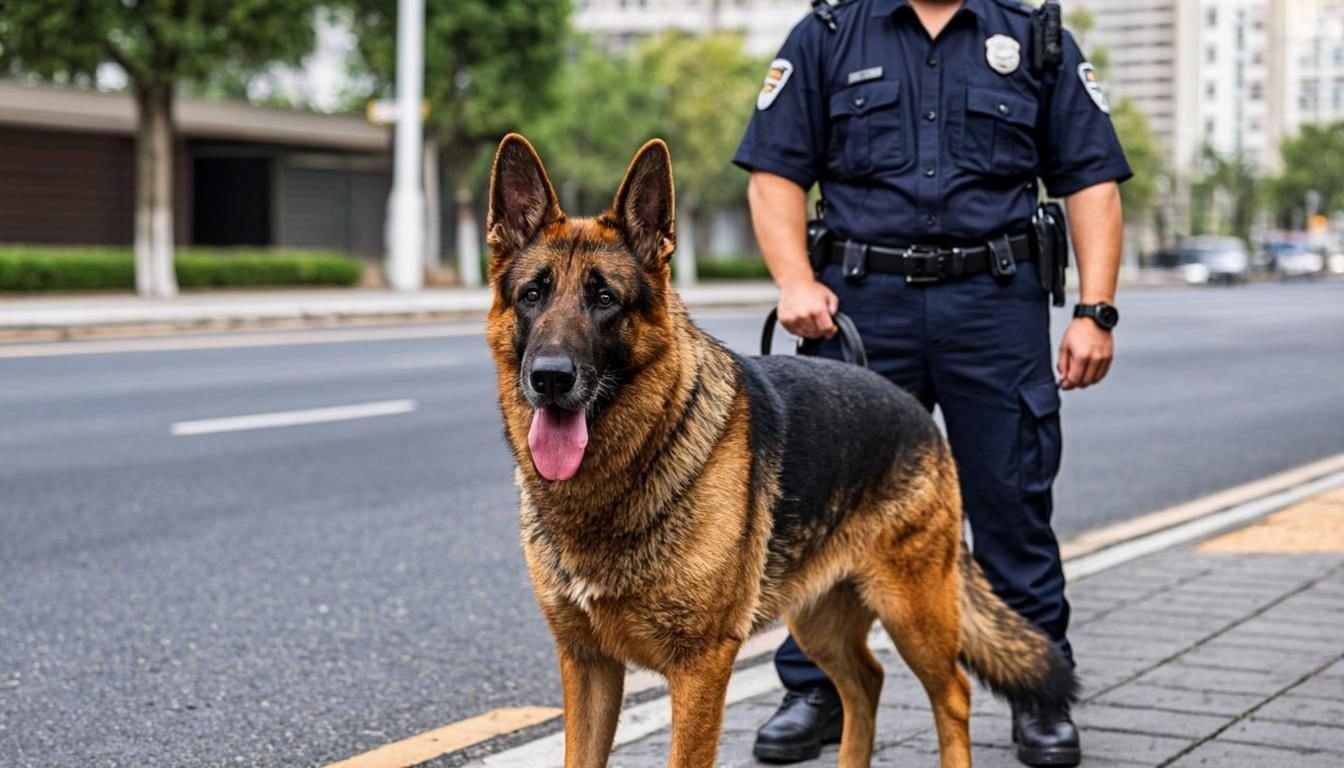
No breed holds more working titles across more disciplines. Police departments choose Shepherds for patrol and detection because they combine courage with controllability; the military fields them for explosive and narcotic detection; search-and-rescue teams rely on their air-scenting ability in disaster zones and wilderness. As service dogs they guide, alert, and retrieve for handlers with disabilities, and as therapy dogs their composed presence comforts hospital and nursing-home residents. Competitive handlers test the same abilities in IGP (formerly Schutzhund), a three-part sport of tracking, obedience, and protection that measures exactly the traits von Stephanitz demanded a century ago.
Those achievements are not marketing — they are the reason the breed needs a job. A Shepherd bred for a century of daily work does not quietly retire in a small apartment. Our profile of the working line German Shepherd details what these dogs deliver when their abilities are channeled properly, and our story of Max, a heroic German Shepherd, shows what the breed looks like at its finest.
Health: What Owners Should Watch For
Maintaining the health of your German Shepherd is of utmost importance, and “large breed” is the operative phrase. Responsible ownership means regular veterinary check-ups, vaccinations, and preventive care, plus awareness of the conditions the breed carries genetically:
| Condition | What it is | Prevention / early signs |
|---|---|---|
| Hip dysplasia | Malformed hip joint causing arthritis | OFA/PennHIP-tested parents, lean weight, low-impact exercise; bunny-hop gait, reluctance to rise |
| Elbow dysplasia | Similar malformation at the elbow | Same screening; front-limb stiffness after rest |
| Degenerative myelopathy | Progressive spinal cord disease, later life | DNA-testable; hind-end weakness that worsens over months |
| Bloat (GDV) | Life-threatening stomach torsion | Two smaller meals, no exercise around meals; unproductive retching is an emergency |
| Allergies | Food or environmental, causing itchy skin | Vet-guided elimination diets; chronic paw licking and ear infections |
None of these are reasons to avoid the breed — they are reasons to buy from health-tested parents and to budget realistically. Serious treatment costs run into the thousands, which is why many owners compare policies early; our guide to the best pet insurance for German Shepherds covers what hip-dysplasia coverage actually looks like in 2026.
Grooming: Living With the Double Coat
The German Shepherd’s coat is a dense double layer — a weather-resistant outer coat over a soft insulating undercoat — and it sheds year-round, then explodes twice a year during seasonal coat blows. Weekly brushing with an undercoat rake keeps loose hair manageable and the skin healthy; during shedding seasons, brushing may need to move to every other day. Baths every 6–8 weeks (or when genuinely dirty) preserve the coat’s natural oils, and regular dental care, ear checks, and nail trimming complete the routine. Our German Shepherd grooming guide covers tools, techniques, and a realistic annual budget.
Color is coat-deep in this breed. Sable, black-and-tan, and solid black dominate, while the recessive white coat produced the separate White German Shepherd population and even its own recognized breed, the White Swiss Shepherd. Shade changes nothing about temperament — structure and breeding matter far more than pigment.
Exercise Requirements
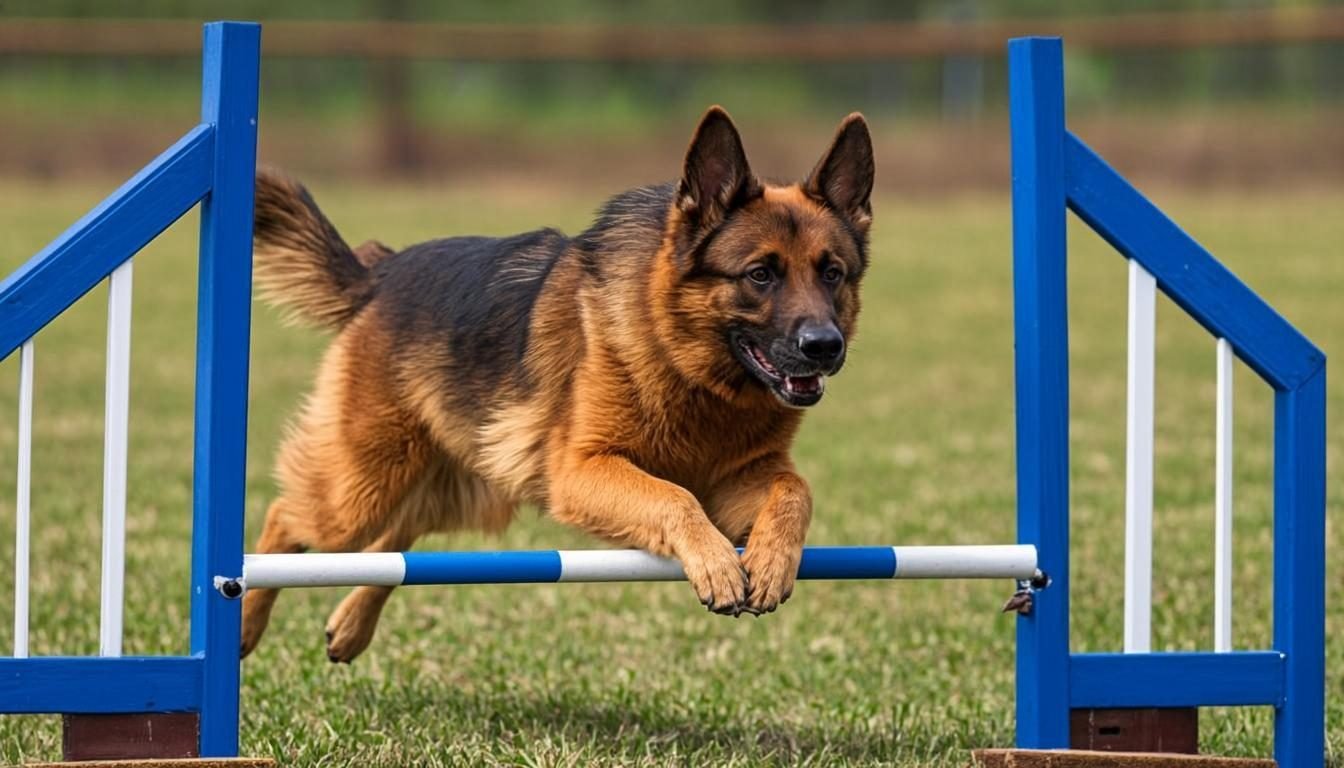
German Shepherds are an active, energetic breed that thrives on physical activity, and an under-exercised Shepherd invents its own entertainment — usually at your expense. Plan on 90 minutes to 2 hours of daily activity: brisk walks, fetch sessions, structured play, and free running in a secure area. Just as important is mental exercise; 15 minutes of scent work or obedience drilling tires a Shepherd more than an hour of leash walking. Puppies need far less organized exercise than their energy suggests — the five-minute-per-month-of-age rule for forced walks protects developing joints — while seniors remain happiest with shorter, more frequent outings that keep muscle and mind engaged.
Training and Socialization
German Shepherds are highly intelligent and trainable — consistently ranked among the top breeds for working intelligence, learning new commands in fewer than five repetitions. They excel in obedience and can master an impressive range of tasks, but that intelligence cuts both ways: an untrained Shepherd trains its owner instead. Early socialization is crucial, ideally exposing the puppy to varied people, surfaces, sounds, and calm vaccinated dogs before 16 weeks of age, when the primary socialization window closes. Positive, reward-based methods suit the breed’s sensitive, partnership-driven temperament far better than compulsion; harsh correction produces exactly the guarded, reactive behavior owners fear.
Start the day your puppy comes home. Our complete guide to German Shepherd dog training techniques walks through the timeline from first commands to advanced control, and the training and behavior guide covers the breed-specific problem behaviors — leash reactivity, over-protectiveness, demand barking — before they start. For age-appropriate expectations, the puppy training guide is the place to begin.
Nutrition: Feeding a Large Working Breed
Feeding your German Shepherd a balanced, breed-appropriate diet is vital for overall health, and this breed’s needs change dramatically across its life. Puppies must eat a large-breed puppy formula (AAFCO growth or all-life-stages statement) with controlled calcium to support slow joint development; adults do best on a quality diet with real protein as the first ingredient, portioned to keep them lean — every extra pound is joint load the breed cannot afford. Consult your veterinarian about diet based on age, size, activity level, and any specific requirements, and adjust portions by body condition rather than by the bag’s suggestions alone.
We cover this in depth across three guides: the best food for German Shepherds (adult focus), the best dog food for a German Shepherd puppy, and the puppy feeding chart with exact portions by age and weight.
Is a German Shepherd Right for You?
An honest answer requires self-assessment before breed admiration. German Shepherds suit owners who can offer daily time (exercise and training are non-negotiable), a securely fenced yard or an active lifestyle, and the financial commitment of a large breed — first-year costs alone typically run $2,000–$4,500 once food, vet care, training, and equipment are counted, as our German Shepherd puppy cost breakdown details. They do less well with owners who travel constantly, households expecting a zero-maintenance pet, and anyone unwilling to manage the breed’s watchdog tendencies through training rather than suppression.
In exchange, you get what millions of owners will tell you: a dog that learns your routine better than you teach it, watches your back without being asked, and greets every day ready to work or play beside you. It is a decade-long partnership, and the breed asks you to earn it — then repays the investment with interest.
Finding a German Shepherd Dog
If you are considering adding a German Shepherd Dog to your family, source matters more than with almost any other breed. Reputable breeders health-test both parents (OFA hips and elbows, cardiac, DM DNA status), raise litters indoors with socialization, and interview buyers as carefully as buyers interview them — our guides to finding German Shepherd breeders near you and knowing exactly where to purchase a German Shepherd puppy walk through the vetting process.
Rescue is a rewarding alternative: the American German Shepherd Rescue Association and regional breed-specific rescues place wonderful adults whose energy level and temperament are already known, and the German Shepherd Dog Club of America maintains breeder and rescue referrals.
The German Shepherd Dog’s versatile nature, unwavering loyalty, and exceptional intelligence make it a breed that stands out among its canine counterparts. Whether serving as a working dog, a loyal family companion, or a competitor in dog sports, the German Shepherd continues to impress. Provide the care, training, and leadership the breed deserves, and you will experience the unique joy of owning a dog that gives everything back.
Frequently Asked Questions
Q: Are German Shepherds good family dogs?
Yes — with training and socialization, they are devoted, patient with children they are raised with, and naturally watchful of their household. Their size and energy require supervision around toddlers, and our article on German Shepherds and children covers safety guidelines in detail.
Q: How much exercise does a German Shepherd need?
Plan on 90 minutes to 2 hours daily for a healthy adult, split between physical exercise and mental work. Puppies need shorter, gentler activity to protect growing joints.
Q: Do German Shepherds shed a lot?
Heavily. Expect year-round shedding with two intense seasonal coat blows. Weekly brushing becomes daily during spring and fall.
Q: Are German Shepherds aggressive?
Well-bred, well-socialized ones are confident and reserved, not aggressive. Poor breeding and isolation create fear-based reactivity — two more reasons to choose tested parents and train early.
Q: How long do German Shepherds live?
7–10 years on average. Lean body weight, health-tested genetics, and preventive veterinary care are the three biggest factors owners control.
Q: What is the difference between show and working lines?
American show lines emphasize angulated beauty; German working and show lines must prove working ability to breed. Our German vs. American lines guide compares structure, temperament, and health.
Q: Are German Shepherds good first dogs?
They can be, for committed first-time owners who invest in training classes from day one. For a gentler introduction to the breed’s world, see our overview of German Shepherd puppies.
Sources and Further Reading
The following authoritative resources provide additional context for the guidance in this article. They do not replace advice from a qualified veterinarian or behavior professional.
- American Kennel Club — German Shepherd Dog
- German Shepherd Dog Club of America — Education
- Orthopedic Foundation for Animals — Breed Health Statistics
Note: This article is for informational purposes only and should not be considered professional veterinary or medical advice. Always consult a qualified veterinarian for specific concerns regarding your dog’s health and well-being.