
Practical note: Insurance prices, exclusions, waiting periods, and coverage limits vary by provider and policy. Check the current policy wording and obtain an up-to-date quote before choosing coverage.
German Shepherds are loyal, intelligent, and active dogs — but they’re also prone to costly health issues. If you’re searching for the best pet insurance for German Shepherds, you’ve come to the right place. This guide covers everything you need to know about choosing the right German Shepherd pet insurance in 2026, including plan types, top providers, average costs, and breed-specific coverage tips that most generic reviews never mention.
Affiliate disclosure: This article contains affiliate links. If you request a quote or enroll through these links, we may earn a commission at no extra cost to you — this helps us keep producing independent, breed-specific guides. See our full Affiliate Disclosure.
Table of Contents
- Key Takeaways
- Why German Shepherds Need Specialized Pet Insurance
- Is Pet Insurance Worth It for a German Shepherd?
- Breed-Specific Conditions That Drive Claims — and Costs
- Types of Pet Insurance Plans Explained
- Top Pet Insurance Providers for German Shepherds in 2026
- How Much Does German Shepherd Pet Insurance Cost?
- Reading the Fine Print: What GSD Owners Must Check
- How to Choose the Best Pet Insurance for German Shepherds
- How the Claims Process Works — With a Real Example
- Common Reasons Claims Get Denied — and How to Avoid Them
- FAQs
- Conclusion
- References
Key Takeaways
- German Shepherds face higher-than-average vet bills due to breed-specific conditions.
- Monthly premiums typically range from $40 to $100+ depending on coverage level.
- Hip dysplasia and degenerative myelopathy are the most commonly claimed conditions.
- Comprehensive plans with hereditary condition coverage are essential for this breed.
- Always compare waiting periods, reimbursement rates, and annual limits.
- Starting insurance early — ideally before age 2 — saves significant money long-term.
Why German Shepherds Need Specialized Pet Insurance
German Shepherds are the second most popular dog breed in the United States. However, their popularity comes with a health caveat. This breed is genetically predisposed to several serious conditions that can lead to thousands of dollars in veterinary costs over a single lifetime, and unlike preventive care, these bills arrive suddenly — often at the emergency clinic, after hours, when financing options are least flexible.
According to the American Kennel Club, common health issues include:
| Condition | Average Treatment Cost (2026) |
|---|---|
| Hip Dysplasia | $3,500 – $7,000 |
| Degenerative Myelopathy | $1,500 – $5,000+ |
| Bloat (GDV) | $2,000 – $6,000 |
| Elbow Dysplasia | $2,000 – $4,500 |
| Panosteitis | $500 – $1,200 |
A single bloat surgery or total hip replacement can wipe out years of savings — and dogs that survive one breed crisis statistically face others as they age. Therefore, having the best pet insurance for German Shepherds is not a luxury — it’s a smart financial decision every owner should make early. Our German Shepherd health problems guide details each of these conditions and their early warning signs, so you know exactly what your policy needs to cover.
Is Pet Insurance Worth It for a German Shepherd?
For most owners of this breed, the answer is a clear yes — and the math explains why. The best pet insurance for German Shepherds costs roughly $480 to $840 per year when you enroll a young dog. A single hip replacement or dual-side dysplasia repair can run $3,500 to $7,000, and emergency GDV surgery adds another $2,500 to $5,000. One serious incident wipes out five to ten years of premiums in a single weekend. That single weekend is exactly what pet insurance exists for.
Insurance is also worth it for the cases that never make headlines. Chronic conditions — skin allergies, recurring ear infections, arthritis management — generate hundreds of small veterinary bills that compound across a 10-year lifespan. Our guide to German Shepherd health problems shows how often this breed genuinely needs a vet beyond routine care. Pet insurance converts those unpredictable costs into a flat, budgetable monthly figure, and that predictability is the entire point of the policy. In practice, the best pet insurance for German Shepherds simply makes that flat figure smaller than the alternative: covering a $6,000 hip replacement out of nowhere.
Breed-Specific Conditions That Drive Claims — and Costs
Any honest review of pet insurance for German Shepherds has to start with the conditions this breed actually files claims for. Five of them account for the majority of breed-related payouts, and each one shapes what the best policies must cover:
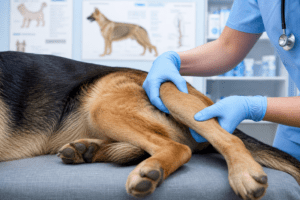
Hip dysplasia — the defining GSD condition. Diagnosis, conservative management, or total hip replacement typically costs $1,700 to $7,000 per hip. Depth guide: German Shepherd hip dysplasia.
Elbow dysplasia — arthroscopy or corrective surgery runs $1,500 to $4,000 and often appears before age two, which makes early enrollment the deciding factor. Details in our elbow dysplasia guide.
Degenerative myelopathy — there is no cure; DNA testing, mobility support, and nursing care commonly total $1,000 to $3,000+ over 6 to 12 months. Our degenerative myelopathy article explains the timeline.
Bloat (GDV) — the emergency where pet insurance for German Shepherds pays for itself in a single night; decompression or gastropexy surgery costs $2,500 to $5,000. Warning signs in our bloat guide.
Allergies and chronic skin disease — the most frequent recurring claims, with years of allergy shots and medicated baths that can exceed $600 annually. Food triggers are covered in our food allergies guide. Chronic claims like these are why pet insurance for German Shepherds should be judged on lifetime value, not on the first premium.
Types of Pet Insurance Plans Explained
Before comparing brands, understand what you are actually buying. The pet insurance market sells three fundamentally different products, and choosing the wrong category — not the wrong company — is the most common mistake owners make.
| Plan Type | What It Covers | Typical Cost (GSD) | Best For |
|---|---|---|---|
| Accident-only | Injuries, fractures, swallowed objects, toxin ingestion | $20 – $35/month | Tight budgets, young accident-prone dogs |
| Accident + Illness (comprehensive) | Everything above plus diseases, hereditary conditions, cancer, surgeries | $45 – $100/month | Almost every German Shepherd owner |
| Wellness rider (add-on) | Vaccines, dental cleanings, exams, flea/heartworm prevention | $15 – $30/month extra | Owners who want predictable routine costs |
For this breed, only a comprehensive accident + illness plan makes financial sense. Accident-only policies cost a third of the price but exclude precisely the conditions German Shepherds actually develop: dysplasia, degenerative myelopathy, allergies, and exocrine pancreatic insufficiency are all illnesses, not accidents. A wellness rider is genuinely optional — run the numbers, because for many households it simply pre-pays routine care at full price.
Top Pet Insurance Providers for German Shepherds in 2026
1. Healthy Paws Pet Insurance
Healthy Paws consistently ranks among the best options for large breeds. It offers unlimited annual benefits with no per-incident caps. Reimbursement rates go up to 90%, and claims are processed quickly — often within two days. For a breed with recurring joint problems, the absence of annual or lifetime caps matters more than almost any other feature.
“Our German Shepherd Max needed emergency surgery for bloat. Healthy Paws reimbursed us $4,800 within 48 hours. Totally worth it.” — Sarah T., Texas
2. Embrace Pet Insurance
Embrace offers customizable plans with a diminishing deductible feature. This rewards claim-free years, which is ideal for younger, healthier dogs. It also covers orthopedic conditions after a six-month waiting period, which is critical for German Shepherds — several competitors impose twelve months.
3. Trupanion
Trupanion pays 90% of actual vet costs after your deductible, directly to the vet in many cases. Its coverage includes hereditary and congenital conditions — key for hip dysplasia claims in this breed. Its per-condition deductible model also means a chronic condition you claim on for years only carries its deductible once, which is exactly how a dysplasia diagnosis plays out in real life.
4. ASPCA Pet Health Insurance
ASPCA provides flexible reimbursement percentages (70%, 80%, or 90%) and annual limits up to $10,000. It’s a budget-friendly option for owners seeking balanced coverage without premium pricing, and its exam-fee coverage is included on standard plans rather than sold separately.
5. Lemonade Pet Insurance
Lemonade uses AI-powered claims processing, making it one of the fastest options available in 2026. Its preventive care add-on is especially useful for German Shepherd puppies during their first two years, and its base premiums are among the lowest in the industry for large breeds.
6. Odie Pet Insurance
Odie earns its spot on this list through flexibility: adjustable deductibles, reimbursement rates, and payout limits, optional wellness coverage for routine care, and — unlike many carriers — enrollment available well into a dog’s senior years. That last point matters more for German Shepherds than almost any other breed: degenerative myelopathy, chronic arthritis, and cancer risk climb steeply after age eight, exactly when most insurers refuse new enrollment or price it out of reach. Get a free quote from Odie Pet Insurance and compare it directly against the providers above — quotes take minutes and cost nothing.
How Much Does German Shepherd Pet Insurance Cost?
Monthly costs vary widely. However, most owners pay between $50 and $90 per month for comprehensive coverage. Premiums climb steadily with age, and the jump after age five is significant for this breed — another argument for enrolling young and locking in a lower baseline. Several factors influence pricing:
- Age: Older dogs cost more to insure.
- Location: Urban areas typically have higher vet costs, raising premiums.
- Deductible: Higher deductibles lower monthly payments.
- Reimbursement rate: Dropping from 90% to 70% cuts the premium noticeably.
- Coverage type: Accident-only plans start around $20/month.
| Age at Enrollment | Typical Monthly Premium | Annual Total |
|---|---|---|
| 8 weeks – 12 months | $40 – $55 | $480 – $660 |
| 2 – 4 years | $50 – $70 | $600 – $840 |
| 5 – 7 years | $65 – $95 | $780 – $1,140 |
| 8 years and older | $85 – $130 | $1,020 – $1,560 |
Figures are national averages for a $500 deductible and 90% reimbursement; quotes in major metro areas can run 20–30% higher. Accident-only pet insurance looks cheaper on paper, but it excludes exactly the illnesses that generate this breed’s biggest claims. If you are still budgeting for a puppy rather than insuring one, our German Shepherd puppy cost guide breaks down what first-year ownership actually adds up to, pet insurance included.
Expert Tip: Enroll your German Shepherd before 12 months of age. Pre-existing conditions are excluded from all major policies, so early enrollment maximizes your coverage window.
Reading the Fine Print: What GSD Owners Must Check
Two policy clauses decide whether a German Shepherd’s biggest claims get paid or denied, and neither appears in marketing pages. First, orthopedic waiting periods: many pet insurance companies impose a separate 6-to-12-month waiting period for hip and elbow dysplasia specifically — and some waive it entirely if you have the puppy examined at enrollment and no findings are noted.
Second, bilateral condition language: if dysplasia is diagnosed in one hip before enrollment, some pet insurance companies classify the opposite hip as pre-existing too, because the condition is “bilateral by nature.” Policies differ enormously here; the question to ask directly is, “If one knee or hip is diagnosed after enrollment, are the other joints covered? That one question separates useful pet insurance policies from useless ones.”
Also check how each company treats curable versus incurable pre-existing conditions: several will re-cover an ear infection or giardia that resolved more than 180 days ago, but never a degenerative condition. Finally, confirm whether the plan reimburses based on your actual vet bill or on the pet insurance company’s internal fee schedule — the gap can be hundreds of dollars on a single surgery.
How to Choose the Best Pet Insurance for German Shepherds
When comparing options, focus specifically on:
- Hereditary condition coverage (hip/elbow dysplasia) with a short orthopedic waiting period
- No lifetime limits or high annual maximums
- Bilateral clause fairness — the other joints must stay covered
- Direct vet payment options so you don’t float a $5,000 bill
- Transparent reimbursement structure based on actual invoices
- Alternative therapy coverage (physical rehab, hydrotherapy, acupuncture) which dysplastic dogs genuinely use
How the Claims Process Works — With a Real Example
Pet insurance is reimbursement-based: you pay the clinic, file the claim, and the pet insurance company pays you back. With today’s apps the loop usually takes two to ten days. A worked example on a typical German Shepherd scenario — emergency bloat surgery at $4,000, on a plan with a $500 deductible and 90% reimbursement:

- You pay the emergency clinic the full $4,000.
- You upload the invoice through the pet insurance company’s app the same week.
- The pet insurance company subtracts the $500 deductible, then reimburses 90% of the remaining $3,500.
- You receive $3,150 — your true out-of-pocket cost was $850, not $4,000.
Keep every invoice, even for routine visits: the medical history they document is what proves a condition developed after enrollment, which is what makes the big claims payable. And file everything, including claims you suspect are below the deductible — on per-condition deductible plans they still count toward it.
Common Reasons Claims Get Denied — and How to Avoid Them
Most denied claims trace back to paperwork, not to the pet insurance company acting in bad faith. The classic pattern is a gap in the medical record: a limping episode mentioned at a routine visit, never written down, followed by a dysplasia diagnosis eight months later that the pet insurance company now reads as pre-existing.
Protect yourself by insisting that every symptom — however minor — is documented in the chart, and by requesting copies of all records after each visit. The second recurring denial involves late enrollment documentation: policies started on a Friday with a limp reported the following week will be investigated, and any earlier symptom becomes grounds for exclusion. When in doubt, call the pet insurance company and get the answer in writing.
Other avoidable denial triggers include submitting claims outside the filing window (typically 90 to 180 days), treating at a clinic without an itemized invoice, and missing an orthopedic waiting period by weeks. One practical habit solves most of this: photograph every invoice the day it is issued, file through the app within a week, and keep a simple timeline of your dog’s symptoms.
Owners who document like professionals rarely lose a legitimate claim — and when a genuine denial does land, every major provider offers a formal appeals process, and state pet insurance regulators review pet policy disputes free of charge. A five-minute call to the pet insurance provider before enrollment prevents most of these outcomes.
FAQs
Q: Is pet insurance worth it for German Shepherds?
Yes. Given their genetic health risks, pet insurance can save owners $5,000 to $15,000 over a dog’s lifetime. Even a single dysplasia surgery repays four to eight years of premiums.
Q: Does pet insurance cover hip dysplasia in German Shepherds?
Most comprehensive plans cover it, but only if the condition develops after enrollment and after the orthopedic waiting period. Pre-existing diagnoses are excluded.
Q: What is the best age to insure a German Shepherd?
Ideally between 8 weeks and 12 months old to avoid pre-existing condition exclusions and lock in the lowest lifetime premium.
Q: Can I use any vet with German Shepherd pet insurance?
Most US-based providers allow any licensed veterinarian, including specialists and emergency clinics — pet insurance works nothing like human health networks.
Q: How long do I wait before coverage starts?
Accident coverage often starts in 2–3 days. Illness and orthopedic coverage may take 14–30 days, and dysplasia specifically can carry its own longer clock.
Q: Will my premiums increase if I file a claim?
Premiums rise with age and with overall veterinary cost inflation, not because of your individual claims. Filing a claim does not single you out for a rate hike.
Q: Are genetic DNA tests required before enrollment?
No, but any result already in your vet’s records counts as pre-existing knowledge. If you tested your puppy, enroll before sharing results with your clinic, or accept that diagnosed risks will be excluded.
Q: Is a wellness plan the same as pet insurance?
No. Wellness plans pre-pay routine care; they pay nothing toward dysplasia surgery, bloat, or cancer. German Shepherds need true pet insurance — the wellness rider is optional icing.
Q: How much is pet insurance for a German Shepherd per month?
Budget $40 to $55 for a puppy enrolled early, $50 to $70 for an adult, and $85 to $130+ for a senior on comprehensive pet insurance plans. Accident-only coverage starts near $20 but excludes exactly the illnesses this breed is prone to.
Q: Will pet insurance cover degenerative myelopathy?
Only if your dog enrolls before symptoms appear. Once DM or any illness is documented in a vet record, it becomes a pre-existing condition that no US pet insurance company will cover. That is the strongest argument for insuring a Shepherd puppy rather than an adult.
Q: What is the best pet insurance for German Shepherd puppies?
Look for three things: accident-and-illness coverage from day one, a short orthopedic waiting period with clearly written dysplasia terms, and a deductible you can realistically pay. Enroll before 12 months old and the best pet insurance for German Shepherds stays affordable for the dog’s entire life.
Q: Does pet insurance cover routine checkups and vaccines?
Standard plans do not — they cover accidents and illnesses. Some providers sell wellness add-ons ($10 to $25 per month) that reimburse vaccines, flea prevention, and dental cleanings. Compare the add-on price against your actual annual routine bill before adding it.
Q: Can I get pet insurance for a German Shepherd with a pre-existing condition?
Yes — you can still buy pet insurance for a German Shepherd who already has a diagnosed condition, but that specific condition (and anything linked to it) will be excluded. Every unrelated illness and accident remains covered, which for a breed this claim-prone still makes pet insurance worth carrying.
Q: How do deductibles and reimbursement rates change pet insurance costs?
A $250 deductible with 90% reimbursement maximizes the payout per claim but raises the monthly price; a $1,000 deductible at 70% does the opposite. Most German Shepherd owners land in the middle — a $500 deductible and 80–90% reimbursement keeps pet insurance premiums predictable without gutting the payout on a $5,000 dysplasia claim.
Conclusion
Choosing the right german shepherd pet insurance in 2026 means thinking ahead. This breed faces real, predictable health challenges that can be financially devastating without coverage. By enrolling early, choosing a comprehensive plan, checking the orthopedic fine print, and comparing plans carefully, you’ll protect both your dog and your wallet. Start comparing quotes today — request a free quote from Odie Pet Insurance, compare it against the providers above, and lock in coverage while your German Shepherd is young and insurable. Your dog deserves the best care possible. The best pet insurance for German Shepherds is ultimately the policy you enroll in early enough to cover the conditions this breed actually develops.