
At seven months old, your German Shepherd is a bundle of long legs and confidence — until one morning he rises from a nap and takes a few steps on three legs. There was no fall, no collision, no reason you can name. That quiet, recurring front-leg limp is the single most common way german shepherd elbow dysplasia announces itself, and it is worth taking seriously from the very first episode. Elbow disease is the most frequently inherited joint problem in the breed, and the Orthopedic Foundation for Animals reports that roughly one in five screened German Shepherds shows abnormal elbow development. Caught early, it is very manageable.
Affiliate disclosure: As an Amazon Associate, German Shepherd Haven earns from qualifying purchases made through marked links on this page, at no extra cost to you. See our full Affiliate Disclosure.
Ignored, it quietly builds arthritis that shapes the dog’s comfort for the next decade — which is why german shepherd elbow dysplasia deserves the same screening culture the hip has already earned in this breed.
This guide walks you through the full picture the way a good specialist appointment would: what elbow dysplasia actually is, the early signs by age, how vets diagnose it, what every treatment really costs in 2026, and — most importantly — what you can do this week to slow the damage. If you are researching both front and rear legs, our companion guide on german shepherd hip dysplasia covers the hind-end version of the problem, and our German Shepherd health problems guide places both in the breed’s wider health landscape.
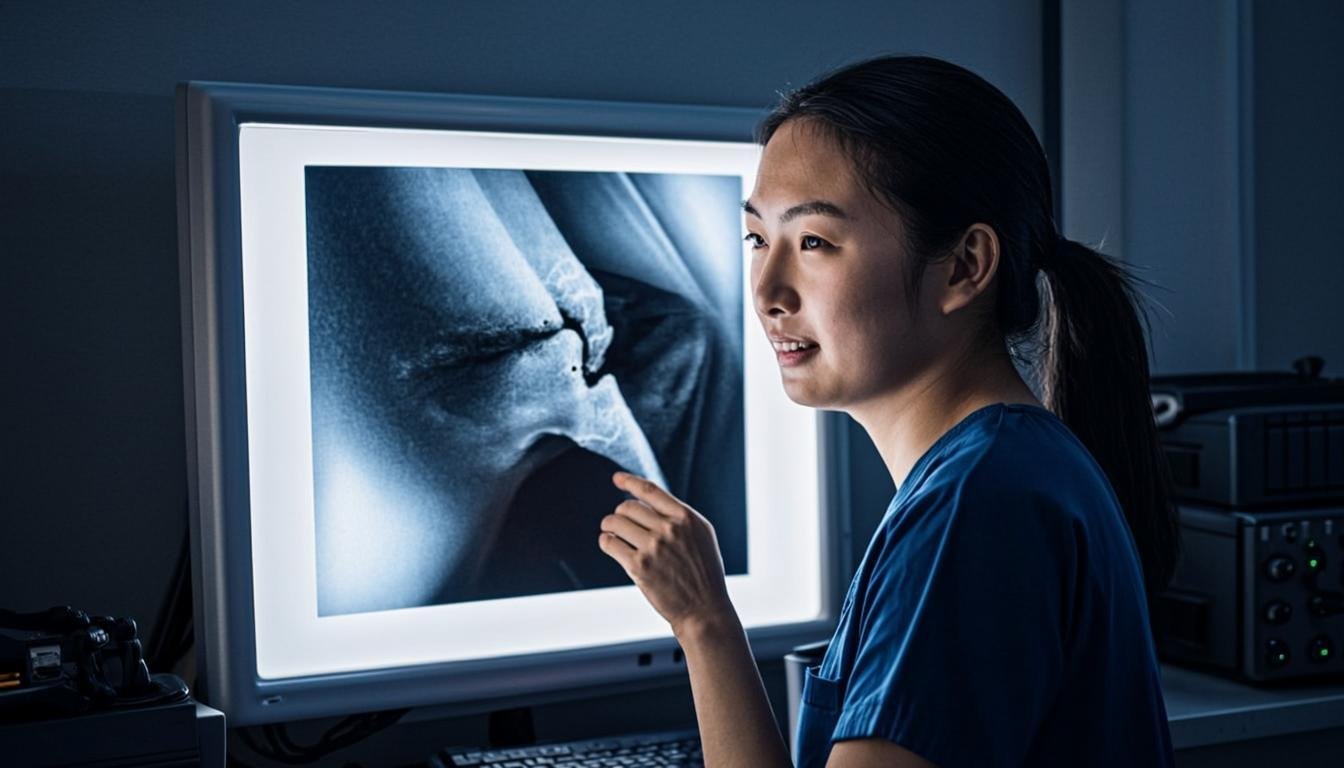
What Is German Shepherd Elbow Dysplasia?
Elbow dysplasia is a developmental disorder: during puppyhood, the three bones that form the elbow — the humerus above, the radius and ulna below — grow at slightly mismatched speeds, so cartilage and bone fail to mature into a smoothly gliding hinge. Vets group the damage into four classic forms, and German Shepherds appear in every category:
- Ununited anconeal process (UAP) — the bony hook at the back of the elbow never fuses to the ulna, leaving a loose piece that grinds the joint with every step.
- Fragmented medial coronoid process (FMCP) — the most common form by far; a small ridge inside the joint cracks or never forms properly, and the fragment acts like gravel in a hinge.
- Osteochondritis dissecans (OCD) — a flap of cartilage on the inner humeral condyle partially detaches because the underlying bone failed to feed it during growth.
- Ununited medial epicondyle (UME) — the least common form; an attachment point for forearm muscles stays unfused and can cause intermittent front-leg pain.
Two facts make german shepherd elbow dysplasia uniquely frustrating for owners. First, both front legs can be affected — studies report that between 20 and 50 percent of diagnosed dogs have changes in both elbows, and the “good” leg compensates so convincingly that owners often miss the second joint until later. Second, the joint reacts to any loose fragment the way a knee reacts to a torn meniscus: inflammation, then cartilage wear, then irreversible osteoarthritis. The disorder itself is not painful in the way a fracture is; the arthritis it seeds is what eventually steals sound movement, which is exactly why early detection matters more here than in almost any other orthopedic condition of the breed.
Why German Shepherds Develop Elbow Dysplasia
Genetics writes the first chapter. A 2019 heritability study in Frontiers in Veterinary Science estimated moderate-to-high heritability for elbow disease in working breeds, which is why responsible breeders screen elbows and why puppies of unscreened parents remain a gamble. Selection works: a large Swedish study published on PubMed Central followed decades of radiographic screening and showed that long-term genetic selection measurably reduced hip and elbow dysplasia prevalence in German Shepherds. When you choose a breeder who shows you OFA elbow certificates for both parents, you are not paying for paperwork — you are buying real odds (PMC5325577).
But genes are not destiny, and the second chapter is growth management. Rapid weight gain, calorie-dense free feeding, and repetitive high-impact exercise during the 4-to-10-month growth window all overload a juvenile joint whose cartilage is still mineralizing. Big, fast-growing male puppies are hit hardest, which matches what orthopedic specialists see in their waiting rooms: adolescent males, both elbows sore, fed to maximum growth by well-meaning owners. Hormones matter too — early neutering before skeletal maturity removes sex hormones that regulate growth-plate closure, slightly lengthening the limb growth period and worsening joint incongruity in predisposed dogs.
Minor trauma — slipping on tile, hard landings off the couch, long stair sessions — can be the final straw that converts a borderline elbow into a clinical one. None of these factors alone causes german shepherd elbow dysplasia in a genetically clean dog, but together they decide whether a vulnerable elbow grows into a comfortable one or a lame one. That is genuinely good news, because everything in this list except genetics is under your control — and growth management is the cheapest german shepherd elbow dysplasia insurance you can ever buy.
Early Signs of German Shepherd Elbow Dysplasia by Age
Front-leg lameness is the headline sign, but the way it appears changes with the dog’s age, and owners who know the timeline catch cases months earlier. The classic pattern in a young Shepherd is stiffness after rest that “warms out of it” within minutes, worst after long naps or first thing in the morning. Watch how your dog lies down: elbows that hurt make the descent deliberate, almost staged. A reduced willingness to hold a sit, especially on hard floors, is another early tell that trainers notice before owners do.
On examination, vets feel for two physical clues you can learn to check at home: elbow effusion (a soft, fluctuating swelling on the outside of the joint, often described as a “hot dog” bump) and pain when the elbow is fully flexed or extended. Because both elbows can be affected, the lame leg is sometimes just the louder of two problems, which is why vets always compare sides. Here is how german shepherd elbow dysplasia typically presents as the months pass:
| Age | What you may notice | What to do |
|---|---|---|
| 8–16 weeks | Almost nothing visible; occasional knock-kneed stance or clunky front gait | Manage growth rate; mention to breeder; keep puppy lean |
| 4–6 months | First subtle stiffness after naps; shorter play sessions; reluctance to jump | Vet exam if stiffness repeats 2+ weeks; discuss elbow X-rays |
| 6–12 months | Clear forelimb limp after exercise; sit “eased down”; weight shifted off a front paw | Orthopedic workup now — the ideal german shepherd elbow dysplasia treatment window |
| 12–24 months | Intermittent lameness; muscle loss over shoulder blades; cracking sounds | Imaging and grading; form a treatment plan; consider insurance review |
| 2–7 years | Arthritis-driven morning stiffness; exercise intolerance; weather-related soreness | Lifelong management program; annual rechecks; weight discipline |
One more pattern deserves its own warning: the shifting lameness. Some affected Shepherds alternate front legs week to week because both elbows hurt and the dog keeps switching support. Owners often describe the dog as “off and on” for months, and that vagueness is precisely what delays diagnosis. If your Shepherd has had three or more episodes of front-leg limping in six months, you already have enough evidence to book orthopedic imaging — even when every episode resolves on its own. Treat german shepherd elbow dysplasia as a timeline that rewards early action, not a single dramatic event.
Elbow Dysplasia or Normal Puppy Soreness?
Every young Shepherd has clumsy days, and internet forums are full of owners who were told to “wait and see” — some by well-meaning friends, others by vets who wanted to avoid scaring them. Waiting is only safe when the answers below point clearly to normal growing pains. The honest rule of thumb: growing pains are symmetrical and brief, while german shepherd elbow dysplasia is stubborn, one-sided (or both-sided but stubborn), and increasingly predictable in its pattern.
| Observation | Normal growing pains | Suspect elbow dysplasia |
|---|---|---|
| Lameness pattern | Random, brief, resolves same day | Repeats after rest/exercise, same pattern weekly |
| Which leg | Switches without logic | Favors one front leg — or shifts between the two |
| After rest | Pops up lively | Stiff first steps that “warm out of it” |
| Physical bump | Elbows flat and firm | Soft fluid swelling (“hot dog” bump) on the joint |
| Sit posture | Comfortable anywhere | Reluctant to sit, flops hips to avoid front load |
| Response to rest | Full recovery in a day | Improves, then relapses with the same activity |
If two or more rows in the right-hand column describe your dog, schedule an orthopedic exam within the next two weeks rather than the next two months. There is no downside to imaging too early: X-rays that come back clean cost a few hundred dollars, while months of undiagnosed joint grinding cost cartilage you cannot buy back at any price. When german shepherd elbow dysplasia is the question, imaging is the only answer that counts.
How Vets Diagnose Elbow Dysplasia
Diagnosis of german shepherd elbow dysplasia starts with orthopedic palpation — the vet flexes and extends each elbow, feeling for pain responses, crepitus (a grinding feel), and that telltale fluid swelling. A standard first visit also includes watching your dog trot in a straight line and turn tightly in both directions, because elbow pain shows up dramatically on tight turns toward the sore side. If the exam raises suspicion, imaging confirms it, and this is where elbow work differs from what most owners expect (Cornell’s Riney Canine Health Center has an excellent plain-language overview of the process).
- Standard X-rays ($300–600 for a full elbow series) reveal advanced changes — arthritic bone spurs, obvious UAP, joint incongruity — but miss small FMCP fragments in up to a third of young dogs because the fragment is cartilage, not bone.
- CT scan ($1,200–2,500) is the modern gold standard: it maps every fragment, measures incongruity, and lets the surgeon plan before the first incision. Specialty hospitals increasingly offer it same-day.
- Arthroscopy doubles as diagnosis and treatment — a camera enters the joint, confirms the lesion, and instruments remove the fragment in the same anesthesia.
- OFA grading (Grade I–III) applies to screening radiographs taken after 24 months of age and predicts long-term arthritis risk; it also matters if you ever want to breed.
Grading matters at every stage of german shepherd elbow dysplasia because it predicts arthritis risk and guides treatment timing. A practical note on sequencing: if your dog is insured or you plan to apply, check policy terms before booking diagnostics, because new policies exclude conditions already noted in the record. Our review of the best pet insurance for German Shepherds explains how orthopedic waiting periods work for the breed. And if a vet recommends “watchful waiting” on a limping adolescent without imaging, that is your cue to seek a second opinion — the treatment window for keeping cartilage healthy in german shepherd elbow dysplasia is measured in months, not years.
Treatment Options: From Weight Management to Arthroscopy
Treatment for german shepherd elbow dysplasia sits on a spectrum of intensity, and the right answer depends on the form, the dog’s age, and how much arthritis already exists. The American College of Veterinary Surgeons frames it as two parallel tracks — joint-preserving surgery for young dogs with manageable lesions, and medical management for mature joints where arthritis dominates — and most real-world plans blend both (ACVS, canine elbow dysplasia).
Conservative management of german shepherd elbow dysplasia is the foundation for every dog, surgical or not: lean body condition (ribs easily felt, visible waist), controlled low-impact exercise like leash walking and swimming, anti-inflammatory medication during flare-ups, and joint support. For Grade I cases and older dogs with mild disease, this alone often keeps a Shepherd comfortable for years. Arthroscopic surgery is the star surgical treatment for german shepherd elbow dysplasia in young dogs with FMCP or OCD: through two tiny portals, the surgeon flushes out fragments and microdrills the lesion bed so fibrocartilage can fill in. Owners consistently report the limp improving within two to four weeks, though the arthritis clock keeps ticking slower — it does not stop.
UAP surgery is more involved because the unfused process must be reattached (screw fixation) or removed entirely; early detection in 5-to-8-month-old puppies gives the best results. SLAP repairs and proximal ulnar osteotomies (PUO) reshape joint loading when incongruity is the driver, buying cartilage years in growing dogs. For end-stage elbows, total elbow replacement exists and works, but it is rare, expensive, and reserved for dogs whose pain no longer responds to anything else. For end-stage german shepherd elbow dysplasia, newer biologics — platelet-rich plasma and stem-cell injections — show promising short-term pain relief in studies, and many specialty practices now offer them as an add-on rather than a replacement for the fundamentals above.
Elbow Dysplasia Surgery and Costs in 2026
Budget conversations for german shepherd elbow dysplasia are easier with numbers on the table. Prices below reflect typical 2026 US ranges from specialty hospitals and urban ERs; rural clinics and university teaching hospitals often run 20–30 percent lower. The pattern to notice: diagnosis is affordable, surgery is the big line item, and lifelong management is a marathon cost that quietly exceeds the surgery itself over a decade.
| Item | Typical range (US, 2026) | Notes |
|---|---|---|
| Orthopedic exam | $60–150 | Often credited toward surgery at the same clinic |
| Elbow X-ray series (both elbows) | $300–600 | Sedation adds $150–400 |
| CT scan | $1,200–2,500 | Gold standard before arthroscopy |
| Arthroscopy (FMCP/OCD fragment removal) | $1,500–3,500 per elbow | Both elbows: expect the upper half of the range doubled |
| UAP screw fixation | $2,000–4,000 | Best in puppies under 8 months |
| Proximal ulnar osteotomy | $2,500–4,500 | For joint incongruity in growing dogs |
| PRP / stem-cell injection | $600–2,000 per treatment | Usually repeated 1–2× per year |
| Lifelong medical management | $600–1,500 per year | Meds, supplements, hydro, rechecks |
Two financial realities of german shepherd elbow dysplasia follow from this table. First, german shepherd elbow dysplasia is exactly the kind of chronic, expensive condition that pet insurance is designed for — as long as you enroll before the first limp, because insurers exclude pre-existing orthopedic findings permanently. Second, bilateral disease doubles everything: if one elbow is affected, budget mentally for the possibility that the second joint needs attention within a few years, and ask your surgeon whether addressing both during one anesthesia saves meaningful money at your clinic.
Non-Surgical Management That Genuinely Helps
Whether your dog had surgery or is being managed conservatively, the daily program is what determines comfort in german shepherd elbow dysplasia. Weight is the single most powerful lever: every extra pound multiplies the load on a sore elbow with each step, and trials consistently show arthritic dogs on restricted-calorie diets limping measurably less within eight weeks. Feed to a lean body condition, weigh monthly, and treat every biscuit as part of the daily budget — our feeding and nutrition guide shows how to balance meals without starving the working drive out of your dog.
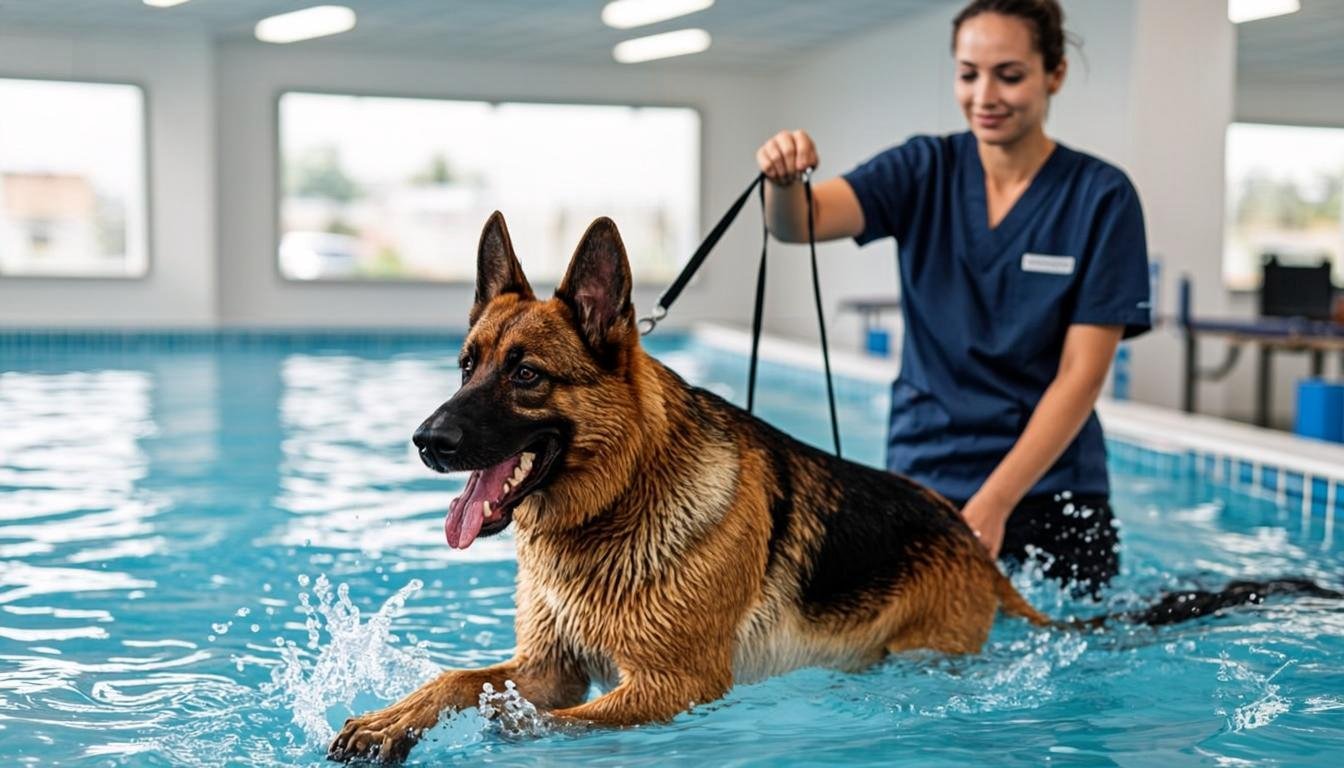
Exercise strategy comes second. The elbow thrives on frequent, short, low-impact movement and suffers from weekend-warrior spikes: three leash walks a day beat one exuberant fetch marathon, and swimming is the perfect elbow workout because it loads muscle while unloading the joint. Build traction with runners indoors (hardwood slip-slide is an arthritis accelerator), use ramps for cars and sofas, and keep nails short so toes grip instead of bracing. Physical rehabilitation — underwater treadmills, cavaletti rails, balance discs — has moved from luxury to mainstream for german shepherd elbow dysplasia patients, and most dogs enjoy it once they learn the routine.
Recommended gear for this stage:
- Orthopedic memory-foam beds for large breeds (Amazon) — pressure-free support takes the jolt off sore elbows during the 14+ hours a Shepherd sleeps.
- Foldable car ramps for large dogs (Amazon) — removes the front-leg landing impact every car trip otherwise adds.
- Glucosamine & chondroitin joint supplements (Amazon) — a daily-support option worth discussing with your vet alongside formal treatment.
Finally, track function the way your vet will: photograph your dog standing from the side monthly, note limp days in a phone note, and review the trend every quarter. Elbow disease moves slowly enough that progress is invisible day to day — a written record turns “he seems fine lately” into data your vet can actually act on, and it catches flare-ups early enough that a short anti-inflammatory course prevents weeks of compensatory strain — the quiet compounding that makes german shepherd elbow dysplasia manageable rather than miserable.
Preventing Elbow Dysplasia in Puppies
Prevention of german shepherd elbow dysplasia has two layers, and the first one happens before your puppy is even born. Ask every breeder for OFA elbow certificates on both parents and, ideally, grandparents — reputable breeders volunteer this without prompting. In Sweden, decades of screening plus breeding restrictions demonstrably cut dysplasia prevalence in German Shepherds, proof that pedigree choices move real-world numbers. A puppy from screened lines is not a guarantee, but it shifts the odds in a way no supplement or training trick can (the Swedish selection study linked above is worth reading before you choose a litter). Ask for those certificates every time; german shepherd elbow dysplasia breeding pressure is real and measurable.
The second layer is growth management, and it costs almost nothing. Feed a large-breed puppy formula to a lean condition — you should see a waist and feel ribs with light pressure — and resist the cultural pressure to grow the biggest, fastest puppy on the block. Our guide on how much to feed a German Shepherd puppy covers the calorie math by month.
Every one of these german shepherd elbow dysplasia rules applies during the exact months the elbow is forming. Restrict stair use and jumping from furniture until skeletal maturity (12–18 months in this breed), favor grass and trails over endless pavement miles, and keep play sessions with heavy adult dogs short during the growth window. These rules are not decorative; they directly reduce the overload signals that push vulnerable juvenile cartilage into fragmentation — the signature opening chapter of german shepherd elbow dysplasia.
Third, think twice before neutering before 12–14 months in a breed where german shepherd elbow dysplasia and orthopedic loading already strain growing joints — discuss timing with your vet against your dog’s specific lines and lifestyle. None of this guarantees a clean elbow, but stacked together, breeder screening plus disciplined growth gives your puppy the best biological starting point german shepherd elbow dysplasia research currently knows how to offer. For the breed’s full orthopedic and genetic landscape, our health problems guide maps every major condition and its screening test.
Living With a Dysplastic Elbow: Three Realistic Paths
Living well with german shepherd elbow dysplasia is a marathon of small good decisions. Diagnosis feels like a verdict, but outcomes in the real world spread across a hopeful range. Consider three composite cases drawn from patterns vets describe routinely. Mika, diagnosed at 9 months after three weeks of shifting front-leg limping: arthroscopy removed a coronoid fragment, six weeks of leash-only walks followed, and at age four she hikes five miles with her family, taking a joint supplement and staying lean — her annual vet visits track arthritis staging that remains mild. Early detection bought her a near-normal career as a family adventure dog.
Duke, diagnosed at 3 years after years of “off and on” limping that imaging finally traced to Grade II changes in both elbows: surgery was declined for financial reasons, so his family built a disciplined program — measured meals, twice-daily 30-minute walks, hydrotherapy twice a month, NSAIDs during flare-ups. Duke’s good months outnumber the bad, though his owners are honest that the program is a lifestyle, not a purchase — the honest bargain of managing german shepherd elbow dysplasia without surgery.
Kai, diagnosed late at age 6 with end-stage elbow arthritis that had already burned through cartilage: his family chose management plus a PRP series, added traction flooring and a ramp, and Kai retired from fetch to sniffing walks. He is comfortable, but his case is the cautionary tale — the cost of the wait exceeded what early treatment would have been, in money and in cartilage.
The common thread across all three: the elbow responds to decisions made early. German shepherd elbow dysplasia rarely announces itself with a scream; it negotiates, and every month of negotiation you spend well — lean weight, smart exercise, timely imaging — compounds into years of sound movement later.
German Shepherd Elbow Dysplasia FAQ
Can german shepherd elbow dysplasia be cured completely?
No surgery recreates a virgin joint, and “cured” is the wrong target. The realistic goal is a pain-controlled, arthritically slow-moving joint: arthroscopy in a young dog removes the mechanical irritant and can delay arthritis for years, while medical management keeps mature elbows comfortable. Most treated Shepherds live full, active lives when owners maintain the weight and exercise discipline that protect the joint long-term.
Does elbow dysplasia always lead to arthritis?
In german shepherd elbow dysplasia, the arthritis clock starts with the fragment, but its speed varies enormously between dogs. A fragment removed at 8 months with disciplined weight control may show only mild changes at 10 years, while an ignored fragment can produce visible arthritis within two years. Early intervention does not pause the clock, but it demonstrably slows it — which is why the 6-to-12-month window matters so much.
Can a German Shepherd with elbow dysplasia still run and play?
Yes — with structure. High-impact fetch, jumping, and hard stops load the elbow destructively, but jogging on soft surfaces, hiking on reasonable terrain, swimming, and scent-work games all fit comfortably in most managed dogs’ lives. Most german shepherd elbow dysplasia patients hike, jog and swim comfortably with that structure. Match intensity to the dog’s next-day response: a limp the morning after means yesterday was too much, not that activity itself is banned.
Are joint supplements worth giving?
Evidence for glucosamine-chondroitin combinations in dogs is mixed but favorable enough that veterinary guidelines list them as reasonable support alongside the fundamentals. Green-lipped mussel and omega-3 fatty acids have the stronger research backing, particularly omega-3s at anti-inflammatory doses. Supplements are the garnish, never the meal: weight control, exercise management, and vet-supervised medication do the heavy lifting.
Should a dog with elbow dysplasia be bred?
No responsible breeding program includes dogs with graded elbow dysplasia, given the heritability documented across screening registries. The breed’s prevalence only falls when affected dogs leave the gene pool deliberately — that Swedish data again. If your dog is affected, the ethical move is spay/neuter planning and honest disclosure to any breeder you bought from, so pedigrees improve for the next generation of Shepherds.
Your next step: if any german shepherd elbow dysplasia sign in this guide matches your dog, book an orthopedic exam this week and bring a phone video of the limp — vets diagnose gait patterns far better from footage than from a tense exam-room walk. And if your Shepherd is still sound, check your insurance waiting periods today; our pet insurance guide for the breed shows which policies handle bilateral orthopedic disease without nasty surprises.
Sources and Limits
The references below informed this german shepherd elbow dysplasia guide. This article is educational and does not replace examination by your veterinarian or a board-certified orthopedic surgeon. Key references consulted: the Orthopedic Foundation for Animals’ elbow dysplasia overview and its breed screening statistics; the American College of Veterinary Surgeons’ clinical summary of forms and surgical options; Cornell University’s owner-facing guide to diagnosis and care; the Swedish longitudinal study on genetic selection reducing dysplasia prevalence (linked above); and the AKC’s breed-owner guide to early signs.
German shepherd elbow dysplasia cost ranges are 2026 US market estimates from clinic and specialty-hospital pricing and vary by region, hospital type, and case complexity. Treatment decisions belong with a professional who can palpate the joint, read the images, and know your dog’s full history.