
German shepherd digging can ruin a lawn in an afternoon, but punishing the behavior never fixes the reason behind it. Shepherds dig from boredom, heat, prey drive, and occasionally distress — and each cause has a different solution. This guide walks through humane german shepherd digging fixes: reading the root cause, building a dig zone your dog will actually use, training alternative behaviors, and protecting your yard without aversive tools.
Affiliate disclosure: As an Amazon Associate, German Shepherd Haven earns from qualifying purchases made through marked links on this page, at no extra cost to you. See our full Affiliate Disclosure.
Why german shepherd digging happens in the first place
Understanding the motivation behind digging is the first step to effective management. German Shepherds are intelligent, active dogs bred for work, scenting, and problem-solving. Digging can be an expression of natural instincts, a response to physical needs, or a learned method to get attention or escape. Common reasons include searching for prey, cooling down, burying objects, seeking shelter, boredom, anxiety, or medical discomfort. Observing when, where, and how your dog digs will guide the solutions you choose. Every german shepherd digging fix starts with an honest look at the why.
When Digging Is Normal vs. When It’s a Problem
Not all digging needs to be stopped. Some digging—like occasional scent investigation or a puppy’s exploratory pawing—is normal. It becomes a problem when it causes safety risks, repeated property damage, or signals distress.
- Normal digging: brief, infrequent, or related to specific stimuli (e.g., burying a bone)
- Problematic digging: persistent, focused on escape routes, destructive, or linked to behavioral stress
If digging increases suddenly or your dog shows other signs of discomfort or behavioral change, consult a veterinarian to rule out medical causes. Once health is cleared, german shepherd digging becomes a solvable management puzzle.
Assessing the Root Cause
Use careful observation to determine why your German Shepherd is digging. Keep a simple log for a week noting time of day, location, what was happening before the digging started, and any triggers. Typical root causes and how to identify them include:
Boredom and Understimulation
If digging happens when the dog is left alone, especially during the hours when household members are out, lack of physical exercise and mental enrichment is a likely cause. Boredom is the most common driver of german shepherd digging, and the easiest to fix.
Hunting/Prey Drive
Digging focused on areas with small-animal activity, like under hedges or near burrows, often indicates chasing scents or prey instincts. Prey-driven german shepherd digging clusters along fence lines and garden beds.
Heat and Comfort-Seeking
Dogs sometimes dig shallow pits to lie in cooler soil. If digging increases on hot days or in sun-exposed areas, overheating or seeking shade may be a factor. Comfort digging explains why german shepherd digging pits appear in the coolest corner of the yard.
Escape or Frustration
Persistent digging at fence lines or gate areas may mean your dog is trying to escape, perhaps due to separation distress or pursuit of stimuli beyond the yard. Escape digging is the most serious form of german shepherd digging and needs immediate attention.
Attention-Seeking
If digging reliably leads to you coming out to scold, play, or otherwise give attention, the behavior can be reinforced, even inadvertently. Attention-seeking german shepherd digging stops the moment the audience stops showing up.
Medical or Sensory Causes
Occasionally, skin discomfort, parasites, or cognitive changes can lead to unusual digging. If the behavior is new, accompanied by other odd signs, or very intense, get a veterinary check. New or sudden german shepherd digging in a mature dog is a vet conversation, not a training one.
Humane management strategies that reduce german shepherd digging
Management means reducing opportunities to dig in unwanted places while providing outlets that meet your dog’s needs. Below are effective, non-punitive approaches.
Increase Physical and Mental Exercise
German Shepherds need both vigorous exercise and mental challenges. A tired dog is less likely to dig out of boredom. Examples: Exercise is the cheapest german shepherd digging prevention available.
- Daily walks with varied routes and pace changes.
- Interactive games like fetch, tug, and controlled scent work.
- Short, frequent training sessions that teach new cues and tricks.
For detailed guidance on general training and behavior, see these humane training and behavior foundations. Those foundations plug directly into german shepherd digging work.
Create a Designated Digging Zone
Give your dog a specific, easy-to-access area where digging is allowed. Make it enticing:
Recommended gear for this stage:
- Wooden sandboxes (dig pit) (Amazon) — a clean, contained digging zone.
- Play sand bags (Amazon) — soft, dog-safe filler for the pit.
- Durable outdoor fetch balls (Amazon) — swap the dig for a legal outlet when needed.
- Fill a low, bordered section with loose soil or sand.
- Bury toys or treats so your dog discovers that digging there leads to rewards.
- Supervise and praise or mark-and-reward your dog when they dig in the zone.
Over time, reinforce the preference for this area by periodically hiding high-value rewards there and by redirecting digging attempts elsewhere into the zone. Consistency here teaches that german shepherd digging pays only in one place.
Provide Scent and Food-Enrichment Games
Scent work mimics natural hunting behavior without yard damage. Hide kibble in a snuffle mat, scatter treats across the lawn, or set up a shallow sandbox with hidden rewards. These activities mentally satisfy a working dog’s search drive. Search games quietly outcompete german shepherd digging for the same mental budget.
Address Temperature and Comfort Needs
If your dog digs to cool off, offer shaded areas, raised bedding, cooling mats, or water play to provide alternative ways to regulate body temperature safely. Ensure fresh water and shade are always available. Shade and water are german shepherd digging prevention disguised as basic care.
Limit Reinforcement of Unwanted Digging
Avoid reinforcing digging by not giving attention—positive or negative—when it happens in undesired spots. Instead, calmly redirect your dog to an appropriate activity and reward the alternative behavior. Scolding can be attention and may unintentionally strengthen the digging if it reliably gets you to the yard. Neutral cleanup beats scolding for german shepherd digging every time.
Reward-Based Training Techniques
Training teaches your dog what you want them to do instead of what you don’t want. Use consistent rewards (treats, praise, play) to shape behavior.
Redirect-and-Reward
Catch your dog starting to dig, interrupt calmly with a neutral cue (e.g., “eh-uh” or a gentle call), then guide them to the designated digging area or another activity. Immediately reward when they start the preferred behavior. Timing is essential: reward within one to two seconds of the desired action to build the association. One-second timing matters as much in german shepherd digging training as in any other skill.
Mark-and-Reward to Build a Digging Preference
Use a marker (a clicker or a verbal cue like “Yes!”) to mark the instant your dog digs in the approved spot, then reward. Repeat regularly so the dog links digging in that location with positive outcomes. A well-paid dig zone makes german shepherd digging elsewhere seem pointless to your dog.
Teach Alternative Behaviors
Train cues that replace digging, such as “go to mat,” “find it,” or “settle.” For example, teach “go to mat” with high-value rewards until your dog reliably moves to their mat when cued. Use these cues to interrupt digging and redirect the dog to the trained behavior, then reward generously. Interruption plus redirection is the core loop of humane german shepherd digging training.
Use Shaping and Targeting
Shaping breaks down the desired behavior into small steps. If you want your dog to dig only in a specific box, reinforce small approximations: looking at the box, touching the box with a paw, then scratching inside. Reward each step to build the complete action. Shaping turns german shepherd digging into a trick you can point somewhere safe.
For general training principles and humane approaches, the RSPCA provides clear, positive-focused guidance on dog training and behavior.
Environmental Changes to Protect the Yard
Modify the environment to reduce access to tempting digging spots. These changes are about prevention, not punishment.
Secure Fence Lines and Gates
If digging at the fence is an escape attempt, reinforce that area by burying rocks or landscape fabric along the base, installing low chicken wire buried slightly under soil, or using a narrow concrete footer. Always choose solutions that keep your dog safe and do not create hazards. Fence work handles the symptoms while training resolves the german shepherd digging drive itself.
Barrier Planting and Ground Cover
Planting dense shrubs or using ground cover like decorative rock in border areas can deter digging. Avoid toxic plants and consider pet-safe landscaping options.
Temporary Deterrents for Transition Periods
When you are initially changing access, use temporary non-harmful barriers (portable fencing, raised planters, or garden netting) to block problem areas while training and enrichment take effect.
Practical german shepherd digging plans, step by step
Below are realistic scenarios and stepwise responses you can adapt to your dog and home.
Example 1: The Bored Adult Dog
- Assess: Notice digging occurs mid-afternoon when the household is out.
- Intervene: Increase morning and evening exercise; add a 10–15 minute sniff-based puzzle after the walk.
- Create a dig zone: Bury toys in the dig box and reward the dog for using it when you return home for the first few weeks.
- Monitor: If digging persists in other areas, use temporary barriers and continue enrichment until the behavior reduces.
Example 2: The Puppy Explorer
- Assess: Frequent, short digging sessions across the yard.
- Intervene: Puppy-proof tempting areas, supervise outdoor time, and teach simple cues like “leave it” and “go to mat.”
- Redirect: When puppy digs, calmly pick them up or call them to an approved area and reward for digging there or for a calm behavior.
- Reward progress: Use high-value treats for quick learning and gradually reduce food rewards as the puppy generalizes the cue.
Example 3: The Fence-Focused Escaper
- Assess: Scratching and digging only at the fence line.
- Intervene: Add buried chicken wire or stones along the fence base and increase supervised outdoor play to provide stimulation.
- Train: Teach the dog to move away from the fence on cue and reward compliance. Use a long-line for safe supervised freedom while training recall and boundaries.
- Seek help: If escaping persists, ask a qualified, reward-based behavior professional to assess the triggers for escape attempts.
Tools, Supplies, and Safe Materials
Useful items to support non-punitive digging management:
- Shallow sandbox or bordered dig box filled with sand or loose soil
- Snuffle mats, food-dispensing toys, and puzzle feeders for mental enrichment
- Raised beds or rocks for fence-line reinforcement (installed safely)
- Shade structures, cooling mats, and fresh water stations for temperature-related digging
- Portable garden mesh or decorative barriers for temporary area blocking
Choose durable, pet-safe materials and avoid items that could injure paws or be chewed into dangerous pieces. Safe materials keep german shepherd digging outlets fun instead of risky.
Monitoring Progress and When to Seek Help
Set realistic expectations: behavior change takes time. Use the initial log to track frequency, location, and context of digging. Look for gradual decreases in problem behaviors and increased use of approved outlets.
Seek professional help if:
- Digging is persistent despite reasonable management and training effort.
- The dog is injuring themselves or repeatedly escaping.
- There are sudden behavioral changes or health concerns.
For behavior cases, look for a qualified, reward-based behavior professional. For medical concerns, consult your veterinarian. The ASPCA offers general information on common dog behavior issues that can help you recognize typical patterns and when professional input is appropriate.
German shepherd digging styles: find yours in this table
Diagnosis precedes treatment, and german shepherd digging comes in distinct styles with distinct signatures. Before changing anything in your yard, spend three days as a naturalist: note where the holes appear, what time of day they multiply, and what your dog looks like while digging. The table below matches the four common styles to their telltale signs and their first-response fixes, so your energy goes at the actual cause instead of the symptom.
| Digging style | Telltale signs | Root driver | First response |
|---|---|---|---|
| Boredom digger | Random holes, mid-day timing, dog left alone | Unmet exercise and enrichment needs | Exercise upgrade + dig zone + food puzzles |
| Comfort digger | Shallow scoops in cool soil, hot days, dog lies in holes | Temperature regulation | Shade, cooling mats, fresh water stations |
| Prey digger | Focused holes along fences, beds, mole runs | Hunting drive on real or imagined prey | Redirect to search games + targeted barriers |
| Escape digger | Tunneling at fence lines, repeated attempts at same spots | Something beyond the fence — or distress inside it | Fence reinforcement + behavior assessment urgently |
Most real dogs blend two styles, and the blend matters: a boredom digger with a side of prey drive needs both the enrichment upgrade and the search-game redirect, while a comfort digger who has learned the behavior also gets paid in attention will keep digging even after you install shade. German shepherd digging responds fastest when you fix the driver, manage the opportunity, and pay the alternative — in that order, with the dig zone doing double duty as the official outlet for whatever remains.
The escape digger row carries a flag worth repeating. Digging aimed at leaving the yard is less a lawn problem than a welfare question: something beyond that fence matters enough to dig for, whether it is a dog in heat down the street, wildlife, or loneliness when the household is away. Fence engineering in that case is containment, not cure — pair it with the deeper work in our separation anxiety plan“>separation anxiety guide if the pattern follows departures, and treat any near-escape as the moment to call in professional help.
Build a dig pit your dog will actually use
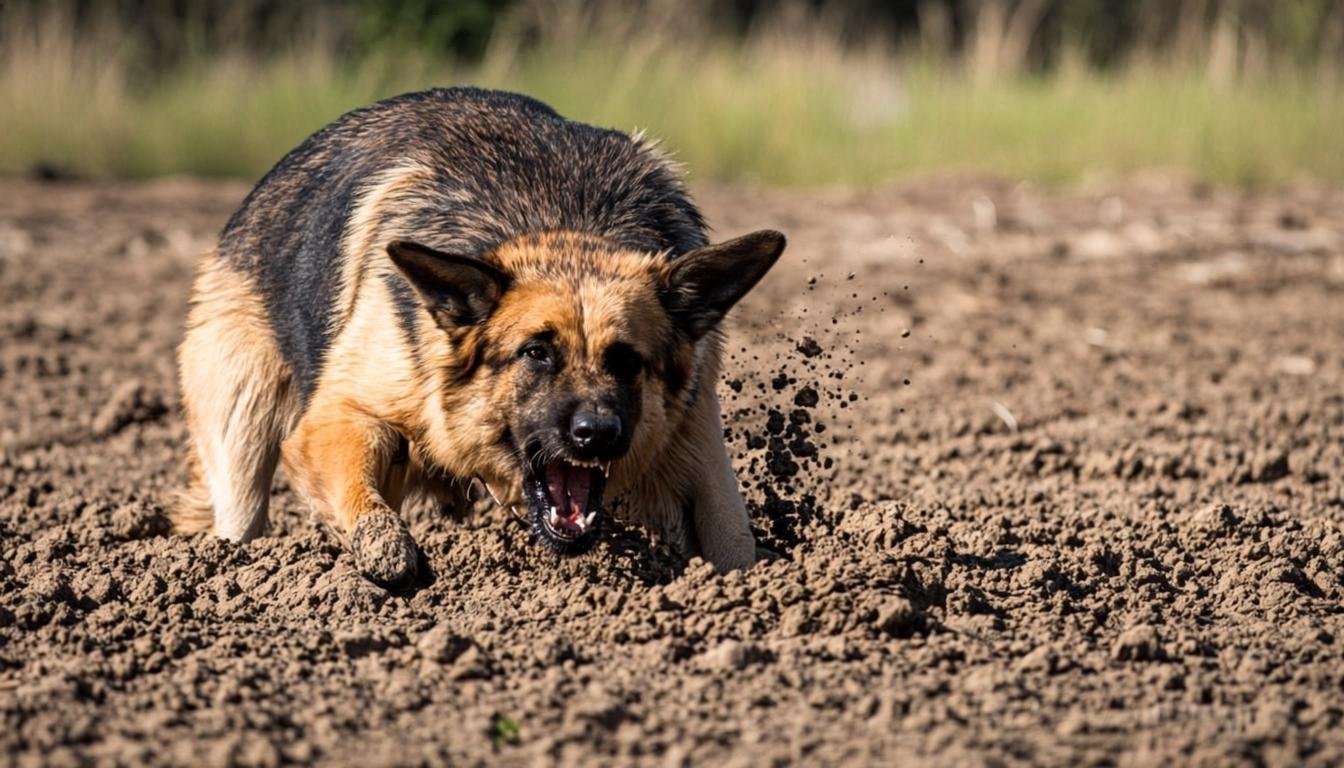
The designated dig zone is the single most effective tool in the whole german shepherd digging toolkit, because it does not fight the instinct — it gives the instinct a legal address. Done well, most dogs convert within two weeks and guard their pit like a treasure chest. Done lazily, it becomes the sandpit nobody uses. The build below takes one afternoon and about the cost of a bag of sand, and it repays itself in lawn every week afterward.
- Pick the location like your dog would. Part shade, visible from the house, away from the fence line you are trying to protect. A dig pit in the boring corner fails; a dig pit where the action is succeeds.
- Frame it clearly. A low wooden border or landscape timbers around 4×8 feet makes the zone legible — dogs read borders better than we expect, and a defined pit reads as a place, not an accident.
- Fill with the right substrate. Loose sand mixed with topsoil digs deep and drains well. Avoid pure play sand in hot climates; it heats. About 18 inches deep lets a full-sized Shepherd dig like a champion.
- Load the jackpots. Bury five to ten high-value treats and a favorite toy at shallow depth on day one, partially visible so discovery is instant. First impressions decide whether german shepherd digging relocates to the pit.
- Launch with a party. Take your dog out, scratch at the sand yourself, and dig a hidden prize up with visible delight. Most Shepherds understand the game within two minutes.
- Pay the pit, starve the yard. Every future burial happens in the pit; rewards happen there; gentle redirection happens anywhere else. Within two weeks the geography of german shepherd digging has officially changed.
- Maintain weekly. Refresh a buried toy every few days, turn the sand monthly, and re-hide surprises after rain. A living pit stays the best game in the yard; a dead one loses to the flower bed.
Troubleshooting is usually about value, not construction. If your dog ignores the pit, raise the jackpot quality — roast chicken beats kibble — and stage the first few discoveries so winning is easy. If digging continues elsewhere, audit your redirection speed; the interruption has to arrive within a second of the first paw scrape, then land the dog in the pit with a reward waiting. German shepherd digging is location-flexible by nature, and the pit works precisely because it makes the legal spot the most rewarding spot in the whole yard.

When digging signals something bigger
Occasionally german shepherd digging is a symptom wearing garden gloves. New digging in a dog who never dug, digging paired with pacing or vocalization, or tunneling that appears alongside other behavior changes deserves a wider look before you invest in sand. The three most common underlying stories are pain, anxiety, and unmet working-dog needs — and each one changes what the right response looks like.
Pain shows up as restlessness: a dog with joint discomfort may dig at bedding, at crate floors, or at cool spots trying to get comfortable. That pattern belongs to a veterinary exam first, and our German Shepherd health problems guide“>health problems guide lists the breed’s common orthopedic culprits worth ruling out. Anxiety-driven digging clusters around departures and isolates to specific locations — gate lines, the point nearest where you leave. That pattern calls for confidence work, not correction; the separation anxiety training plan“>separation anxiety plan covers the gradual-desensitization approach that actually resolves it.
The third story is the most common and the most fixable: a working mind with nothing to work on. German shepherd digging for stimulation is the breed’s answer to an under-filled day, and it competes poorly once you genuinely fill the day — our training and behavior guide“>training and behavior guide offers the structured outlets that do it. The practical rule of thumb: fix the schedule before the yard, fix the yard before the fence, and fix the fence before frustration makes every layer harder. Layered in that order, german shepherd digging almost always resolves without a single harsh correction — and the dog you end up with is calmer everywhere, not just in the garden.
FAQ: german shepherd digging
Do German Shepherds naturally dig more than other breeds?
Moderately — the breed’s working drive and intelligence make german shepherd digging common when needs go unmet, though not as instinct-heavy as terriers. The style varies by dog, which is why diagnosis beats assumptions.
Will neutering stop my dog’s digging?
Only if roaming-motivated, and even then training and management carry most of the fix. Hormone-driven german shepherd digging along fence lines may ease after neutering, but boredom and habit digging will not notice the difference.
Can I just fill the holes and ignore it?
Filling holes removes the evidence, not the behavior — most dogs reopen them within days. Lasting results come from pairing any refilling with the cause-level fixes in this guide, or german shepherd digging simply relocates.
Is it too late to start a dig zone with an adult dog?
Not at all. Adult Shepherds learn the pit fast, especially with staged jackpots and a week of consistent redirection. German shepherd digging habits are location-trainable at any age.
How do I stop digging under the fence specifically?
Layer three defenses: a buried hardware cloth or concrete footer along the line, dense plantings or rocks at the base, and — most important — the enrichment that removes the motivation. Fence work plus cause work is the only combination that ends escape-style german shepherd digging safely.
Three quick wins to start this weekend
If a full training overhaul feels heavy, start with the three changes below. They require no special equipment, they fit any yard size, and together they address the causes behind most german shepherd digging cases. Owners who apply just these three steps often see hole counts drop by half within two weekends, which buys the motivation and breathing room for the deeper work.
Win one: upgrade the ten minutes before you leave. German shepherd digging while the household is out is usually an energy-storage problem, so spend five minutes on structured play and five on fast obedience drills right before departures. The point is not exhaustion — it is switching your dog’s brain from looking-for-work mode to mission-accomplished mode. Leave a food puzzle as the closing act, and the first solo hour of the day passes in consumption instead of excavation.
Win two: make one spot official. Even a $20 bag of sand in a kiddie pool converts part of the yard into a legal digging outlet overnight. Bury two or three prizes the evening before, launch with a party as described earlier, and pay every discovery generously. The dig zone is not a compromise with your dog — it is the strategy, because redirected german shepherd digging fades everywhere else once one location pays consistently. Keep the prizes coming weekly so the zone stays richer than any flower bed.
Win three: change what happens at the hole. From today, holes get neutral treatment: no scolding, no dramatic filling ceremonies, no chasing your dog away from the fence. Call your dog over, reward the recall, and fill holes while your dog watches something better happen elsewhere. This one shift matters more than it sounds — attention in any form is high-value currency for this breed, and accidental payment is how german shepherd digging survives polite households. The AVSAB position statements back this principle across every unwanted behavior: manage the reinforcement, and the behavior manages itself.
Track the simple numbers for two weeks: holes per week, their locations, and the timing. Most households discover a pattern they had never noticed — a lunchtime cluster, a fence-line focus, a post-mailman burst — and each pattern points straight at its fix in the sections above. When the numbers stop falling despite honest consistency, that is the signal to bring in the professionals rather than doubling down on more of the same.
And when the numbers do fall, do not declare victory early; german shepherd digging relapses during schedule changes, so keep the dig zone stocked and the exercise blocks protected for a full season before calling the problem solved. For breed-specific behavior patterns worth knowing, the ASPCA guide to common dog behavior issues is a solid companion to this article.
Checklist: Quick Takeaways
- Observe and log when and where digging happens to identify causes.
- Increase physical and mental exercise to reduce boredom-driven digging.
- Create and reinforce a designated digging zone using rewards.
- Teach and reward alternative behaviors rather than punishing digging.
- Modify the environment to make problem areas less accessible—safely.
- Avoid scolding or aversive tools; they can worsen stress and digging behavior.
- Consult a veterinarian or qualified, reward-based behavior professional if digging persists or you have safety or health concerns.
Sources and Limits
Sources used for general behavior guidance include the ASPCA’s overview of common dog behavior issues and the RSPCA’s resources on dog training and positive methods. These sources provide helpful, general context but are not a substitute for individualized advice:
For breed-specific daily routines and broader care considerations, see guidance on the breed’s daily management needs. Individual dogs vary widely; this article offers practical, general approaches but cannot replace a personalized assessment. For medical questions, urgent concerns, or persistent behavioral problems, consult your veterinarian and, for behavior modification, a qualified reward-based behavior professional.
By combining thoughtful observation, environmental changes, and consistent reward-based training, you can reduce unwanted digging in your German Shepherd while respecting the dog’s instincts and emotional welfare.
Related German Shepherd Haven Guides
For more practical context, read the breed’s daily management needs and humane training and behavior foundations.