
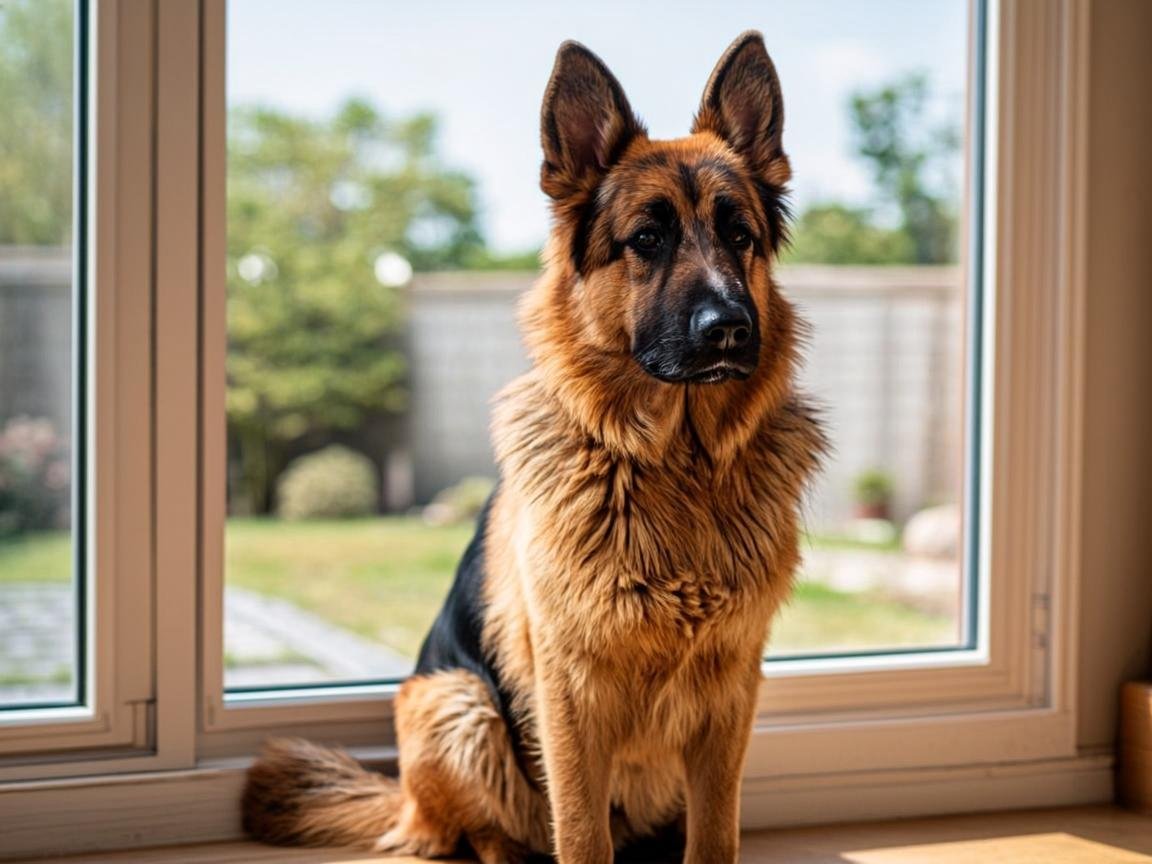
German Shepherd separation anxiety is one of the most emotionally exhausting problems an owner can face — and one of the most commonly misdiagnosed. Your calm, brilliant, deeply bonded companion transforms the moment you pick up your keys: howling that neighbors report from three houses away, scratched door frames, shredded blinds, or house soiling in a dog that is otherwise perfectly trained.
Affiliate disclosure: As an Amazon Associate, German Shepherd Haven earns from qualifying purchases made through marked links on this page, at no extra cost to you. See our full Affiliate Disclosure.
Left alone, a dog in the grip of German Shepherd separation anxiety is not being naughty — the behavior is a symptom, and symptoms can be treated. Studies of dogs referred to behavior specialists consistently find that separation-related behaviors are among the most common reasons for referral, and they are also a leading cause of dogs being rehomed or surrendered — not because the dogs are broken, but because nobody taught the owners how the treatment actually works.
Here is the encouraging part: separation anxiety is one of the most thoroughly researched behavior conditions in dogs, and the core treatment protocol — systematic desensitization to your departures, paired with counterconditioning — has decades of clinical evidence behind it. This guide explains exactly how German Shepherd separation anxiety develops, how to tell it apart from boredom or incomplete training, and how to run a step-by-step training plan that respects how your dog’s brain learns. It follows the site’s training and behavior philosophy: humane methods, realistic timelines, and escalation paths when home training is not enough.
- Key takeaways: separation anxiety is panic at being alone — not spite, not boredom, not dominance.
- Diagnosis starts with video: a camera recording your departures is the single most valuable diagnostic tool available.
- Treatment is graduated: you rebuild comfort at durations of seconds and minutes before trusting hours.
- German Shepherds are overrepresented: the breed’s loyalty, intelligence, and sensitivity cut both ways.
- Escalation is smart, not failure: veterinary behaviorists and medications like fluoxetine exist for severe cases and dramatically improve success rates.
What Is German Shepherd Separation Anxiety?
German Shepherd separation anxiety is a panic response triggered by isolation from attached people. In practical terms, your German Shepherd’s nervous system treats your absence the way it would treat a threat: heart rate climbs, stress hormones flood the body, and the dog escalates through a predictable sequence — vocalizing, searching, pacing, then destructive escape attempts aimed at reuniting with you. This is not a training gap. A dog mid-panic is not choosing to misbehave any more than a person having a panic attack is choosing to hyperventilate.
Veterinary behaviorists classify German Shepherd separation anxiety on a spectrum. At the mild end sits separation-related distress: whining for a few minutes, mild pacing, a dribble of drool by the door, but the dog settles within a short period. That continuum is why German Shepherd separation anxiety is diagnosed by degree, not by checkbox.
At the severe end sits true separation anxiety (or separation-related panic): sustained howling for hours, self-injury from escape attempts — broken teeth, bloody nails, torn paw pads — and house soiling in a reliably house-trained dog. A 2014 review of canine separation anxiety treatment and management published in Veterinary Medicine: Research and Reports describes exactly this continuum and emphasizes that treatment intensity must match severity, which is why honest assessment before training matters so much.
Three features distinguish German Shepherd separation anxiety from every other “destructive when alone” problem. First, timing: anxiety behaviors begin within minutes of departure, concentrated at exits — doors, windows, crates — because the dog is trying to get out and find you. Second, physical stress signs: panting, drooling puddles, dilated pupils, and trembling that the neighbors’ cameras will capture before you do. Third, pre-departure sensitivity: the dog tracks your leaving ritual (keys, shoes, coat) and starts showing distress before the door even closes. A dog that destroys your couch cushion but sleeps peacefully on camera for four hours is not anxious — that is an enrichment and exercise problem, and it has a completely different solution.
It is also worth naming what German Shepherd separation anxiety is not: it is not guilt (the “guilty look” is your dog reading your body language, not remembering wrongdoing), it is not an attempt to punish you for leaving, and it is not something the dog will simply outgrow. In adult dogs, untreated separation-related panic tends to escalate over time because every solo departure is another full-intensity panic rehearsal. That is why this guide focuses on structured treatment rather than waiting it out.
Signs Your German Shepherd Has Separation Anxiety
The German Shepherd separation anxiety symptom picture is remarkably consistent across affected dogs, and the classic cluster was well documented in the ASPCA’s behavior guidance on separation anxiety. Watch for this list — ideally confirmed by camera footage rather than neighbor reports alone:
- Vocalization at exits: the classic German Shepherd separation anxiety signature — howling, barking, or whining that starts within minutes of your departure and recurs in waves throughout the absence.
- Escape attempts focused on exit points: scratched or chewed door frames, damaged window sills and blinds, bent crate bars, broken teeth or nails — injuries concentrated where the dog tried to reach you.
- House soiling in a trained dog: urination or defecation near the exit or on items carrying your scent, in a dog with no medical cause and reliable house training when you are home.
- Drooling and self-grooming escalation: puddles of saliva by the door, wet chests from licking paws and forelegs during the absence.
- Pre-departure hypervigilance: the dog shadows you as you get ready, trembles when you take out keys, blocks the door, or escalates before you leave.
- The “velcro reset”: frantic, prolonged greeting when you return — sometimes followed by hours of exhaustion or clinginess that persists into the evening.
Because German Shepherds are large, athletic, and deeply bonded, their anxiety expressions scale up with their size: a Beagle may shred a cushion, while a 40-kilogram Shepherd can crack a door panel or bend a steel crate. That physical power is one reason the breed-specific stakes of this condition are genuinely higher — escape attempts that would leave a smaller dog scratched can send a German Shepherd to the emergency vet. German Shepherd separation anxiety, in short, scales with the dog.
Separation anxiety or just boredom? The comparison table
Before German Shepherd separation anxiety training begins, sort the symptoms honestly. The two conditions look similar from the outside — destruction and noise while alone — but the internal mechanisms differ completely, and so do the fixes.
| Observation | Separation anxiety | Boredom / under-exercise |
|---|---|---|
| When behavior starts | Within minutes of departure | After a period of calm; often later in the day |
| Where damage occurs | Concentrated at doors, windows, crate | Random: cushions, shoes, trash, scattered items |
| Camera evidence | Pacing, panting, trembling, howling cycles; dog never truly settles | Sleeps, then plays/wanders; relaxed body language |
| Drooling, self-injury | Common (broken nails, wet doors, sores) | Essentially never |
| Pre-departure reaction | Dog tracks your routine; distress before you leave | Neutral — dog doesn’t react to keys or coat |
| Response to exercise | Tired dog still panics | A tired dog is calm and quiet |
If your dog’s profile lands mostly in the boredom column, the treatment is enrichment and exercise, not desensitization — and the good news is that the working-dog training principles that German Shepherds were bred for solve most boredom destruction quickly. If the profile lands in the anxiety column, you are looking at German Shepherd separation anxiety proper, and the assessment plus plan below apply.
German Shepherd Separation Anxiety or a Lookalike Problem?
Four conditions imitate German Shepherd separation anxiety, and each demands a different fix. Isolation distress is the closest cousin: the dog panics when alone, but any companion — human or canine — prevents it. Confinement anxiety flares only inside crates or closed rooms and fades when the dog can roam. Barrier frustration is frustration, not fear: the dog wants to join the fun on the other side of the fence and shows agitation rather than panic on camera. Boredom destruction we already covered in the comparison table above.
The discrimination matters because treatment polarity differs: crates help confinement-anxious dogs feel safe, while crates can make German Shepherd separation anxiety worse; a second dog may fully resolve isolation distress while leaving true German Shepherd separation anxiety untouched. Your camera footage plus the signs checklist resolves most cases. When the picture stays ambiguous after two weeks of recordings, that ambiguity itself is useful information — bring it to a certified behavior consultant rather than guessing, because a misread case wastes months on the wrong plan.
Why German Shepherds Are So Prone to Separation Anxiety
German Shepherd separation anxiety begins with the breed’s greatest strengths, which double as its risk factors. German Shepherds were developed as partnership dogs: bred to work inches from their handler’s knee, reading micro-expressions, making decisions in constant social contact. Centuries of selection for handler-focus produced dogs that bond fast, bond deep, and monitor their people almost continuously. When that dog’s entire emotional architecture is organized around cooperation with you, extended isolation is not merely boring — it violates the breed’s operating assumption, which is why German Shepherd separation anxiety appears overrepresented in the breed. This is why the breed appears overrepresented in separation-related case reports, and why the condition often first appears after a major bond disruption.
Life-stage transitions are the classic triggers of German Shepherd separation anxiety. Adolescence is a well-documented vulnerability window — the adolescent German Shepherd guide covers how hormonal and neurological restructuring between roughly 6 and 18 months temporarily increases fearfulness and clinginess, and anxiety that gets rehearsed daily during this window can consolidate into a lasting pattern.
Other common triggers include a household member moving out, returning to office work after weeks of constant company (the post-pandemic generation of anxiety cases is a textbook example), boarding or hospitalization, a rehoming, or even a single scary event that happened while the dog was alone — a thunderstorm, a smoke alarm, fireworks — that teaches the dog “being alone is when bad things happen.”
Two breed-typical owner habits can quietly accelerate German Shepherd separation anxiety. The second is emotional departures: long, guilty, high-energy goodbyes (“It’s okay, mama will be back soon, be a good boy…”) that coat the departure cue in arousal and concern. The dog does not understand the words; the dog reads the chemistry.
The first is constant togetherness: German Shepherds follow their people from room to room by nature, and many owners never practice planned separation at all — the dog goes from 100 percent company to eight hours alone with no intermediate training, which is like attempting a marathon without jogging first. An owner who treats leaving as a five-second non-event trains a calmer dog without ever running a formal exercise.
Real German Shepherd Separation Anxiety Cases: Three Recovery Timelines
Composite cases — typical of what behavior consultants handle — show how German Shepherd separation anxiety recovery actually looks. Case one: a ten-month-old male whose owners return to office work after months at home begins howling within minutes of every departure. Camera footage shows pacing and door-scratching but no self-injury: mild-to-moderate German Shepherd separation anxiety. With sitter coverage protecting real absences, sub-threshold ladder work twice daily, and neutralized departure cues, the dog reaches a calm full workday in nine weeks. The lesson: German Shepherd separation anxiety caught early, with logistics solved, moves fast.
Case two: a four-year-old rehomed rescue panics at even ten seconds alone — trembling, drool puddles, a bent crate bar. This is severe German Shepherd separation anxiety, and the veterinary behaviorist adds daily fluoxetine to the plan. Progress is real but slow: threshold durations climb from seconds to forty minutes over seven months, with two setbacks after thunderstorms. The lesson: severity sets the timeline, and medication is a bridge, not a failure.
Case three: a breeder-raised puppy whose owners run independence training from week one — daily playpen minutes, randomized micro-absences, boring exits. At two years old, with a full work schedule, the dog has never shown a single German Shepherd separation anxiety symptom. The lesson: German Shepherd separation anxiety is dramatically easier to prevent than to reverse, and the prevention window is puppyhood. Three dogs, three starting points, one pattern: German Shepherd separation anxiety yields to structure, repetition, and honest measurement — never to hope alone.
True Anxiety or Something Else? How to Rule Out Common Causes
Skip this step and you can spend months training for the wrong problem, because German Shepherd separation anxiety shares symptoms with at least four lookalike conditions. Three checks separate real anxiety from its imitators, and each one takes less than a week.
Check 1: Get camera evidence. Position any phone, tablet, or webcam with a view of the door and the dog’s usual zone, record a departure of 30–60 minutes, and watch honestly. You are looking for the timing and the body language: does distress start immediately, does the dog settle, is there panting, drooling, trembling, door-scratching, howling? Record on several different days — a single recording can catch an unrepresentative good or bad day. This footage is so informative that professional behaviorists typically refuse to design a separation case plan without it.
Check 2: Rule out medical drivers. House soiling in a previously reliable adult dog warrants a vet visit before any behavior plan: urinary tract infections, gastrointestinal upset, and incontinence from hormonal or age-related causes all mimic anxiety soiling. Sudden clinginess and restlessness can reflect pain — hip discomfort, dental pain, ear infections. Cognitive decline produces new nighttime restlessness and separation distress in senior Shepherds. A basic wellness exam with urinalysis is the cheapest way to avoid treating pain with a training plan.
Check 3: Audit the basics. How many hours of real exercise and mental work is this dog getting daily — not yard access, but actual walks, training sessions, sniffing time? An under-exercised German Shepherd invents work, and destroyed couches are work. Is house training genuinely complete, or has the dog ever had accidents when supervised?
Is there a second dog in the home, and does the problem stop when the other dog stays behind? (Dogs whose distress resolves with any companion — human or canine — have isolation distress, a cousin condition with a slightly different treatment ladder.) Only when medical causes are excluded, exercise is adequate, and camera footage shows the panic signature do you treat the case as German Shepherd separation anxiety and commit to the desensitization plan.
The Step-by-Step German Shepherd Separation Anxiety Training Plan
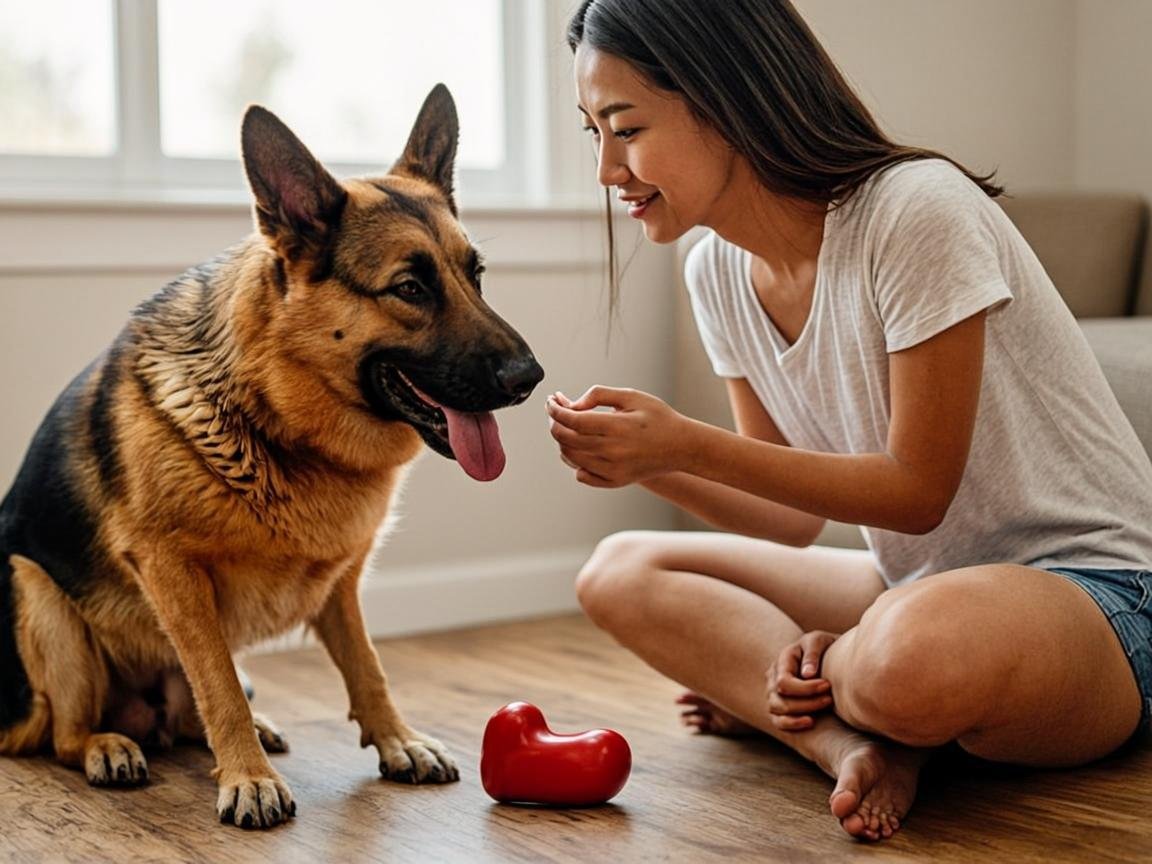
The evidence-backed German Shepherd separation anxiety treatment is systematic desensitization — re-exposing the dog to departures at intensities low enough that panic never triggers — combined with counterconditioning, which pairs your leaving with something the dog genuinely loves. The 2014 clinical review of separation anxiety treatment describes this pairing as the foundation of successful programs, with medication added as support in severe cases. What follows is a practical translation of that protocol for home use. The plan has five phases; do not skip phases, because each one is load-bearing.
Phase 1: Build your baseline (days 1–7)
Every German Shepherd separation anxiety plan starts by measuring, not training. Set up your camera, and run micro-departures to find your dog’s threshold: touch the door handle (does the dog notice?), open the door and close it, step out for one second, five seconds, thirty seconds, two minutes. Your threshold number is the duration at which the first stress signs appear — a frozen stare, an ear flick, standing up. Write it down; it might be ten seconds or it might be ten minutes. Every German Shepherd separation anxiety plan starts from this number, and most owners are surprised how low it is in truly anxious dogs.
Phase 2: Neutralize the departure cues (days 3–14, overlapping)
Anxious dogs treat your pre-departure ritual — keys, shoes, jacket, lunchbox — as a countdown to panic, a hallmark of German Shepherd separation anxiety that owners often notice first. Desensitize each cue individually: pick up your keys and then sit down and watch TV; put on your work shoes and walk to the kitchen; take your jacket off and on five times through the evening. Repeat daily until each item stops producing a reaction, then begin randomizing — keys jingle at breakfast, shoes go on at random hours — so the cues lose their predictive meaning entirely. This phase costs nothing, and owners routinely report it visibly lowers baseline tension within one to two weeks.
Phase 3: Independence training while you are home (weeks 2–4)
A dog that cannot be apart from you in the living room cannot be apart from you in the house. This phase is where German Shepherd separation anxiety is quietly prevented — or quietly rehearsed. Reward calm lying-down away from you with quiet praise or a food scatter — never by making a party of it.
Practice brief, boring separations: a baby gate between rooms while you read; the dog on a mat in the hallway while you cook behind a barrier; a stuffed chew in one room while you work in another. The goal is a dog that treats “not touching you” as a normal, unremarkable state. German Shepherds often need this phase more than owners expect, because the breed’s room-following habit is self-reinforcing.
Phase 4: Graduated absences — the engine of the plan (weeks 3–12)
This phase is where German Shepherd separation anxiety actually reverses — desensitization lives here. Starting below your Phase 1 threshold, leave for durations the dog can handle with zero stress signs, and return before panic ever begins. Each successful repetition slightly raises the ceiling; any panic resets you to a shorter duration. A typical progression table looks like this — adjust to your dog, not to the table:
| Stage | Practice durations | Sessions per day | Progress to next stage when… |
|---|---|---|---|
| 1. Micro | 1s → 5s → 10s → 30s | 3–5 | 30s produces zero stress signs, five sessions straight |
| 2. Minutes | 1min → 3min → 5min → 10min | 2–3 | Dog lies down and takes the chew within 1 minute of departure |
| 3. Short absences | 15min → 30min → 45min | 1–2 | Camera shows settling after departure and no exit-watching |
| 4. Real-life practice | 1hr → 2hr → 4hr | 1 | Consistent calm across different times of day |
| 5. Maintenance | Full workday with midday break | Ongoing | Not applicable — keep variety to prevent relapse |
Three rules make this phase work. First, stay sub-threshold: if you see stress signs at 10 minutes, you practiced 10 minutes wrong — drop back to 5. Second, vary the staircase: mix durations (30s, 2min, 45s, 3min) rather than climbing monotonically, so the dog cannot predict and cannot habituate to a pattern. Third, real absences are cheating: until the plan reaches Stage 4, arrange dog-sitters, doggy daycare, family, or work-from-home days so the dog never practices full-length panic, because every panic rehearsal un-does days of progress. This logistical layer is the hardest part of German Shepherd separation anxiety treatment, and owners who solve it are the owners who succeed.
Phase 5: Counterconditioning — make departures predict good things
Alongside the duration ladder, teach a departure-specific ritual: a long-lasting food project that appears only when you leave and disappears when you return — a frozen stuffed Kong, a snuffle box, a puzzle feeder. Drop back a stage and re-attempt.
The asymmetry is the active ingredient of German Shepherd separation anxiety counterconditioning: the high-value item is exclusive to absences, so the emotional association flips from “you left” to “the frozen Kong hour.” Two cautions from clinical practice: keep the item’s difficulty matched to the practiced duration (a 15-minute chew for a 10-second absence backfires), and if the dog refuses food when you leave, that is not stubbornness — refusal to eat is itself a stress barometer telling you the current duration is above threshold.
Crate or No Crate? Making the Right Confinement Choice
Confinement is the most common strategic error in German Shepherd separation anxiety work. For some dogs a crate is a bedroom; for a German Shepherd with separation-related panic it can be a trap that converts anxiety into injury. If the camera shows bar-bending, panting, drool-soaked fur, or broken nails, the crate is amplifying the panic, and every crated absence is rehearsing fear.
Decide with footage, not preference: if the camera shows a crated dog that calms down, sleeps, and takes the chew, the crate is an asset — a safe room, truly — and crate training foundations should be built positively. In that case, dog-proof one room instead: pick a space with washable floors, remove curtains and blinds within reach, block windows with frosted film if the dog storms at passersby, and leave water, bedding, and the departure chew there.
If confinement anxiety is present, rebuild the crate as a completely optional happy place for two to four weeks before ever closing the door — feed every meal in it, stuff Kongs only in it, and let the dog enter and exit freely. The Humane Society’s guidance on crate training emphasizes exactly this positive-association approach, and it applies double to anxious dogs. There is no medal for crating a dog that panics; there is only a vet bill and a longer recovery timeline. In German Shepherd separation anxiety work, the crate earns its place only when the camera proves the dog is calm.
Enrichment and Daily Routines That Lower the Panic Baseline
Training changes how the dog feels about departures; routine changes how stressed the dog is when departures arrive. Four levers measurably lower a German Shepherd’s baseline arousal, and they cost little — and both levers matter equally in German Shepherd separation anxiety recovery. Physical exercise timed correctly: a solid 30–45 minute sniffy walk or play session 30–60 minutes before a planned absence means the dog meets the departure physiologically calm — exercised but not sprinted into arousal.
Recommended gear for this stage:
- KONG Classic durable stuffable toy (Amazon) — the departure-only food project the plan relies on.
- Pet cameras with treat dispenser (Amazon) — watch what actually happens when you leave.
- Snuffle mats for low-arousal foraging (Amazon) — calming enrichment that lowers the panic baseline.
Mental work: ten minutes of obedience drills, scent games, or trick training taxes the brain harder than an hour of fetching, and our master guide to choosing a private German Shepherd trainer includes structured enrichment ideas professionals use with high-drive dogs. Predictable rhythms: dogs with consistent morning and evening routines show fewer free-floating stress behaviors, because predictability is intrinsically reassuring. Leaving calmly, returning calmly: the five-second no-fuss exit and the thirty-second delayed, low-key greeting are free, and they remove the emotional whiplash that bookends every absence in an anxious dog’s day.
When Medication and Professional Help Are Needed
Some dogs cannot learn while their nervous system is at panic intensity — the same way a person cannot process therapy mid-panic-attack. In moderate-to-severe cases, veterinary medication is not a cop-out or a last resort; it is a tool that lowers the panic baseline enough for the training plan to land. Severe German Shepherd separation anxiety floods the learning system; medication turns the volume down so training can finally be heard.
Two medications are FDA-approved specifically for canine separation anxiety in the United States: fluoxetine (a daily selective serotonin reuptake inhibitor) and clomipramine (a daily tricyclic). Both take four to six weeks to reach full effect and are typically combined with — never substituted for — the desensitization program. For predictable short events, veterinarians may additionally prescribe fast-acting situational medications. A review of separation anxiety treatment strategies in the veterinary literature describes the medication-plus-behavior-modification combination as standard of care for severe presentations, and owners frequently report it is what finally made training possible.
Professional help comes in tiers, and knowing which tier you need saves months — a pattern that holds for nearly every serious German Shepherd separation anxiety case. A certified behavior consultant (CAAB, CPDT-KA with separation case experience) designs and supervises the desensitization plan — the right first call for moderate cases and for owners whose schedule makes solo implementation impossible.
A veterinary behaviorist (DACVB, a board-certified specialist) handles severe cases, bite-risk presentations, and medication management; many now offer remote consultations. Daycare and dog-sitters are the logistical bridge, not treatment: they prevent panic rehearsals while the plan works, which is a job worth paying for. If your dog’s anxiety includes aggression toward anyone who approaches during a panic episode, pause and read our German Shepherd aggression training guide, because that presentation needs professional eyes before any home program continues.
Expect honest numbers: mild cases often improve substantially within four to eight weeks of consistent work; moderate cases typically need three to six months to reach comfortable full workdays; severe cases with medication can take six to twelve months, with plateaus and occasional regressions along the way. Anyone promising a one-week fix for genuine German Shepherd separation anxiety is selling something the clinical literature cannot support.
Five Common Mistakes That Make Separation Anxiety Worse
Well-meaning owners routinely apply advice designed for boredom or disobedience, and on a panic-driven condition that advice actively backfires. These are the five errors that make German Shepherd separation anxiety worse, and professionals see them constantly:
- Punishing the evidence. Yelling at destroyed cushions, rubbing the dog’s nose in soiling, or crating the dog as punishment teaches only one lesson: your return is the scary part. The dog cannot connect punishment to behavior that happened hours ago — and now departure-plus-return predicts anger, which raises the anxiety the punishment was meant to fix.
- Training above threshold. Repeatedly practicing absences long enough to trigger panic (“flooding”) does not build tolerance; it builds evidence that being alone is exactly as terrifying as the dog fears. Every session must stay sub-threshold, even if that means three-second departures for the first week.
- Skipping the logistics. Owners run perfect ten-minute desensitization sessions all weekend, then leave the dog alone for nine hours on Monday. Each real absence rehearses full panic and largely resets progress. Doggy daycare, sitters, and schedule restructuring are not optional extras in a real treatment plan — they are the plan’s guardrails.
- Over-relying on gadgets. Thunder-shirts, pheromone diffusers, and calming chews show mixed evidence at best, and some dogs genuinely relax with them. Fine — use them as garnish. No product substitutes for the duration ladder, and spending weeks testing gadgets while absences keep happening is weeks of lost progress.
- Getting another dog “for company.” The classic well-intentioned gamble. Some isolation-distressed dogs do settle with a companion; many do not — and now you have two dogs practicing destruction together. Never add a second dog while the first has an untreated behavior problem, and never before camera footage confirms what actually relieves your dog’s distress.
Preventing German Shepherd Separation Anxiety in Puppies
German Shepherd separation anxiety prevention is dramatically cheaper than treatment, and the German Shepherd puppy is at the perfect age to build independence — the same weeks when the breed’s bonding machinery is wiring itself. Five habits do most of the work.
1. Teach calm absence from week one. New owners default to constant contact, but the puppy needs daily practice being alone while you are home: playpen time in another room, crate naps behind a gate, minutes at a time, extending as the puppy relaxes. A puppy that practices short solo intervals every day treats longer absences as unremarkable — the puppy never learns that isolation is an emergency, because to this puppy it never has been.
2. Vary the departures. Puppies are pattern-machines; deliberately scramble the pattern. Sometimes shoes on, no exit; sometimes exit with no shoes; sometimes two minutes, sometimes twenty, sometimes just taking out the trash. Randomized micro-absences teach the most important lesson in this entire article: your leaving predicts nothing about how long you will be gone.
3. Keep exits boring and returns quiet. The five-second departure and the delayed, low-voice greeting cost nothing every single day — and they install the emotional tone of separation for life. Save the party for the play session fifteen minutes after you get home.
4. Socialize for resilience, not just politeness. The adolescent months are a documented vulnerability window — our teen dog support guide explains why clinginess peaks and how to answer it. Puppies with broad positive experience of being handled by others, staying with family or sitters, and riding out brief boredom build a general “the world is safe without you” confidence that separation training can stand on.
5. Build a real off-switch. Breed-typical drive is a gift with an edge: the working-line puppy guide shows how to channel it, and a dog with an on-demand “settle on your mat” behavior has a portable calm-down skill that works before departures, during doorbell chaos, and everywhere else arousal spikes.
Frequently Asked Questions About German Shepherd Separation Anxiety
Can German Shepherd separation anxiety be cured completely?
Yes — German Shepherd separation anxiety responds well to consistent work: the desensitization-plus-counterconditioning protocol has strong clinical support, and many dogs reach “managed so well it stops being a problem” status, sleeping through your full workday. Expect management habits (calm exits, varied absences, exercise before leaving) to remain part of life permanently, exactly as physical fitness stays part of a healthy lifestyle after reaching a target weight.
How long does treatment take?
Mild German Shepherd separation anxiety often improves within four to eight weeks of daily sub-threshold practice. Moderate cases need three to six months; severe cases with medication support can take six to twelve months. The single biggest speed factor is preventing full-length panic rehearsals through sitters or daycare while the training ladder climbs.
Should I crate my German Shepherd when I leave?
Only if camera footage shows a crated dog that genuinely settles. For panic-prone dogs, crating can convert anxiety into self-injury. Dog-proof a room instead, or rebuild crate associations over weeks with meals and chews before ever closing the door.
Do bark collars or punishment stop separation howling?
No — and they frequently worsen the condition. The howling is a panic symptom, not a choice, and adding aversive stimulation to a panicked dog adds fear to fear. Veterinarian behavior specialists uniformly recommend against punishment-based tools for separation-related distress.
Is it too late if my adult German Shepherd already has severe anxiety?
No. Adult dogs — including rehomed seniors — respond to the same protocol, usually with veterinary behaviorist involvement and often with medication support. Severe cases take longer, but age itself is not a barrier; consistency is the variable that matters.
Does German Shepherd separation anxiety get worse with age?
Typically yes, when untreated — every panicked solo departure is another full-intensity rehearsal, and rehearsed fear consolidates. The flip side: age does not block recovery. German Shepherd separation anxiety responds to the same desensitization plan in seniors as in adolescents, usually with medication support in long-standing cases.
Can a second dog cure German Shepherd separation anxiety?
Rarely, and gambling on it often creates two problems instead of one. Some dogs with isolation distress settle with any companion; dogs with true German Shepherd separation anxiety usually panic because their person left, and another dog does not substitute. Get camera evidence first, treat the existing case, and never add a dog as a treatment.
How long can a German Shepherd with separation anxiety be left alone?
Exactly as long as the dog’s sub-threshold duration allows — and no longer. During active German Shepherd separation anxiety treatment, real absences beyond the dog’s threshold should be covered by sitters, daycare, or schedule changes until the duration ladder climbs. It is logistics, not weakness, and it is how the fastest recoveries happen.
Is German Shepherd separation anxiety more common in rescue dogs?
Rescues are overrepresented, largely because rehoming, shelter stays, and lost attachments are known triggers. But German Shepherd separation anxiety is common in never-rehomed dogs too, especially after intense-bond periods like a remote-work stretch. History raises risk; it does not decide outcome, and the plan in this article applies equally to rescue and homebred dogs.
Final Thoughts and Next Steps
German Shepherd separation anxiety rewards owners who treat it like what it is: a treatable panic condition with a decades-deep evidence base, not a character flaw and not a training failure. Diagnose with a camera instead of a guess, rule out medical causes, keep every training session below panic threshold, prevent real absences from undoing your work, and escalate to professionals and medication when severity demands it. Follow that sequence and the odds tilt strongly in your favor — and the dog who once howled at the closing door becomes the dog who greets your return with a stretch and a yawn.
If you are still weighing whether this breed fits your household’s schedule, our honest guide on whether a German Shepherd is a good house dog covers the alone-time reality in detail, and the nine breed challenges every owner should know puts this condition in the broader context of living with a demanding, brilliant dog. Subscribe to our newsletter for step-by-step training guides delivered weekly, and if you are mid-treatment right now, leave a comment with your dog’s current threshold duration — reader milestones genuinely shape the follow-up articles we publish.
Sources and Limits
This article is educational and does not replace individualized diagnosis by a qualified veterinarian or certified behavior professional. Key references consulted: the clinical review of canine separation anxiety treatment and management by Sargisson, published in Veterinary Medicine: Research and Reports (PMC7521022); the ASPCA’s behavior guidance on separation anxiety; the RSPCA’s dog behavior advice library; and general preventive care resources from the American Veterinary Medical Association. Medication decisions belong exclusively with your veterinarian, who knows your dog’s full health history. Timelines described here reflect typical clinical experience and vary with case severity, household logistics, and owner consistency.