
So you have decided the breed — now the real question: where can I purchase a German Shepherd puppy that is healthy, well-bred, and honestly represented? The answer matters more than most buyers realize, because the channel you choose determines the health testing behind your puppy, the temperament it inherits, and the support you get when questions arrive at 11pm. This guide compares every realistic option, walks through the buying process step by step, and shows you the paperwork and the scams to watch for before money changes hands.

Practical note: Verify the breeder, rescue, health records, living conditions, and contract before paying a deposit. Avoid sellers who pressure you to send money without an in-person or independently verified meeting.
Table of Contents
- Your Four Realistic Options, Compared
- The Step-by-Step Buying Process
- What to Check When Visiting a Breeder
- Health Checks to Ask About
- How to Assess a Puppy's Health at the Visit
- Contracts, Health Guarantees, and Paperwork
- Online Scams: How Not to Lose Your Deposit
- Bringing Your Puppy Home: The First 48 Hours
- What a Responsible Seller Will Ask You
- Timing: When German Shepherd Puppies Are Actually Available
- Key Takeaways on Where to Purchase a German Shepherd Puppy
Your Four Realistic Options, Compared
Every route ends at the same checkpoint: the quality of the German Shepherd puppy in front of you. A show-line German Shepherd puppy from tested parents and a cheap German Shepherd puppy from an online classified ad can look identical at eight weeks, yet cost you thousands of dollars apart in veterinary bills over three years. When you purchase a German Shepherd puppy, you are really purchasing the two years of care that came before it, so weigh each option by the breeding behind it, not by distance alone. Whichever route you choose, that budget should also include German Shepherd pet insurance, since the first year often carries the highest veterinary costs.
German Shepherds are terrific pets — intelligent, loyal, athletic, and deeply connected to their owners. Many people know the breed from its legendary work as police and search-and-rescue dogs, and its popular mixes keep widening the appeal. But the same demand that fills breeder waiting lists also fills shelters with mismatched dogs. Before choosing where to buy, understand what each channel actually offers:
| Channel | Typical Cost | Waiting Time | Health Transparency | Best For |
|---|---|---|---|---|
| Reputable breeder | $1,500 – $5,000 | 1 – 12 months | Full: tested parents, pedigree, guarantee | Predictable temperament and health |
| Breed-specific rescue | $150 – $500 | 2 – 8 weeks | Good: foster-evaluated, vetted | Adults, known personalities |
| General shelter | $50 – $300 | Immediate | Variable: history often unknown | Budget + saving a life |
| Rehoming listings online | $0 – $1,000 | Immediate | Poor to good: verify everything | Experienced owners, fast rehomes |
German Shepherd puppies for sale through any channel deserve the same initial visit: take note of how the puppy responds to your voice and touch. The puppy should be friendly and ready to meet new acquaintances — fearfulness at eight weeks predicts fear-based reactivity at two years.

The Step-by-Step Buying Process
Buying a Shepherd puppy is a 4-to-10-week project when done properly. Rushing any single step below is how expensive mistakes happen.
- Define your reality first: family pet, sport prospect, or protection line? Answer this honestly before shopping — it changes which breeders deserve your shortlist.
- Research and shortlist three sources: club breeder directories, breed-specific rescues, and referrals from local trainers beat classified ads every time.
- Contact with real questions: ask about health testing, waiting lists, and what happens to returned dogs. The quality of the answers (and the questions they ask you back) tells you everything.
- Visit in person or by live video: see the mother, the litter, and the living conditions. No visit, no deposit — ever.
- Choose the puppy calmly: temperament over color, breeder guidance over first impressions. Breeders who have watched the litter for eight weeks know which puppy fits which home.
- Sign the contract and pay a traceable deposit: read the health guarantee before, not after, and keep every receipt.
- Prepare and pick up at 8–10 weeks: puppy-proofed home, vet appointment booked within 48 hours, and the first week planned as decompression.
What to Check When Visiting a Breeder
Trust your senses during the visit. A healthy German Shepherd puppy is curious, plump but not bloated, and playful after a few minutes of shyness; eyes are clear, ears are clean, and the gait is even. Any German Shepherd puppy that coughs, has a swollen belly or flinches at human touch deserves a veterinary exam before money changes hands – and the seller of that German Shepherd puppy should already have offered one. A confident German Shepherd puppy approaches with tail up, and any German Shepherd puppy kept apart from the litter deserves questions.
If you are purchasing from a breeder, you should seek to view both parents — or at minimum the mother, since the sire may live elsewhere. Examine how the parents respond to you as a stranger and look for evidence of inappropriate aggression: a well-bred Shepherd is watchful and reserved, never frantic or hostile without cause. The parents’ temperament will be handed down to the litter, so what you see in the adults is a live preview of what you are buying.
You should also ensure that the parents move freely and unfettered — stiffness, bunny-hopping gaits, or reluctance to rise are visible red flags for the hip and elbow problems the breed is prone to. Check the Orthopedic Foundation for Animals (OFA) accreditation for the puppy’s parents and verify it yourself in the public OFA database using the parents’ registered names rather than trusting screenshots.
Health Checks to Ask About
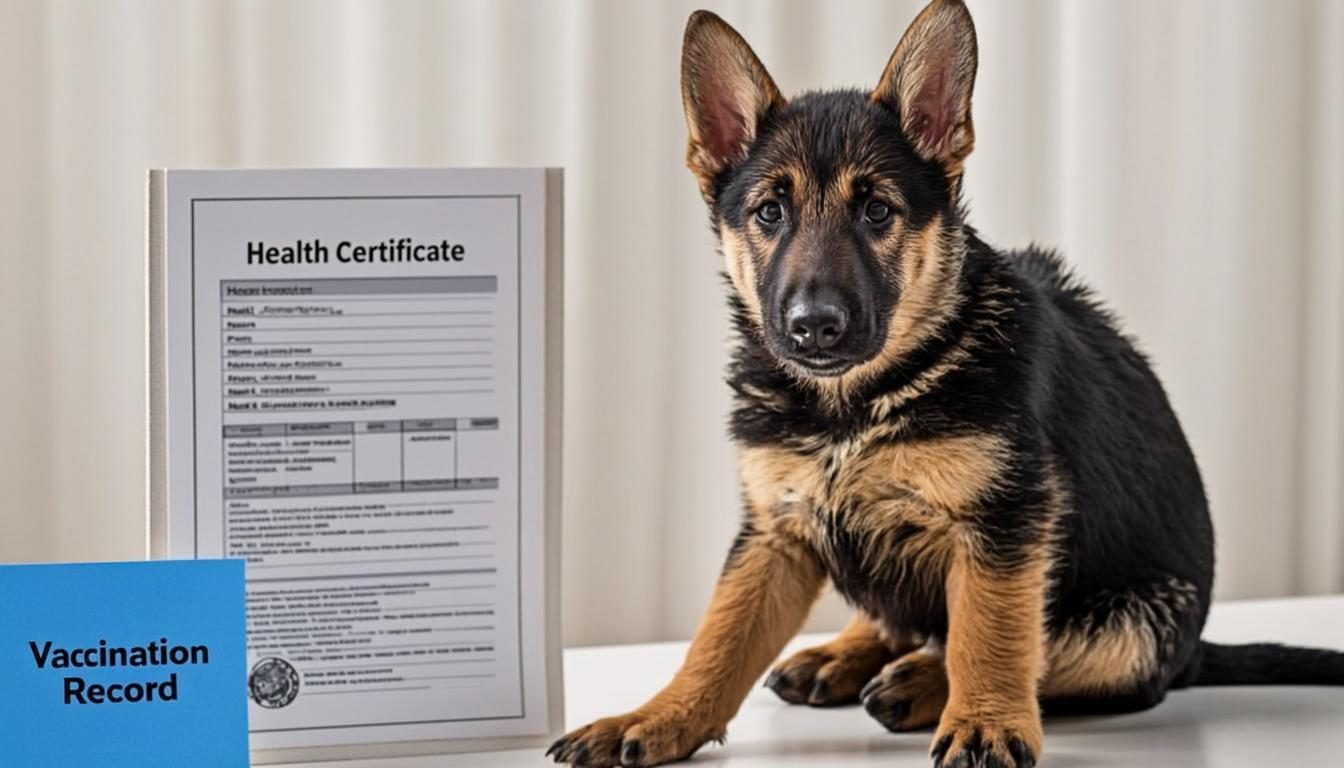
Paperwork separates a real German Shepherd puppy from a story. Every German Shepherd puppy from a serious program leaves with vaccination dates, deworming history and the parents’ health certificates in writing – three pages that say more about the German Shepherd puppy than any photo ever will. No honest breeder of a German Shepherd puppy hesitates to provide them – ask before you purchase a German Shepherd puppy, not after.
Hip dysplasia is the condition every Shepherd buyer must understand. It can be passed down through a litter even when parents look sound, which is exactly why formal evaluation exists: the OFA rates registered dogs based on X-rays of the joint structure, and any dog prone to hip dysplasia should not be bred. You should never buy a dog from someone who cannot produce OFA or PennHIP documentation for both parents — alongside elbow clearances, current cardiac evaluation, and ideally degenerative myelopathy (DM) DNA status for both lines.
Ask for the puppy’s vaccination and deworming record with dates, and confirm the puppy stays with its litter until at least eight weeks. Litters separated earlier miss critical bite-inhibition lessons, and the behavioral debt comes home with the puppy.
How to Assess a Puppy’s Health at the Visit
The next stage is scrutinizing the individual puppy. Eyes should be bright and attentive, gums pink and healthy, and ears clean and free of foreign matter. The puppy should be active but not unduly so — a balanced puppy explores, tumbles, recovers, and comes back to investigate you. Check for a smooth coat without bald patches, a round but not bloated abdomen (pot-bellied appearance often signals worms), and clean rear ends.
When shopping for German Shepherd puppies, also evaluate the puppy’s pedigree. A breeder who is a member of the American Kennel Club community will have family charts showing the puppy’s parents and relatives on both sides for several generations. The best breeders gladly show this chart and may even give you a copy for your records.
Contracts, Health Guarantees, and Paperwork
The contract is where serious breeders separate themselves from sellers. A legitimate German Shepherd purchase agreement includes: the health guarantee (typically 12–24 months against hip and elbow dysplasia, sometimes with a replacement-puppy clause), the exact refund or replacement terms, a spay/neuter requirement for pet-quality puppies, and — the hallmark of an ethical program — a mandatory return clause requiring the dog to come back to the breeder if you ever cannot keep it. Breeders who insist on taking their dogs back for life are breeders who care where their bloodlines end up.
Paperwork to collect at or after pickup: registration application (AKC or equivalent), vaccination and deworming records, the written guarantee signed by both parties, and feeding instructions for the transition home. Registration papers can legitimately arrive after proof of spay/neuter for pet puppies — delayed papers are fine, absent papers with a “purebred” claim are not.
Online Scams: How Not to Lose Your Deposit
Patience is the cheapest insurance in this whole process. Litters of German Shepherd puppy candidates appear year-round, but the right German Shepherd puppy is worth waiting eight weeks for, and breeders who purchase a German Shepherd puppy to flip it the same weekend never ask you to wait. If a deal cannot survive a two-week pause, walk away.
Puppy scams cluster around this exact search phrase, so protect the money before you fall for the photos. The rules are simple and non-negotiable: never pay by wire transfer, gift card, crypto, or peer-to-peer apps; never accept “the puppy is at the airport, pay the shipping fee to release it” (the classic ransom scam — real shippers are booked by breeders in advance); and never buy sight unseen from a seller who refuses a live video call showing the puppy with its mother, on request, at an unscripted moment.
Reverse-image-search the photos — stolen litter photos are reused for years. If the price is dramatically below market, assume the deal is the product: real health testing costs real money, and nobody sells a properly bred Shepherd at half price.
Bringing Your Puppy Home: The First 48 Hours
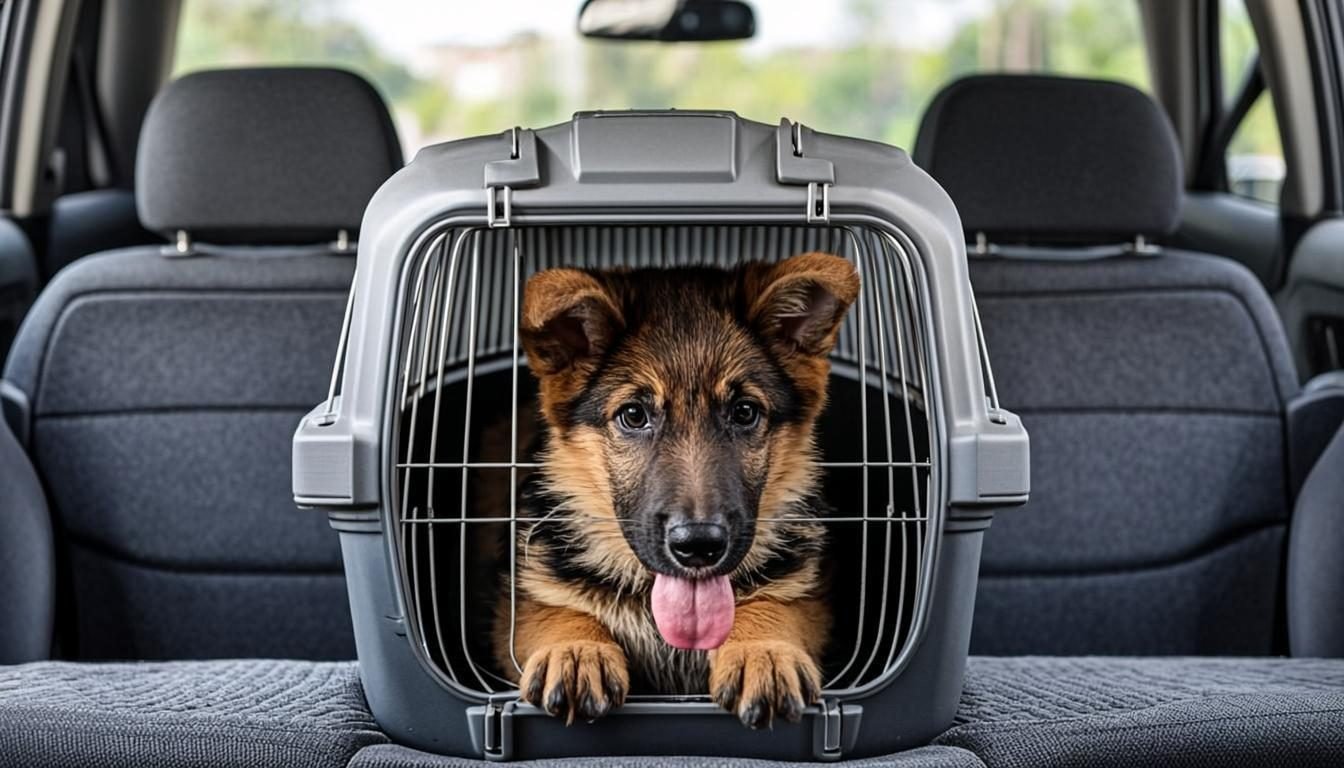
Once you have acquired your puppy, take them to the vet within two days to be de-wormed, verify the vaccination schedule, and establish the health baseline that insurance will want documented.
Set up a quiet corner with a crate before the puppy arrives, keep the first days calm, and start the feeding routine immediately — quantities change month by month during growth, and our German Shepherd puppy feeding chart takes the guesswork out of every stage. Diet quality matters doubly in this breed during the growth year, so our puppy nutrition guide explains which large-breed formulas protect developing joints.
To properly socialize your puppy with other dogs and people, take them on walks, arrange play dates with calm, vaccinated dogs, and — if permitted — bring them into pet-friendly shops while they are small enough to carry. Every positive encounter before 16 weeks is a deposit into the confident adult dog you will live with for the next decade. If you are still comparing local sources, our guide to finding German Shepherd puppies for sale near you covers the breeder-vetting checklist in depth.
A final note on the coat: buyers sometimes pay premiums for rare colors. Before you do, read our profile of the black German Shepherd — pigment changes the look, never the temperament, and health testing matters far more than shade.
What a Responsible Seller Will Ask You
Sellers screen you too, and that is a good sign. When you purchase a German Shepherd puppy from a responsible source, expect questions about your yard, your work schedule, your experience and your plans for training. A seller who never asks anything will take money from anyone – including the next family that cannot keep their German Shepherd puppy, which is exactly how shelter intakes start.
Flip the script and use the seller’s questions as a quality signal, because ethical programs interview buyers as carefully as buyers interview them. Expect questions about your experience with large breeds, your household (children, other dogs, fenced yard?), your work schedule and who handles the puppy during the day, and your plans for training and exercise. Several strong breeders will ask for a vet reference if you have owned dogs before, and some working-line kennels require an interview or even a training club affiliation before placing a serious-line puppy.
Treat an interrogation as a green flag, not an obstacle: a breeder who fights for their puppies’ placements is a breeder whose health guarantees are worth having. Conversely, a seller who answers no questions and only discusses payment has told you everything you need to know. Walk away without regret — the right source exists, and the search is far cheaper than the wrong dog.
Timing: When German Shepherd Puppies Are Actually Available
Supply is seasonal whether you buy or adopt. Most breeders plan one to two litters per year, so healthy puppies often wait-listed months in advance — contact breeders before you are emotionally ready to bring a puppy home, not after. Shelters and rescues see intake spikes in late spring and early summer (accidental litters and impulse “pandemic puppies” surrendered by fall), making those windows the best hunting for adoption.
If you need a puppy by a specific date — a child’s birthday being the classic example — be honest with breeders about your timeline and remember that the right answer is sometimes “wait for the next litter.” A puppy matched to your home is worth three months of patience; a puppy bought to meet a deadline is a decade-long compromise.
FAQs About Purchasing a German Shepherd Puppy
Q: Where is the best place to purchase a German Shepherd puppy?
For most families: a reputable breeder with health-tested parents, or a breed-specific rescue for an adult. Both give you the most reliable information about what you are bringing home.
Q: How much should a deposit be?
Typically $200–$500, always with a written receipt stating what happens if no suitable puppy is born or the deal falls through. Large “full payment upfront” demands are a scam signature.
Q: Is it safe to buy a German Shepherd puppy online?
Only with a live video visit, traceable payment, verifiable health documents, and ideally an in-person pickup. Purely online transactions with shipped puppies are where the fraud concentrates.
Q: What age puppy should I bring home?
8–10 weeks. Earlier separations are worse for behavior; much later misses the primary socialization window you control at home.
Q: Should I buy from a pet store?
Generally no — pet-store puppies overwhelmingly originate from high-volume breeding operations, and the health paperwork rarely survives scrutiny. The store’s warmth toward you does not change the supply chain behind the glass.
Q: How do I verify a breeder is legitimate?
Cross-check three independent signals: OFA database results for the parents, a real conversation with references from previous buyers, and a physical visit (or live video) showing the mother and living conditions.
Key Takeaways on Where to Purchase a German Shepherd Puppy
Where you purchase a German Shepherd puppy decides how that puppy lives for the next decade. Buy from a health-testing breeder, adopt through a breed-specific rescue, or use a service-dog program – and skip pet stores, classified ads and any German Shepherd puppy seller who wants a deposit before you meet the litter. Paperwork, patience and a vet visit within 48 hours turn the purchase of a German Shepherd puppy into the start of a great decade. A well-bred German Shepherd puppy rewards the wait for years, and the day you purchase a German Shepherd puppy from a real professional, you will feel the difference immediately.
Sources and Further Reading
The following authoritative resources provide additional context for the guidance in this article. They do not replace advice from a qualified veterinarian or behavior professional.