
Ask ten German Shepherd breeders whether “American” and “German” Shepherds are the same breed and you will start an argument. Kennel clubs say yes — one breed, one standard, one registry. Working-dog people say no — a century of divergent selection has produced two very different dogs that happen to share a name. Both camps have a point, and understanding the distinction matters enormously when you shop for a puppy, because the line a breeder produces predicts the dog’s structure, temperament, health outlook, and price. This guide explains where the lines came from, how they differ, and how to tell what you are actually being sold.
Both camps are describing one German Shepherd dog breed seen through different priorities. The German Shepherd dog breed was founded on working ability, and the German lines guard that charter, while American lines refined a show silhouette. This guide walks the German Shepherd dog breed’s two directions so you can pick with open eyes.
For background on the breed itself, start with our complete German Shepherd Dog overview, then return here for the line-by-line comparison.
Table of Contents
- Origins: One German Shepherd Dog Breed, One Standard
- How One Breed Became Two Types
- German vs. American Lines at a Glance
- American-Bred Lines in Depth
- German-Bred Lines in Depth
- The Other Lines Worth Knowing
- Which Line Fits Your Home?
- How to Verify What a Breeder Is Actually Selling
- Price and Availability in the United States
- Training Implications by Line
- Key Takeaways on the German Shepherd Dog Breed’s Two Lines
Origins: One German Shepherd Dog Breed, One Standard
In 1899, Captain Max von Stephanitz attended a regional dog show in western Germany, saw a herding dog named Hektor Linksrhein that matched his ideal, and bought him on the spot.
Renamed Horand von Grafrath, he became the first entry in the stud book of the Verein für Deutsche Schäferhunde (SV), the club von Stephanitz founded and led as president of the breeding authority for the breed. The first breed standard he wrote placed practicality and intelligence at its center: a dog of consistent structure, dependable character, and genuine working ability.
German Shepherd dogs were bred to herd sheep across long distances, which demands a specific physical profile. Herding dogs must trot on and off for hours, so they need exceptional endurance, mobility, vigor, and tenacity — a marathon runner’s build, not a sprinter’s. Character was equally codified: according to the breed standard, a German Shepherd must be bold, confident, alert, attentive, trainable, loyal, and incorruptible, with the courage and fighting instinct to protect a flock from predators. Those requirements built the template every later line either preserved or abandoned.
How One Breed Became Two Types
Until the 1940s, American and German Shepherds were essentially the same population — imports from German bloodlines dominated American breeding. Three forces then split them apart. First, the World Wars made anything German unpopular; the breed was briefly renamed the “Alsatian” in Britain and parts of the United States, and direct imports dried up. Second, with fresh bloodlines cut off, American breeders began selecting for the show ring alone, and the AKC system — which judges appearance, never working ability — rewarded a particular dramatic silhouette. Third, Germany’s SV club went the opposite direction, hardening its rules so that no dog could be bred without proving it could work.
By the 1970s the difference was obvious at a glance, and it has only widened since. Neither line is “wrong” — they are optimized for different goals — but they are no longer interchangeable.
German vs. American Lines at a Glance
| Feature | German Lines | American Lines |
|---|---|---|
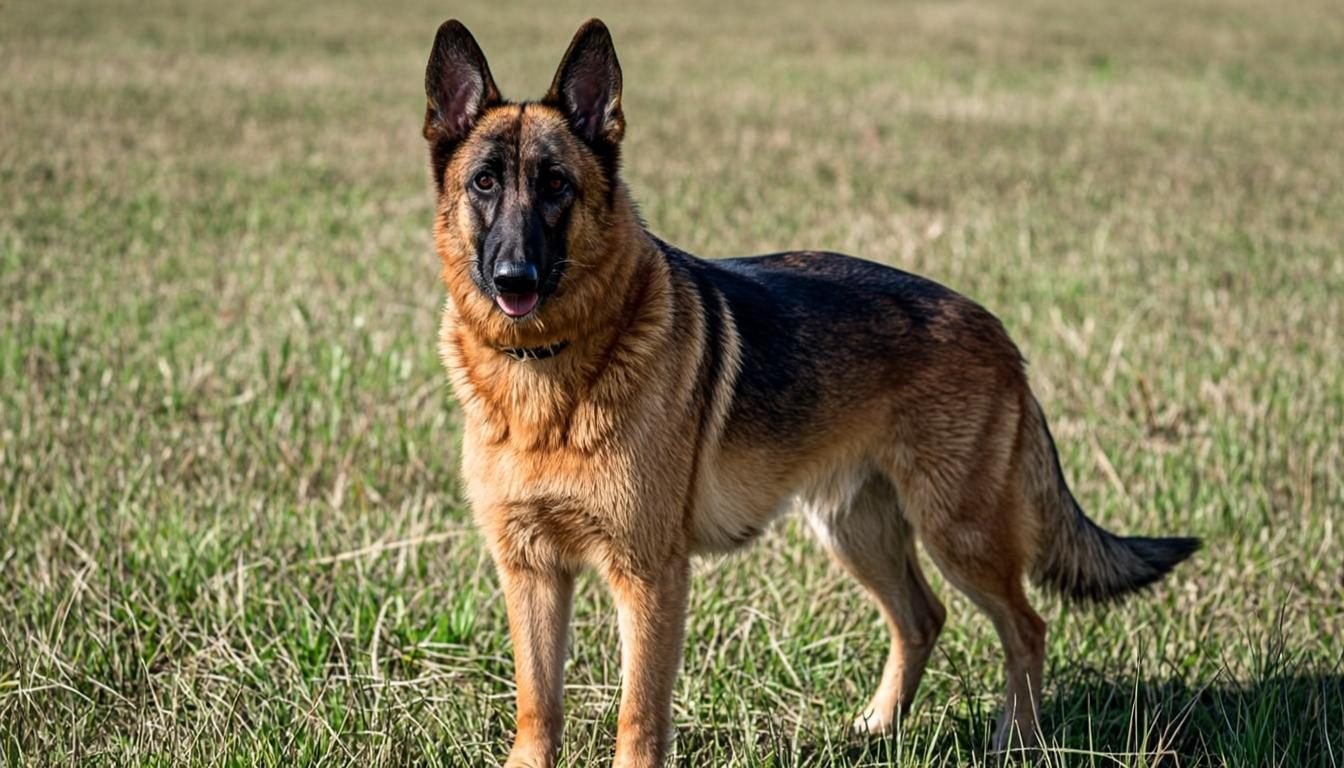
| Topline (back) | Longer, more horizontal back | Steeply downward-sloping back from head to tail base |
| Hindquarter angulation | Moderate, functional | Extreme, show-prized |
| Typical size | Often slightly larger and heavier-boned | Slightly smaller, finer-boned |
| Color tendency | Richer, darker sable and black-and-red | Lighter tan, black-and-silver common |
| Temperament selection | Working courage and nerves required to breed | Softer, more companion-oriented; drive varies widely |
| Breeding requirements | SV: working title, breed survey, hip/elbow clearance mandatory | AKC: health testing optional, enforced by breeder choice only |
| Hip dysplasia risk | Lower on average, thanks to universal screening | Higher on average, testing uneven |
| Typical US puppy price | $2,500–$5,000+ for imports | $800–$2,500 |
American-Bred Lines in Depth
Temperament is where the German Shepherd dog breed’s split feels personal. German lines test courage and hardness on the field before breeding, so a puppy from that German Shepherd dog breed segment arrives confident and pushy. American lines soften those edges, and many owners call the result the easiest German Shepherd dog breed version to live with in a busy household.
The most visible distinction is posture. German-bred Shepherds keep a more horizontal back; American-style German Shepherds show a downward-angled topline that begins at the head and terminates at the tail base, with hip joints acutely inclined. That exaggerated hindquarter assembly produces the long, flowing, ground-eating stride that American show judges reward with ribbons.
But this is not a question of taste — it is a question of health. Extreme angulation is not a natural position for the breed, and it is associated with a higher risk of hip problems and abnormal gait mechanics. German lines show a decreased incidence of hip issues, owing mainly to decades of mandatory screening and the SV’s refusal to let structure drift away from function.
American show breeders selecting for severe angulation have, in the harshest assessments of working-dog breeders, produced some lines short on the drive, nerves, and working ability the breed was founded to carry. That generalization deserves its caveat: plenty of American breeders health-test and temperament-test seriously, and a well-bred American Shepherd from such a program is a wonderful, calmer family companion. The problem is systemic, not universal — the AKC has no authority to enforce a rigorous standard, so buyer diligence does the work regulation does in Germany.
German-Bred Lines in Depth
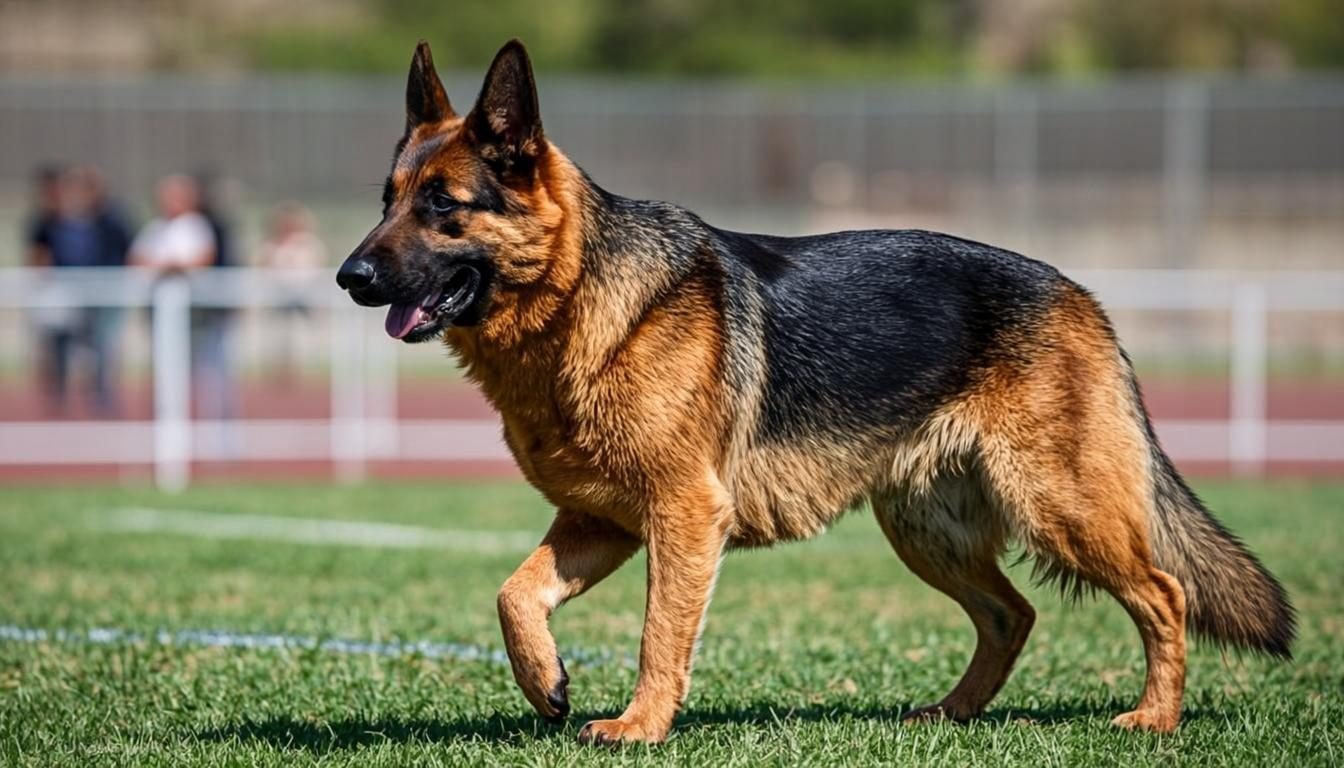
In Germany, the SV functions as a gatekeeper that has scrutinized breeding stock for over a century. Anyone with access to these dogs’ hip ratings and titles can verify them for decades through public breed surveys. To receive breeding clearance, a German Shepherd must pass a Körunung (breed survey) evaluating character and structure, hold a working title (IGP/Schutzhund in tracking, obedience, and protection), and carry certified hip and elbow scores — no titles, no breeding. The result is a dog with a straighter, more functional back, often darker sable coloring, and a temperament selected under pressure: confident, driven, and steady-nerved.
That reliability is exactly why police departments, militaries, and sport handlers worldwide still source their dogs from German and German-descended working bloodlines. The trade-off is intensity: a high-drive German-line dog in a passive household is a dog looking for a second job, and bored working dogs invent destructive employment.
The Other Lines Worth Knowing
The German/American split is the headline, but serious buyers encounter three more labels. West German show lines obey SV rules (titles and health clearances required) while presenting the angulated show silhouette — a middle path with working paperwork and a flashier outline. East German (DDR) lines were developed under the former communist state’s strict breeding program, producing famously robust, dark, intensely driven dogs that survive today in small working kennels. Czech lines, born from the Czechoslovak border-patrol breeding program, lean the hardest toward working traits: lighter, wiry, relentless.
Our guide to the working line German Shepherd covers what owning one of these dogs actually demands, and the broader overview of German Shepherd types maps the full family tree.
Which Line Fits Your Home?
Match the line to the life, not the legend. For a family companion with moderate activity needs, a well-bred American show line from health-tested parents is often the pleasantest choice: softer energy, gentler edge, lower price. For sport, competition, protection work, or an owner who genuinely wants a project, German working lines deliver the focus and courage the breed was invented for — with the expectation of daily training and an outlet for drive.
For buyers who want working paperwork with a slightly softer presentation, West German show lines split the difference. And for households drawn to the breed’s look without its intensity, it is fair to say so out loud: other breeds, or our overview of whether a German Shepherd suits a home setting, may serve better than a working-bred puppy placed in the wrong context.
Whatever the line, coat color is cosmetic. The genetics behind the solid black and white coats appear in both American and European pedigrees, and shade predicts nothing about temperament or health — structure and testing do.
How to Verify What a Breeder Is Actually Selling
“German lines” is one of the most abused phrases in American puppy marketing. Verify three things before believing it. First, pedigree paperwork: real German imports trace to SV-registered parents with verifiable names in the German stud book; ask for the pedigree and cross-check it, not just a kennel name on a website. Second, titles: parents should hold listed working or show titles (IGP1–3, V or VA conformation ratings) you can look up.
Third, health documentation: OFA or German “a-stamp” hip and elbow results for both parents, verified in the public OFA database using the dogs’ registered names. A breeder who cannot produce all three is selling a label, not a line. Our checklist for evaluating German Shepherd breeders near you covers the visit itself — meeting the mother, seeing the living conditions, and the contract terms that separate serious programs from sellers.
Price and Availability in the United States
Budget honestly before you fall in love. Imported German lines of the German Shepherd dog breed cost more up front and in travel, yet their working pedigree paperwork is the industry’s gold standard. American lines of the German Shepherd dog breed are easier to find and cheaper, provided you verify health clearances instead of trusting the label.
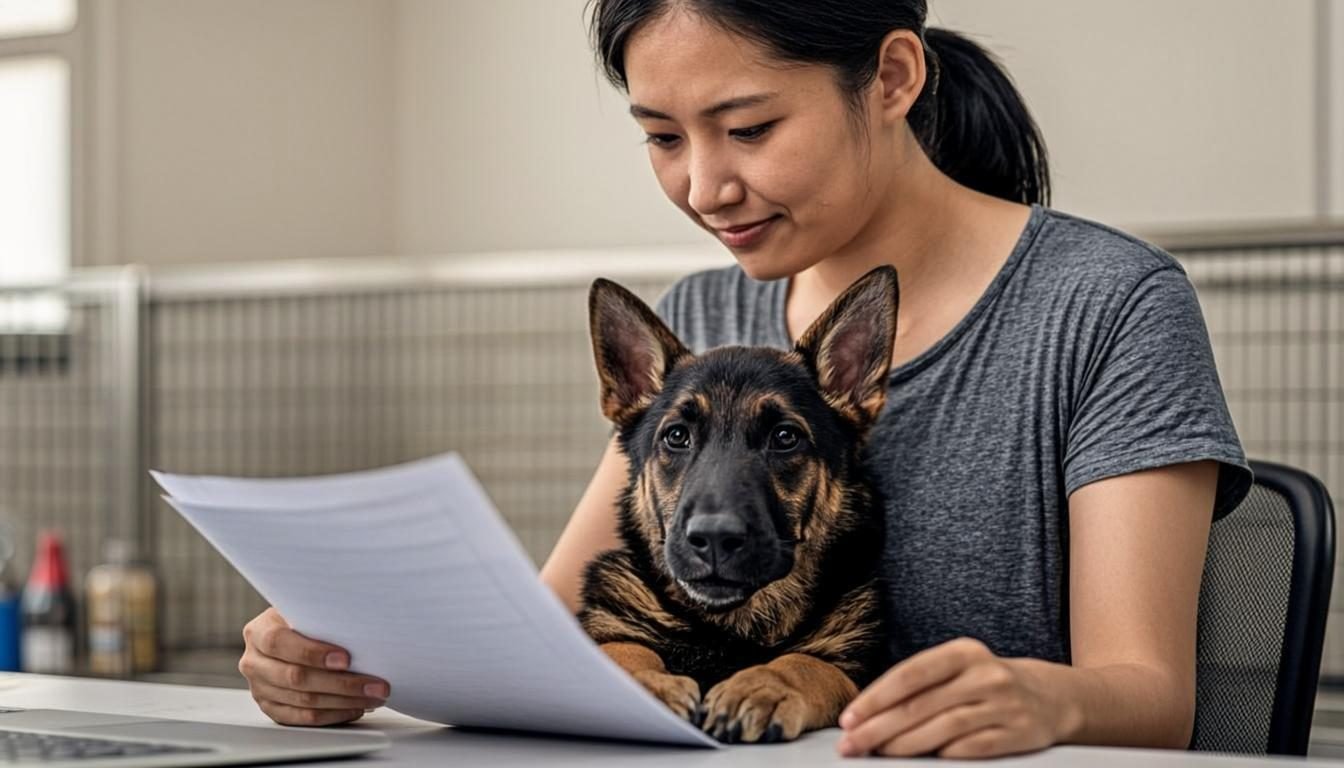
American-line puppies are plentiful and comparatively affordable, typically $800–$2,500, because the breeding pool is large and unregulated. True German imports and working-line puppies from titled parents cost $2,500–$5,000 or more, reflecting the screening expenses behind them — and occasionally waitlists run a year for a specific pairing. The price gap is not vanity; it is the cost of hips X-rayed, titles earned, and breed surveys passed. Buying cheap from untested parents and paying later in veterinary bills is the most expensive bargain in dogs, a pattern our German Shepherd puppy cost guide quantifies in detail.
Training Implications by Line
The line you choose quietly writes your training plan. American show-line dogs generally need firm-but-gentle consistency and moderate daily work; they train beautifully for obedience and companionship and rarely demand more. German working-line dogs require structured training from day one — not because they are difficult, but because their intelligence and drive need direction the way a gifted athlete needs a coach.
Handlers of working lines typically build training around three pillars: obedience that becomes automatic under distraction, an outlet like IGP, nose work, or advanced fetch-and-search games that satisfies the brain, and impulse control exercises that channel protective instincts into controllable behavior. The difference shows most in the second year: the show-line dog settles into household rhythm, while the working-line dog asks for a job every morning and takes your answer personally. Match the intensity to your actual life, not your aspirational one — the right line is the one whose energy you can sustain for a decade.
Q: Can a German working-line dog be a couch pet?
For a few hours a day, absolutely — well-conditioned working lines settle remarkably well indoors. But they need their “work” (training, sport, or intense exercise) most days, or the settling stops being voluntary.
Q: Are American lines harder to train?
No — they are usually easier for pet homes. The distinction is drive, not intelligence: both lines learn fast, but working lines need more structured outlets for what they learn.
Key Takeaways on the German Shepherd Dog Breed’s Two Lines
The German Shepherd dog breed never split into two breeds – it split into two philosophies. German lines keep the working test mandatory; American lines chase the show silhouette; both can be wonderful companions in the right home. Verify pedigrees, demand health scores, and match drive to your calendar, and the German Shepherd dog breed delivers whatever role your life needs.
Frequently Asked Questions
Q: Are American and German Shepherds the same breed?
Legally yes — the same registry and standard. In practice, a century of different selection has produced measurably different structure, temperament tendencies, and health profiles.
Q: Which line is healthier?
German lines average better hips and elbows because the SV makes screening mandatory before breeding. American-line health depends entirely on the individual breeder’s testing discipline — which is why verifying OFA certificates matters more than the label.
Q: Is the sloped back of American show lines harmful?
Extreme angulation is associated with gait abnormalities and elevated hip-dysplasia risk. Moderate slope is normal for the breed; the extreme silhouette that wins in the ring is what critics — and much of the veterinary literature — question.
Q: Which line makes a better family dog?
For most households, a calm American or West German show-line dog from tested, even-tempered parents. German working lines excel with active, training-oriented owners who can channel the drive.
Q: How do I know if a puppy is really from German lines?
Demand the pedigree, the parents’ titles, and verified hip/elbow scores. Real imports have SV registration you can trace; kennel-name marketing without paperwork means nothing.
Q: Do the lines differ in lifespan?
Both average 7–10 years. Line-to-line lifespan differences are smaller than the effects of weight management, screening, and preventive care — see our German Shepherd lifespan guide for the factors owners actually control.
Sources and Further Reading
The following authoritative resources provide additional context for the guidance in this article. They do not replace advice from a qualified veterinarian or behavior professional.