
If you are looking for a stunning and intelligent companion with the German Shepherd’s ability and a distinctly softer heart, the White Swiss Shepherd — the Berger Blanc Suisse — deserves your full attention. This is not simply a German Shepherd painted white: it is a separately recognized breed with its own standard, its own temperament profile, and a growing global following among families who want a watchful, trainable, gorgeous dog without the sharpest edges of the working-line German Shepherd. This guide covers the breed’s unusual history, how it differs from its white American cousins, what living with one actually costs and requires, and how to decide whether this remarkable dog fits your home.
Table of Contents
- Origin and History: The Coat Color That Built a Breed
- White Swiss Shepherd vs. White German Shepherd vs. Standard GSD
- Appearance and Physical Traits
- Temperament: The Softer Guardian
- Training and Intelligence
- Exercise and Grooming
- Health and Lifespan
- Is a White Swiss Shepherd Right for You?
- Living With the Breed: What Owners Report Year One
- Key Takeaways: White Swiss Shepherd
- Frequently Asked Questions
Origin and History: The Coat Color That Built a Breed
The White Swiss Shepherd originates from Switzerland — but its story begins in Germany, in the founding population of the German Shepherd itself. The recessive gene that produces the white coat was present in the breed’s earliest generations; white-coated dogs appeared in early German registrations, and grandmothers of famous show lines carried the trait silently for decades. In 1933, white was dropped from the German standard, and attitudes hardened afterward — by the 1960s, breeding authorities on both continents treated the white coat as a fault to be eliminated, with the American Kennel Club disqualifying white from conformation competition in 1968.
American fanciers kept the white dogs alive as a dedicated sub-population, and it was from that gene pool that Switzerland rebuilt the variety as its own breed. The pivotal dog was an American-born white male named Lobo, imported to Switzerland in 1966–67, whose descendants — together with other white imports — formed the foundation of the Swiss breeding program.
The Swiss Kennel Club recognized the Berger Blanc Suisse as an independent breed in 1991, and the Fédération Cynologique Internationale (FCI) followed with full international recognition in 2002, placing the breed in Group 1 alongside the herding breeds. The United Kennel Club recognized it in 1999 as the White Shepherd; the AKC still lists the White Swiss Shepherd in its Foundation Stock Service, on the path toward full recognition. The result of that century-long journey: a breed identical in ancestry to the German Shepherd, preserved and refined under a separate standard in Europe.
White Swiss Shepherd vs. White German Shepherd vs. Standard GSD
Buyers constantly ask whether these are three dogs or one. The honest answer depends on the paperwork and the continent:
| Feature | White Swiss Shepherd (Berger Blanc Suisse) | White German Shepherd (US lines) | Standard German Shepherd |
|---|---|---|---|
| Recognition | FCI-recognized independent breed (2002) | AKC-registerable but conformation-disqualified | Fully recognized worldwide |
| Standard emphasis | Moderate structure, no extreme angulation | Varies by breeder; often American show type | Working or show lines, per program |
| Temperament tendency | Softer, more sensitive, people-focused | Typically calmer than working GSDs | Confident, driven; sharpest edges of the three |
| Typical US puppy price | $1,500–$3,000 (rare) | $800–$2,000 | $800–$5,000 depending on lines |
In practice, a quality White Swiss Shepherd from European or FCI-style lines is the most predictably bred of the white dogs, because the standard explicitly forbids the extreme angulation that has troubled American show breeding. Our profile of the White German Shepherd covers the American variety in depth, and the German Shepherd overview grounds the family tree.
Appearance and Physical Traits
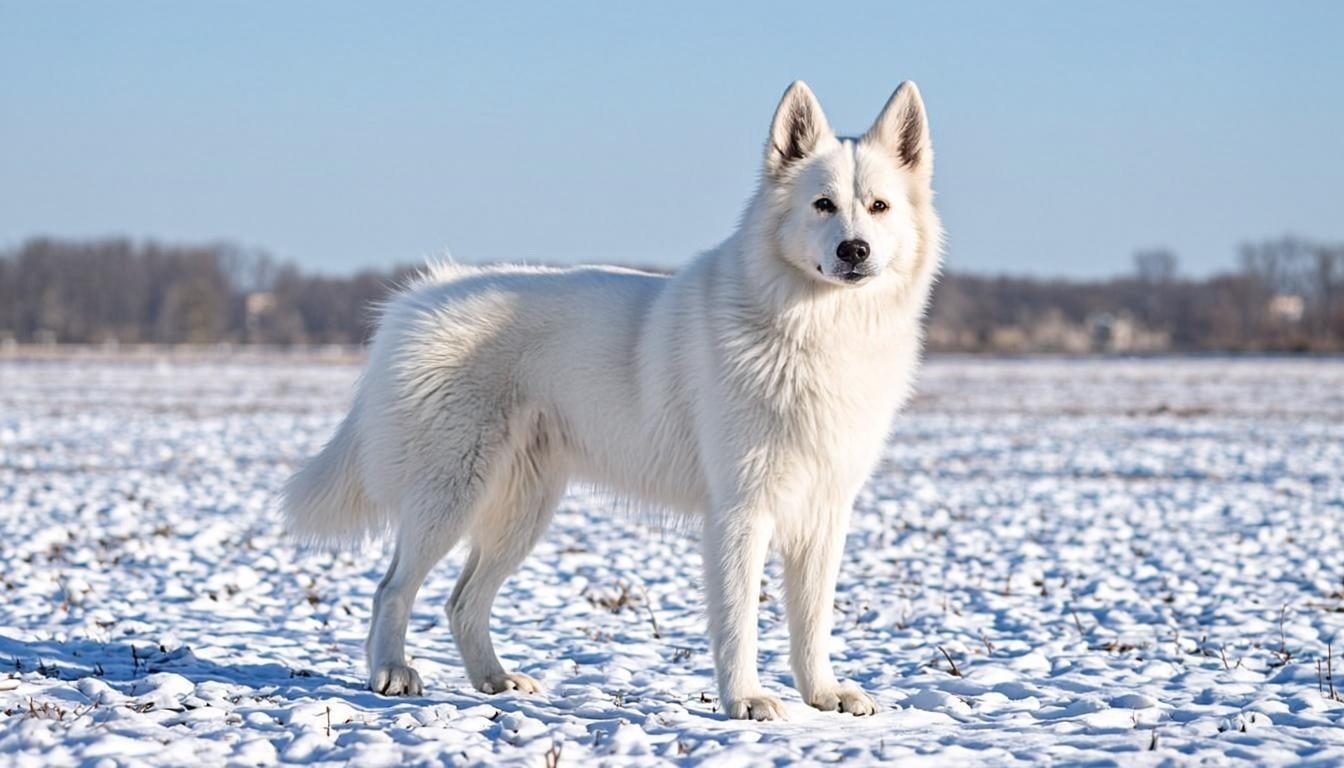
The White Swiss Shepherd is a medium to large-sized dog with a well-muscled body and a proud, athletic posture. Height runs 22–26 inches at the shoulder with weight between roughly 50 and 85 pounds, males noticeably larger than females. The weather-resistant double coat is dense, medium to long, with a mane at the neck and feathering on the legs — and its snow-white color is the breed’s signature.
What serious fanciers actually evaluate, however, is pigment: the nose, eyelids, lips, and pads should be jet black, framing dark, almond-shaped eyes that range from dark to medium brown. Black pigment on white coat is what gives the breed its striking, clean outline; washed-out noses or light eyes are faults for a reason.
Ears are erect and mobile, the tail bushy and carried low at rest, and the overall silhouette balanced rather than exaggerated — a dog that should look like it could herd all day, because structurally it could.
Temperament: The Softer Guardian
Around strangers the contrast sharpens. A White Swiss Shepherd watches new people with interest rather than suspicion, and most warm up quickly once the owner signals approval. That makes the breed pleasant in busy households, though it also means socialization must be deliberate – the softness is a gift, but it needs confident handling to become stable adult behavior.
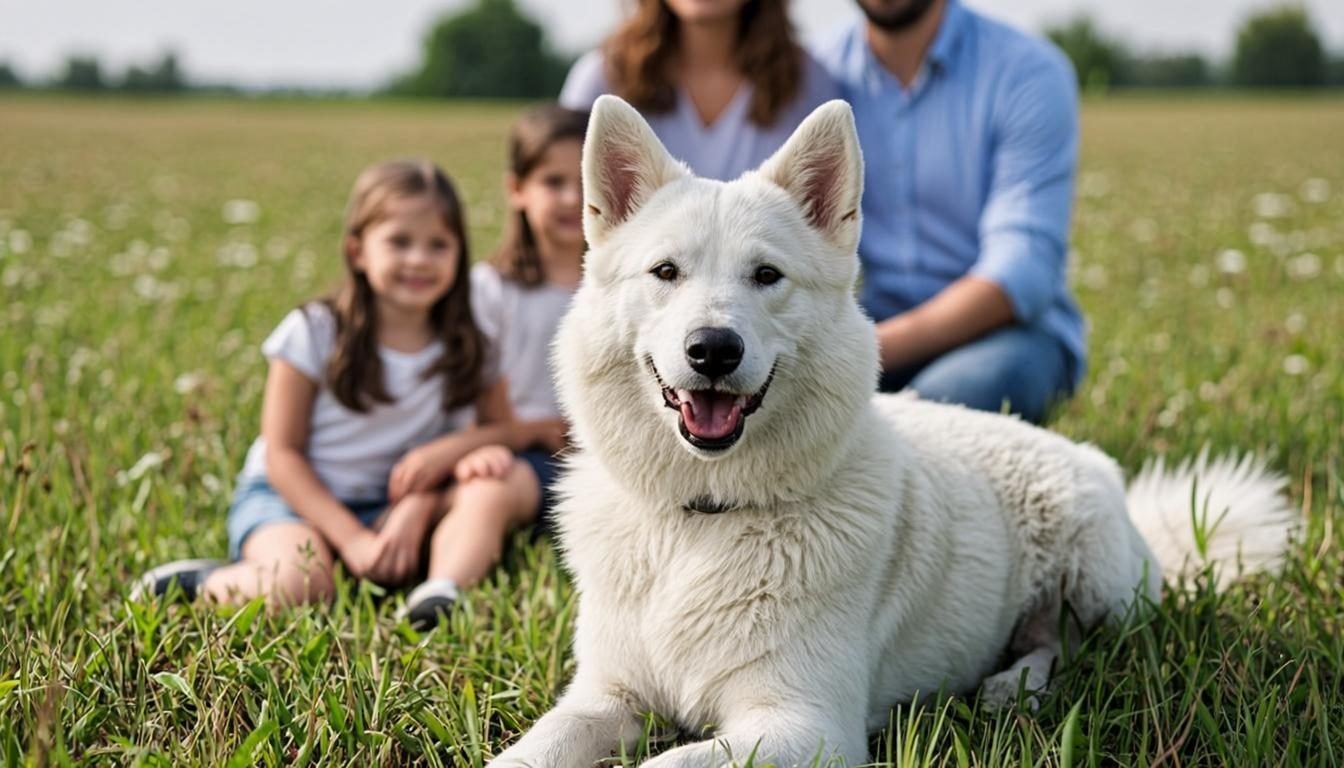
Known for loyalty and devotion, White Swiss Shepherds make excellent family dogs. They are gentle, affectionate, and watchful with their loved ones, forming deep bonds with their owners and aiming to please. The breed’s defining difference from the German Shepherd is emotional softness: White Swiss Shepherds generally carry less defensive sharpness, respond more sensitively to handler correction, and recover more slowly from harsh treatment. That softness is a feature for the right home — it produces the steady, forgiving companion therapy programs prize — and a responsibility for the owner, because heavy-handed training can wound a dog that is trying its heart out for you.
With strangers, expect polite reserve rather than instant friendship: the breed observes, assesses, and then accepts. Watchfulness is genuine — many owners report their White Swiss Shepherd announcing visitors reliably while remaining composed. This is a people-oriented breed that does not do well isolated in a backyard; it wants to be where the family is, doing what the family is doing.
Training and Intelligence
Training sessions land differently with this breed. A White Swiss Shepherd works for partnership, not dominance, so short positive sessions beat long corrections every time. Keep sessions under fifteen minutes, end on a win, and the breed’s natural sensitivity turns into remarkably fast learning.
The White Swiss Shepherd’s intelligence is one of its standout qualities. These dogs are quick learners that thrive on mental stimulation, excelling in obedience, agility, herding, and scent work when training stays positive, consistent, and reward-based. The sensitivity noted above is the training guidance in one sentence: this breed learns fastest from encouragement and shuts down under yelling, so trainers who succeed with working German Shepherds sometimes need to soften their approach here. Short, engaging sessions with clear markers and generous praise bring out the best in the breed — our complete guide to German Shepherd dog training techniques applies directly, with the volume turned down on correction.
Intelligence without a job becomes mischief, so plan for mental exercise: puzzle feeders, scent games, trick training, and rotations of tasks keep the active mind engaged. A mentally satisfied White Swiss Shepherd is famously calm indoors — the breed’s enthusiasts call it the “off switch” they fell in love with.
Exercise and Grooming
Grooming is honest work twice a year and light maintenance the rest of the time. The White Swiss Shepherd blows its undercoat in dramatic fashion each spring and fall – expect a fortnight of daily brushing – while the remaining weeks need only a weekly pass with an undercoat rake. Bathing more than a few times a year strips the coat’s natural weatherproofing.
White Swiss Shepherds are an energetic breed requiring regular exercise to stay physically and mentally sound: an hour or two daily of walks, play, and interactive games like fetch or puzzle toys keeps them content, with extra adventure (hikes, swimming, training classes) welcomed. They suit active families better than apartment-only households without a real exercise plan.
The beautiful white coat requires regular maintenance — more than a short-haired breed, less than its reputation suggests. Weekly brushing with an undercoat rake prevents matting and controls shedding; during the twice-yearly coat blow, daily brushing for two to three weeks keeps the house survivable. Contrary to intuition, white coats clean easily: dried mud brushes out, and baths every 6–8 weeks with a gentle (avoid harsh whitening) shampoo keep the coat bright. Routine dental care, nail trimming, and ear cleaning complete the grooming routine, and our German Shepherd grooming guide covers the shared double-coat techniques in detail.
Health and Lifespan
The White Swiss Shepherd is generally a healthy breed, with a typical lifespan of 12 to 14 years — notably longer than the German Shepherd’s 7–10 average, partly reflecting the moderate structure the standard mandates and the smaller, careful breeding population. Like all shepherd breeds, they can be prone to genetic conditions, chiefly hip and elbow dysplasia, with occasional degenerative myelopathy carriers in lines.
Regular veterinary check-ups, a balanced diet, and proper exercise are crucial, and buyers should require hip/elbow certifications and DM DNA status from both parents — the same screening standard we recommend in the pet insurance guide for the wider breed family. Skin sensitivities and food allergies appear in some lines; a breeder who talks openly about health history is worth ten who talk only about coat color.
Is a White Swiss Shepherd Right for You?
The breed fits owners who want German Shepherd intelligence and presence with a gentler edge: active families, first-time large-breed owners prepared to train, and anyone drawn to the dramatic white coat for reasons beyond aesthetics. It is the wrong match for owners wanting a guard-dog temperament (this is a watchful companion, not a protection dog), for households with no time for daily exercise, and for anyone unwilling to manage shedding seasons.
Expect a puppy price of $1,500–$3,000 in the US — the breed is still rare here, and waitlists are normal — plus the standard first-year budget for a large breed, itemized in our German Shepherd puppy cost guide. Nutrition, feeding schedules, and the transition home follow the same principles as any shepherd: our best food for German Shepherds guide applies, as does the feeding and nutrition guide.
If you are considering adding a White Swiss Shepherd to your family, be prepared for a lifelong journey filled with joy, companionship, and unwavering devotion. Owning one is not only a privilege but a responsibility — to provide the training, exercise, and care this intelligent breed deserves.
Living With the Breed: What Owners Report Year One
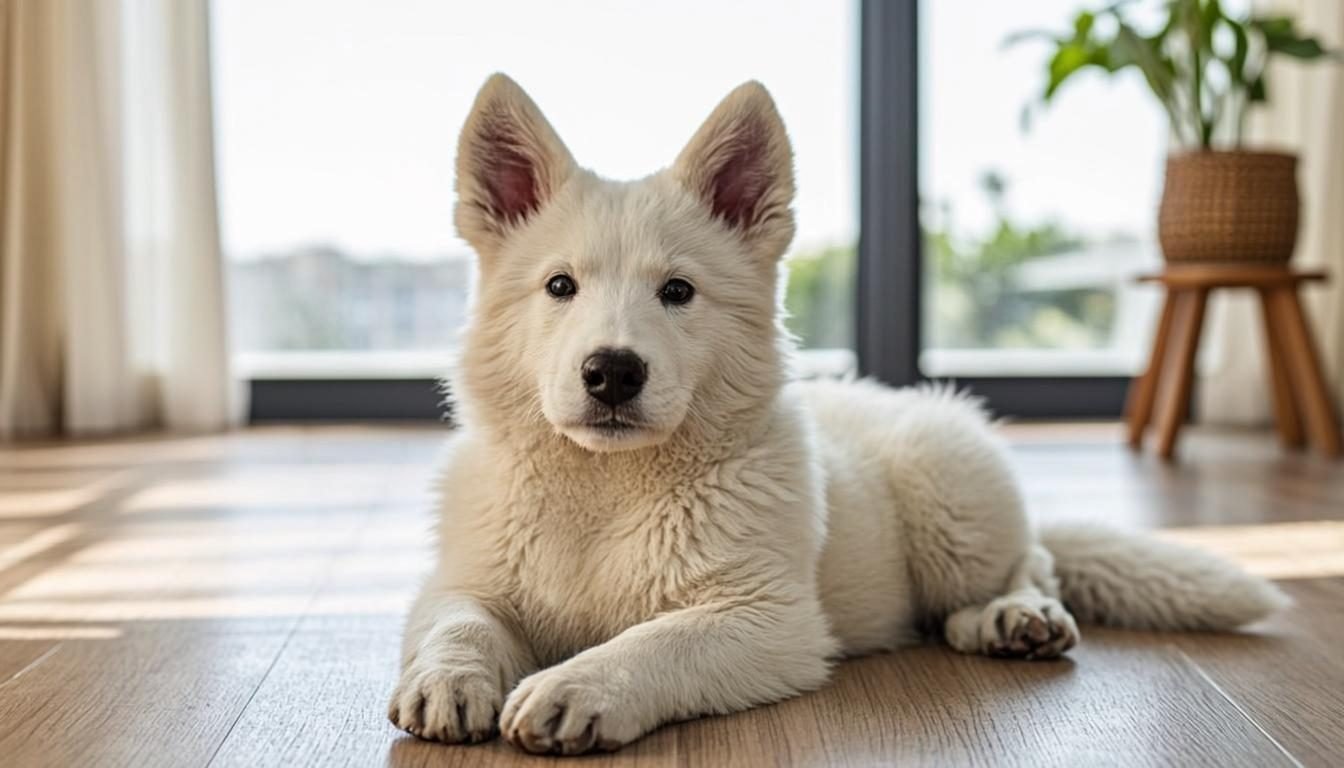
New owners describe a consistent first-year arc. Months one through three are the adjustment window: the sensitive puppy needs gentle structure, and the double coat announces itself on every black garment you own. By months four through eight, the breed’s trainability shows its power — most White Swiss Shepherds master house manners, loose-leash basics, and a solid recall faster than their owners expected, provided sessions stay positive. Adolescence brings the same soft regression it brings any shepherd, and the breed’s sensitivity means calm consistency works where correction fails.
The recurring theme in owner reports is the “velcro effect”: this is a dog that positions itself in every room you occupy and reads household mood with uncanny accuracy. Households that embrace the closeness describe the breed as the most person-attuned dog they have owned; households that expected an independent yard dog learn quickly to rehome their expectations — or meet them. Plan the first year around partnership and you will understand why the Berger Blanc Suisse has moved from curiosity to sought-after companion in barely two decades of international recognition.
Q: Do White Swiss Shepherds bark on command or guard by instinct?
They alert reliably — announcing strangers is instinctive — but they are not protection-bred dogs. Expect a watchful sentinel, not a guard; anyone wanting true protection training should look to working German Shepherd lines instead.
Key Takeaways: White Swiss Shepherd
The White Swiss Shepherd is a recognized breed of its own – FCI-listed, selectively bred for a softer edge and steady nerves. It offers German Shepherd intelligence in a gentler package, thrives on partnership-based training, and suits families who want a capable guardian that greets guests before guarding them. Health-tested lines and daily exercise remain non-negotiable.
Frequently Asked Questions
Q: Are White Swiss Shepherds good with children?
A: Yes — White Swiss Shepherds are known for their gentle nature and are usually great with children. Proper socialization and supervision ensure a harmonious bond between dog and child, as with any large breed.
Q: Do White Swiss Shepherds require a lot of exercise?
A: Yes — they are an active breed needing an hour or two of daily activity to fulfill physical and mental needs. Daily walks, playtime, and interactive activities keep them happy and healthy.
Q: Are White Swiss Shepherds suitable for first-time dog owners?
A: They can be — more so than many German Shepherd lines — provided the owner commits to positive-reward-based training and daily exercise. Their sensitivity rewards gentle, consistent guidance and punishes none of it.
Q: What is the difference between a White Swiss Shepherd and a White German Shepherd?
A: Breed recognition and selection emphasis. The White Swiss Shepherd is an FCI-recognized independent breed (Berger Blanc Suisse) bred to a moderate-structure European standard; the American White German Shepherd shares ancestry but registers as a white-coated German Shepherd. Temperamentally, the Swiss breed trends softer and more people-focused.
Q: Do White Swiss Shepherds get along with other pets?
A: With proper socialization and early exposure, yes — many live harmoniously with other pets. Individual temperament and proper introductions still play the crucial role, and small running pets deserve sensible supervision around any herding breed.
Q: Are White Swiss Shepherds prone to excessive barking?
A: They are vocal enough to announce visitors — alert barking is part of the watchful nature — but early training and adequate exercise minimize excessive barking. A “Quiet” cue works well with this eager-to-please breed.
Q: Is the White Swiss Shepherd recognized by the AKC?
A: Not fully — it is listed in the AKC’s Foundation Stock Service, the official stepping stone toward recognition. It is fully recognized internationally by the FCI and in the US by the UKC, which matters most for buyers seeking papers from reputable breeders.
Sources and Further Reading
The following authoritative resources provide additional context for the guidance in this article. They do not replace advice from a qualified veterinarian or behavior professional.