
Affiliate disclosure: this post may contain affiliate links. If you buy through them, we may earn a commission at no extra cost to you. We only recommend products we would feed to our own dogs.
Practical note: Stop grooming if the dog shows pain, persistent skin irritation, bleeding, or strong ear discomfort, and ask a veterinarian for advice rather than attempting to treat a suspected medical problem at home.
German Shepherds are renowned for their intelligence, loyalty, and striking appearance. However, their dense double coat and high-energy temperament make German Shepherd grooming a task that demands expertise, patience, and the right tools. Whether you’re a seasoned owner or a first-time guardian, understanding the nuances of grooming this breed is critical to their health and happiness. This comprehensive guide dives into every facet of German Shepherd grooming — from managing seasonal shedding to building a cooperative grooming partner — ensuring your furry friend stays comfortable and confident year-round.
Table of Contents
- Understanding the German Shepherd's Coat: Your Grooming Foundation
- Essential Tools for Effective German Shepherd Grooming
- Step-by-Step German Shepherd Grooming Routine
- How Often Should You Groom a German Shepherd?
- Tackling Common German Shepherd Grooming Challenges
- Seasonal Shedding: Surviving the Twice-Yearly Coat Blow
- Behavioral Considerations in German Shepherd Grooming
- Health Issues Impacting German Shepherd Grooming
- Professional Grooming vs. DIY: What's Best?
- Grooming a Puppy: Building the Habit From Week One
- Beyond the Coat: Ears, Eyes, and Dental Care
- FAQs About German Shepherd Grooming
- Conclusion: Elevate Your German Shepherd Grooming Game
Understanding the German Shepherd’s Coat: Your Grooming Foundation
The German Shepherd’s double coat — a soft insulating underlayer beneath harsher outer guard hairs — serves as insulation against weather and debris. However, this coat requires meticulous German Shepherd grooming to prevent matting, overheating, and skin issues. Not all Shepherds wear the same coat, and the differences matter for your tool kit and your vacuum cleaner:
| Coat Type | Appearance | Shedding Level | Special Care |
|---|---|---|---|
| Standard (stock coat) | Short-to-medium dense guard hairs | High, seasonal spikes | Weekly rake work, daily during coat blows |
| Plush coat | Thicker, fuller undercoat | Very high | Undercoat rake 2–3x weekly, high-velocity dryer |
| Long coat (stock hair) | Longer, silkier guard hair, no undercoat in some dogs | High but less clumpy | More prone to matting behind ears and in pants |
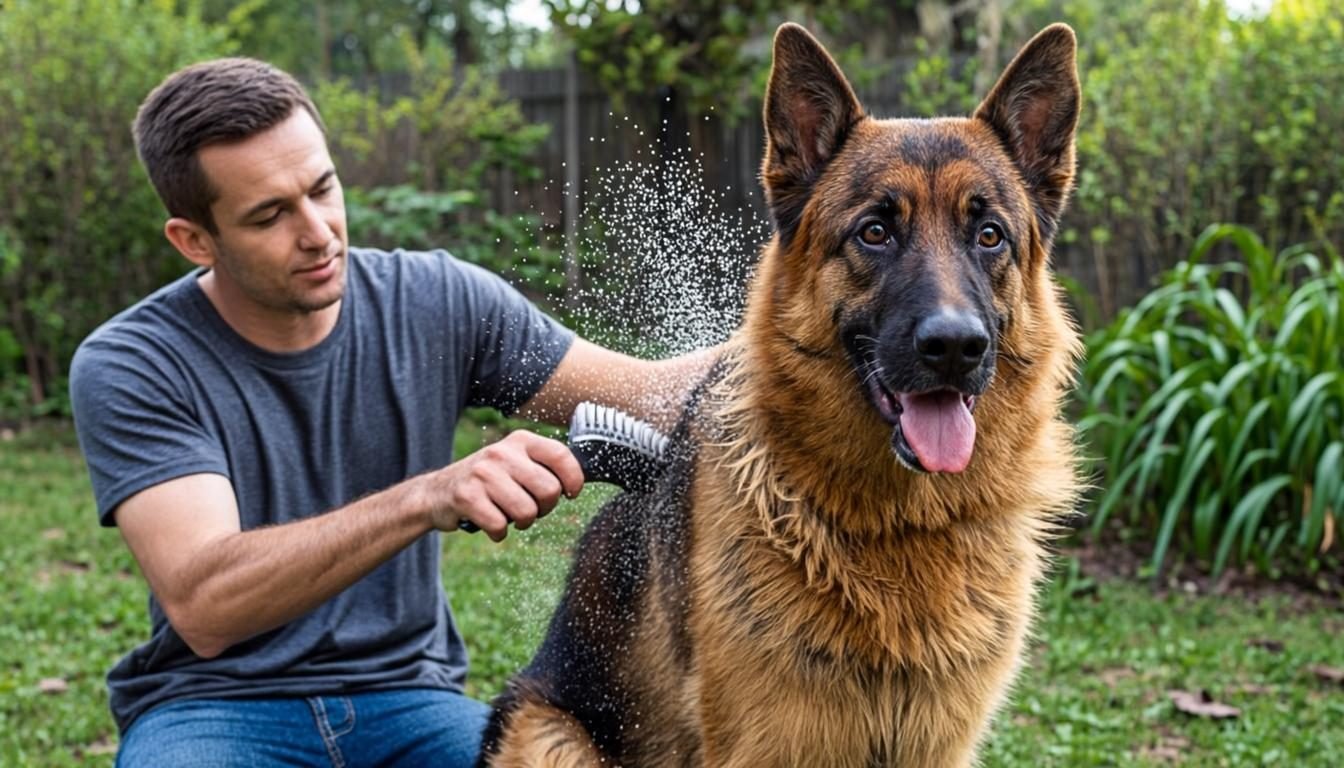
Regular brushing (3–4 times weekly) is non-negotiable, especially during shedding seasons in spring and fall. Tools like the Kong ZoomGroom or Furminator Deshedding Tool are indispensable for reaching the undercoat without scratching the skin beneath.
Pro Tip: Pair grooming sessions with mental stimulation, such as puzzle toys, to keep your Shepherd engaged.
Essential Tools for Effective German Shepherd Grooming
Investing in high-quality tools transforms grooming from a chore to a bonding experience. Key items include:
- Undercoat rake and slicker brush: The Chris Christensen Big G Slicker Brush tackles dense fur without breaking guard hairs.
- Deshedding shampoo: Formulas like Earthbath Shed Control reduce loose hair.
- High-velocity dryer: A Shelandy Pet Dryer speeds up drying while blowing out dead undercoat.
- Nail grinder: Prevent overgrowth with a Dremel 7300-PT.
- Ear cleaner: A veterinary-grade solution such as Virbac Epi-Otic keeps ear canals clear.
Where to buy on Amazon: Chris Christensen Big G Slicker Brush · Earthbath Shed Control Shampoo · SHELANDY Pet Hair Force Dryer · Dremel 7300-PT Nail Grinder · Virbac Epi-Otic Advanced Ear Cleaner
Step-by-Step German Shepherd Grooming Routine
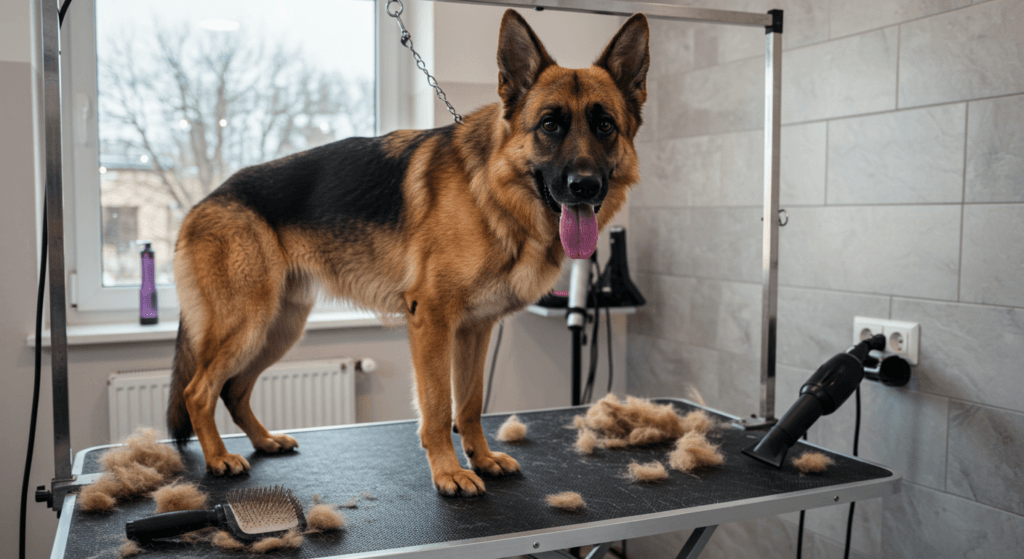
Follow this 7-step routine for a stress-free experience:
- Pre-brush: Remove loose fur with a slicker brush, working from neck to tail with the coat’s grain.
- Bath time: Use lukewarm water and a moisturizing shampoo — Shepherds need baths only every 6–10 weeks unless filthy, because over-bathing strips the oils that waterproof the coat.
- Blow-drying: Section the coat and use a dryer on low heat, always lifting against the grain to blast out dead undercoat.
- Deshedding: Target the undercoat with a rake, focusing on the breeches, ruff, and tail.
- Nail trimming: Grind nails to avoid quicking; a Shepherd’s black nails hide the quick, making a grinder far safer than clippers.
- Ear cleaning: Wipe the visible canal with Virbac Epi-Otic on a cotton pad — never insert anything down the canal.
- Final touch: Apply a conditioning spray for shine and a quick once-over with the slicker.
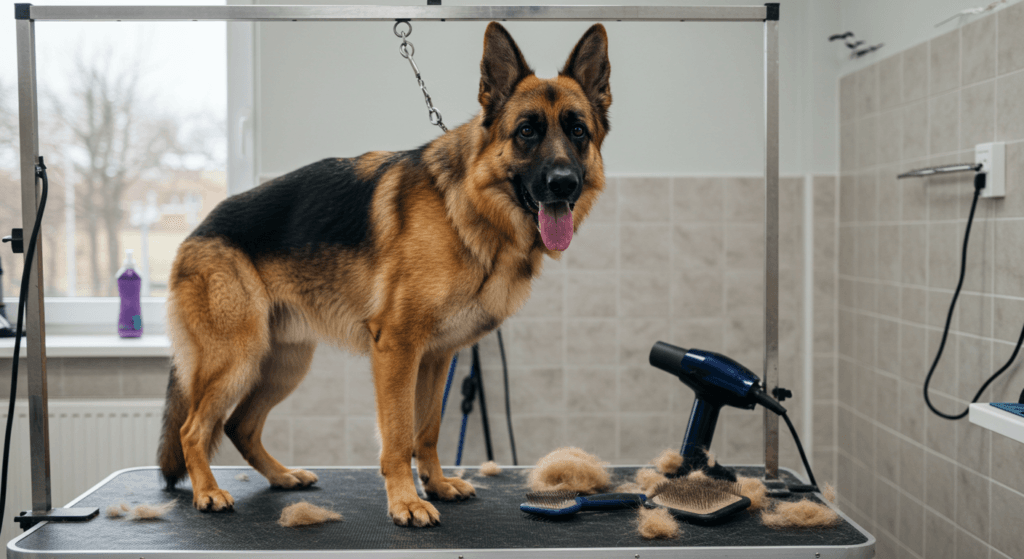
Pro Tip: Reward calm behavior with treats to reinforce positive grooming habits.
How Often Should You Groom a German Shepherd?
Frequency is where most owners go wrong in both directions — brushing daily in winter and vanishing from the routine in summer. Use this calendar as your baseline and adjust to your individual dog:
| Task | Normal Season | Shedding Season (spring/fall) |
|---|---|---|
| Brushing | 3–4 times per week | Daily |
| Bathing | Every 6–10 weeks | Once at the start of each coat blow |
| Nail care | Every 3–4 weeks | Every 3–4 weeks |
| Ear check | Weekly | Weekly |
| Teeth brushing | 3–7 times per week | 3–7 times per week |
Tackling Common German Shepherd Grooming Challenges
Matting and Skin Issues
Mats often form behind ears, in the armpits, and under the “pants.” Use a detangling spray like Cowboy Magic and shave carefully with a T-blade for severe cases — never pull a mat tight against skin, because Shepherd skin tears easily and hot spots follow within days. Check between the toes after every hike: grass awns lodge there and can migrate.
Handling Sensitivity and Grooming Anxiety
German Shepherds may resist grooming due to anxiety or their guarded nature. Counter-condition by introducing tools gradually and pairing sessions with praise. Certified dog behaviorist Sarah Hodgson recommends short, frequent sessions to build trust — five calm minutes daily beat a weekly forty-minute battle, for both of you.
Seasonal Shedding: Surviving the Twice-Yearly Coat Blow
Twice-yearly “coat blows” can leave your home buried in fur. Combat this by:
- Increasing brushing to daily sessions, ten minutes at a time.
- Adding omega-3 supplements to their diet (Nordic Naturals) to keep the new coat’s quality high.
- Using a Rubber Curry Brush during baths to lift dead hair as you shampoo.
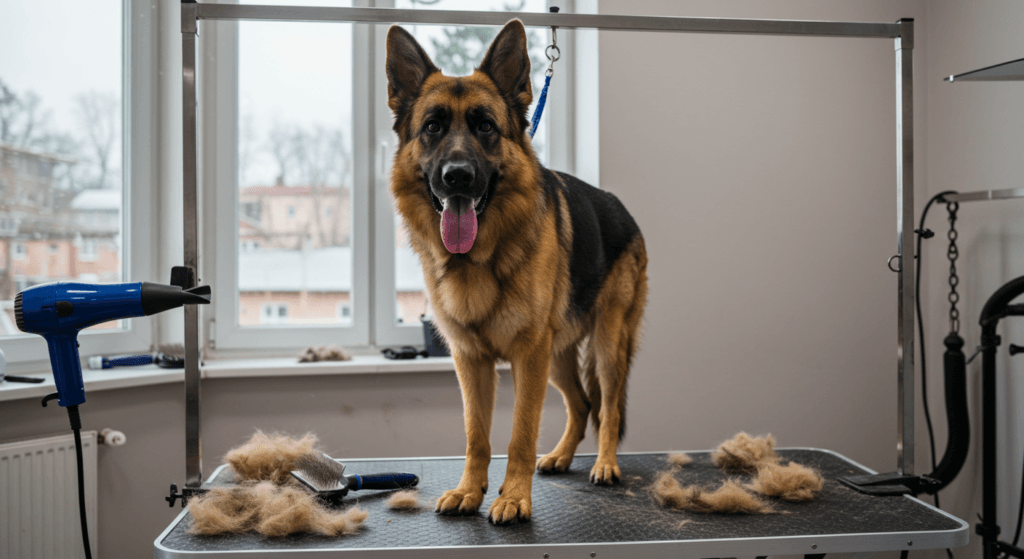
- Finishing each session with the high-velocity dryer outdoors — a single post-bath blow-out can remove a full grocery bag of dead undercoat.
Did You Know? A German Shepherd can shed up to 2.5 cups of fur weekly during peak seasons!
Behavioral Considerations in German Shepherd Grooming
Their protective instincts and high intelligence mean German Shepherds require early socialization to grooming. Enroll puppies in “happy handling” classes and expose them to blow dryers, clippers, and brushes while they are still small enough to hold easily. For reactive adults, consult a fear-free certified groomer like those at The Cooperative Dog — forcing a defensive 80-pound dog through grooming creates associations that take months to undo.
Health Issues Impacting German Shepherd Grooming
Skin conditions sit at the center of grooming-related health complaints. The AKC German Shepherd breed profile lists allergies and pyoderma among the breed’s common issues, and both show up first in the coat. Whenever brushing reveals hot spots, scabs or bald patches, treat it as a health signal – not just a grooming problem.
Underlying conditions like hip dysplasia or allergies can make grooming painful. Schedule regular vet check-ups and opt for padded grooming tables. The Orthopedic Foundation for Animals provides resources on managing breed-specific health risks. Skin problems deserve special attention in this breed: persistent scratching, recurrent ear infections, and thinning patches are often the first visible signs of dietary sensitivity, so our guide to food allergy symptoms in German Shepherds is worth reading before you blame the shampoo.
Coat quality also starts from within. A dull, brittle, or thinning coat on a well-groomed Shepherd usually points to nutrition — the right protein and omega-3 levels transform the coat within eight weeks, and our review of the best food for German Shepherds covers the formulas that deliver it.
Professional Grooming vs. DIY: What’s Best?
While DIY grooming saves costs, professional groomers (find one via the National Dog Groomers Association) offer expertise in handling difficult Shepherds and equipment — those high-velocity dryers alone cost more than a decade of professional bath fees. For medical needs, veterinary groomers are equipped to manage sedation or sensitive skin safely. A sensible hybrid for most households: home maintenance weekly, plus a professional deshedding appointment at the start of each coat blow.
Case Study: Jackson, a 10-year-old German Shepherd featured in a viral grooming video, thrived after switching to a deshedding routine — his owners reported half the fur on the furniture and a visibly calmer dog during sessions.
Grooming a Puppy: Building the Habit From Week One
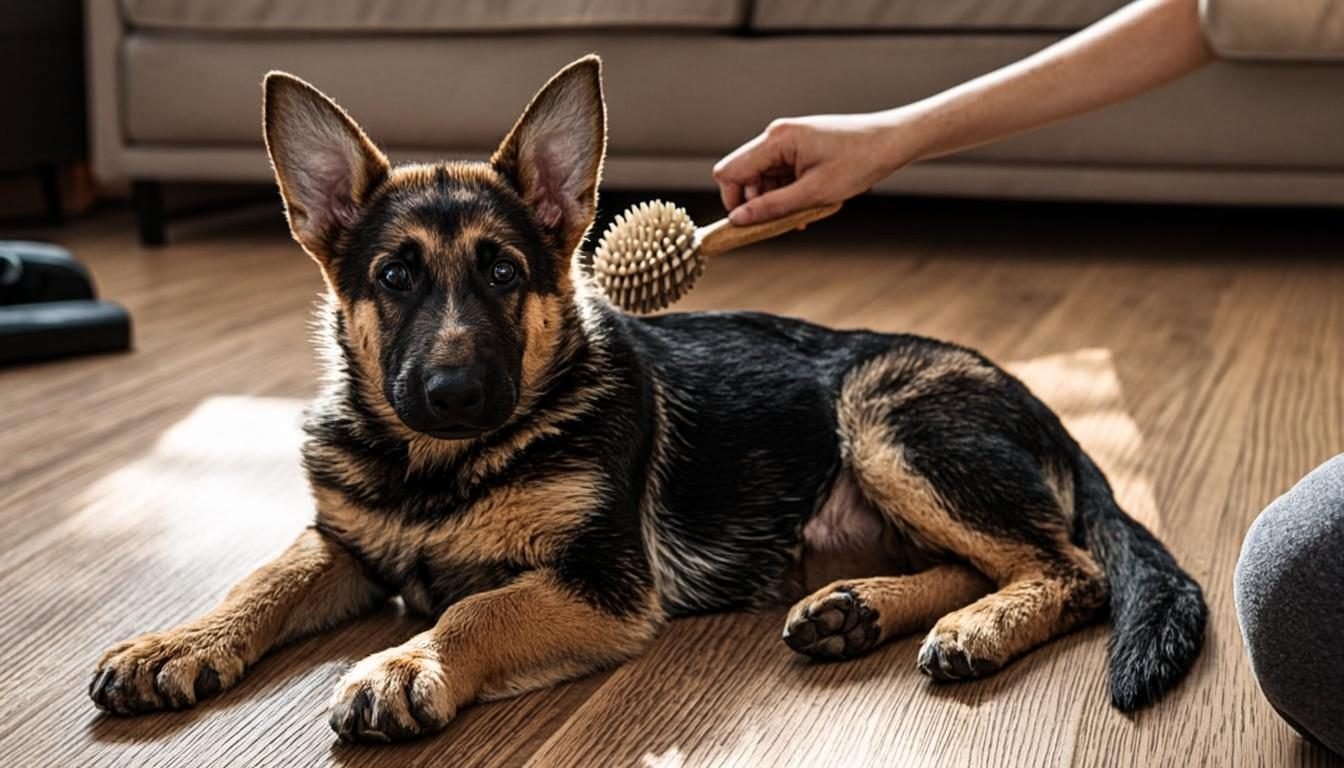
The best adult grooming patient is made in puppyhood. From the day your puppy comes home, run a five-minute “grooming game” daily: touch the paws, lift the ears, run the brush once or twice, and pay generously. By twelve weeks, introduce the sound of the dryer at a distance with treats flowing.
Puppies raised this way stand calmly for nail grinds and baths as adults — while Shepherds whose first nail trim happens at age two under stress often need a muzzle ever after. Keep sessions short, end on success, and let the puppy watch you groom an older dog if you have one; imitation does half the training for you.
Beyond the Coat: Ears, Eyes, and Dental Care
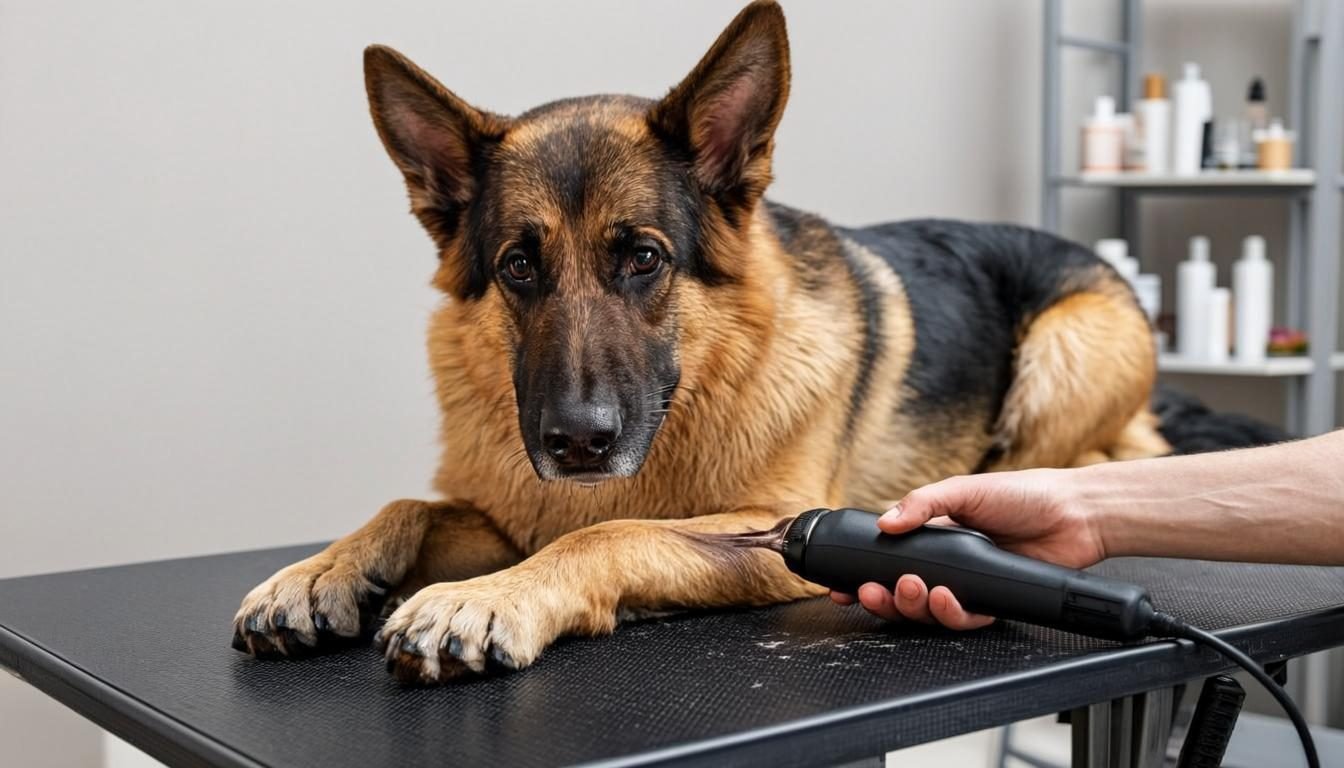
Grooming a Shepherd is more than fur management. The breed’s upright ears collect dust and seed heads on every hike: check weekly, wipe only what you can see, and learn what healthy looks like — pale pink, faintly waxy, odorless. A yeasty smell, head shaking, or brown discharge means the ear is already inflamed, and grooming should pause in favor of a vet visit. Eyes need a thirty-second daily glance: clear, bright, with rims free of crust. Tear staining is rare in this breed, so any persistent discharge deserves attention rather than a wipe of the cloth.
Dental care is the most neglected grooming task in the breed, and the stakes are high — by age three, most dogs show some gum disease, and chronic dental infection feeds bacteria into the joints this breed can least afford to damage. Brush with a dog-specific paste three to seven times weekly, provide textured chews that scrub mechanically, and ask your vet to grade the teeth at every annual visit. A Shepherd whose mouth is handled from puppyhood accepts the toothbrush as a game; an adult who has never had it done may need a slow week of “touch the muzzle, get a treat” before the brush is welcome anywhere near.
Check today’s price on Amazon: C.E.T. Enzymatic Toothpaste →
Realistic Budget for a Complete Grooming Kit
You do not need the entire pet-store aisle, but bargain tools shed teeth, snag coats, and end up repurchased. Build the kit once, properly:
| Item | Entry Level | Pro Grade |
|---|---|---|
| Slicker brush + undercoat rake | $25 – $40 | $60 – $90 |
| Deshedding tool | $25 | $60 |
| Nail grinder | $35 | $80 |
| High-velocity dryer (optional) | — | $130 – $300 |
| Shampoo + conditioner + detangler | $30 | $60 |
| Ear solution, toothbrush, toothpaste | $25 | $40 |
| Total | ~$140 | $430 – $630 |
The entry-level kit covers every weekly need; the dryer is the one item worth upgrading first, because it does the work of three extra brushing sessions every time a coat blow hits.
Signs Your Grooming Routine Is Working
You will know the routine is right when three things become true. First, the fur snowfall in your house flattens to a steady background level instead of monthly blizzards. Second, the skin beneath the coat is pale and flake-free when you part the hair, with no greasy residue on your hands after a brushing session.
Third — and easiest to overlook — your dog starts asking for it: settling into position at the sight of the rake, or nudging the brush with a nose. On a breed as tuned-in as a German Shepherd, that final signal is the whole point. Grooming done well is not maintenance performed on a dog; it is ten quiet minutes of partnership your Shepherd genuinely enjoys, with a healthier coat and fewer vet bills as the side effect.
FAQs About German Shepherd Grooming
Q: How often should I bathe my German Shepherd?
Every 6–10 weeks for most dogs, or when visibly dirty. Over-bathing strips protective oils and can trigger the dry, itchy skin the breed is prone to.
Q: Should I shave my German Shepherd in summer?
No — never. The double coat insulates against heat as well as cold, and shaved coats can grow back patchy or wiry. Manage shedding with raking and the dryer instead.
Q: Why does my Shepherd shed in winter too?
Indoor lighting and heating disrupt the natural seasonal cycle, so house dogs shed moderately year-round with two big seasonal spikes.
Q: What’s the fastest way to handle a coat blow?
A warm bath followed by a high-velocity dry and a full rake session removes most of the dead undercoat in one afternoon instead of three weeks of vacuuming.
Q: Are long-coated German Shepherds harder to groom?
Slightly — feathering behind the ears and in the pants mats faster — but long coats without undercoat can be easier than plush stock coats at peak shedding.
Q: When should puppies have their first professional groom?
After the second vaccine round, ideally before six months old — a short, playful first visit builds a lifetime of cooperation.
Related guide: GERMAN SHEPHERD WORKING DOGS: THE ULTIMATE GUIDE TO THEIR ROLES, TRAINING, AND LEGACY
Conclusion: Elevate Your German Shepherd Grooming Game
Mastering German Shepherd grooming ensures your dog’s coat remains healthy, their skin irritation-free, and their temperament calm. By integrating the right tools, routines, and patience, you’ll transform grooming from a battle into a bonding ritual.