
German shepherd agility is one of the most rewarding sports you can share with this breed: fast, technical, and built on the partnership between dog and handler. It is also a sport where preparation separates confident runs from strained backs. This readiness guide covers the physical checks, obedience foundations, conditioning, and equipment introductions that should come before your first full course. Work through it in order and german shepherd agility becomes a safe, gradual project rather than an injury risk.
Affiliate disclosure: As an Amazon Associate, German Shepherd Haven earns from qualifying purchases made through marked links on this page, at no extra cost to you. See our full Affiliate Disclosure.
German shepherd agility physical readiness: joints and vet checks
Before you introduce obstacles and repetitive jumping, confirm your dog’s body is ready. German Shepherds have breed-specific growth patterns and a predisposition to orthopedic issues, so a conservative approach to high-impact activities is essential. German shepherd agility can absolutely be safe, but only when joint maturity leads the schedule.
Growth plates and age guidelines
Puppies and adolescents have open growth plates that are vulnerable to repetitive impact. Many experienced handlers and veterinarians recommend waiting until a dog’s skeleton matures before regular high-impact agility work. For individual guidance, ask your veterinarian for an assessment based on your dog’s growth, body condition, and any imaging they recommend. Most vets clear controlled german shepherd agility groundwork long before they clear jumping at full height.
Pre-activity veterinary check
Schedule a general health and orthopedic check before beginning an agility program. A vet can evaluate joint function, weight, muscle condition, and any preexisting issues. If your dog has been diagnosed with or is suspected to have hip or elbow dysplasia, chronic lameness, or spinal disease, consult the vet about appropriate alternatives and safe modification of activities. Ask for a written exercise plan; it keeps german shepherd agility training inside agreed limits.
Mental readiness and motivation
Agility is as much about a dog’s brain as its body. Confidence, focus, and a strong, positive relationship with the handler make learning sequences and navigating obstacles much easier. Drive without focus, however, and german shepherd agility turns chaotic fast — obedience is the steering wheel.
Motivation and reward
Most German Shepherds respond strongly to food, toy, or praise rewards. Use high-value rewards to build enthusiasm for obstacles in short, fun sessions. Keep training upbeat and end on a success to preserve motivation. Keep german shepherd agility sessions under ten minutes and enthusiasm stays high all week.
Breed tendencies and working drive
If you’re interested in competitive or high-intensity agility, consider how your dog’s working lines and temperament fit that goal. German Shepherds bred for performance often have strong drive and trainability. For more on the working traits that influence sport suitability, see the article about the working abilities of the breed. That heritage explains why german shepherd agility clicks so quickly for well-socialized adults.
Obedience and reward-based foundations
A solid obedience foundation makes agility learning safer and more reliable. Focus on communication, impulse control, and handler-directed attention before introducing complex obstacles. Treat impulse control as obstacle zero in your german shepherd agility plan.
Essential behaviors to master
- Reliable recall in a low- and medium-distraction area.
- Solid attention on cue: a dog that will look to you for direction.
- Basic position cues—sit, down, stand—performed calmly and quickly.
- Loose-leash walking and calm approach/leave behaviours around other dogs and people.
Humane, reward-based methods
Use positive reinforcement: clicker or marker cues plus treats, toys, or social rewards. Avoid aversive or force-based techniques; they reduce confidence and can create safety risks on course. If you need help shaping reliable behaviors, seek a qualified reward-based trainer or behavior professional. Solid foundations make every later german shepherd agility skill cheaper to teach. The AVSAB position statements are the reference standard here, and clubs that follow them tend to produce safer, happier teams.
Conditioning for german shepherd agility: strength and flexibility
Conditioning builds the muscles and endurance needed to navigate obstacles and run courses safely. Conditioning also reduces the risk of overuse injuries.
Core and hind-end strengthening
Exercises that improve core stability and hind-quarter strength help with balance and landing control. Examples include controlled hill walks, slow sit-to-stand repetitions on stable surfaces, and low-level balance work. Introduce such exercises gradually and monitor for fatigue. Five minutes of cavaletti work does more for german shepherd agility safety than an hour of repetitive jumping.
Low-impact cardiovascular work
Swimming, leash walking with varied terrain, and long, steady walks are valuable low-impact options. These activities increase aerobic fitness without repeated jumping. Consult your veterinarian before starting swimming or high-resistance workouts if your dog has orthopedic concerns. Low-impact conditioning is the quiet engine behind every confident german shepherd agility run.
Progression and recovery
Train with short sessions and frequent rest days, progressively increasing intensity. Watch for subtle signs of soreness—reluctance to jump, stiffness after rest, or changes in gait—and pause activities until your vet advises otherwise. Rest days are training days in disguise; tissue adapts between german shepherd agility sessions, not during them.
Equipment introduction and safety considerations
Introduce agility equipment gradually, using scaled-down versions and surfaces that reduce slip risk. Safety starts with equipment that matches your dog’s size and skill level.
Recommended gear for this stage:
- Backyard agility starter kits (Amazon) — low, beginner-safe equipment scaled for home practice.
- Adjustable practice jumps (Amazon) — heights you can lower for adolescents and beginners.
- Hands-free treat pouches (Amazon) — keeps rewards instant during agility sequences.
Surface and footing
Firm, non-slip surfaces are ideal. Avoid hot asphalt in summer and slippery floors indoors. If you train on grass, check for holes, debris, and wet patches. Proper traction reduces twisting injuries on turns and landings.
Scaled equipment and contact obstacles
Start with low jumps and narrow, short contacts that allow your dog to learn shapes and movement. For contact obstacles (e.g., A-frame, dogwalk), use lower heights and reward independent contact positions (touching a designated zone) before increasing height. Many handlers use targets or platform work to shape correct contact behavior safely. Contacts are where german shepherd agility injuries cluster, so slow is genuinely fast here.
Portable, safe choices
Consider using low, lightweight hurdles, cavaletti poles, and platforms you can adjust. If you use a club’s equipment or an instructor’s gear, inspect it each session for damage and stability. A wobble board teaches body awareness that transfers directly to german shepherd agility equipment.
Age-appropriate progressions and realistic goals
Setting achievable, age-appropriate goals prevents injury and keeps the process enjoyable. Not every German Shepherd will become a national-level competitor; many dogs thrive as recreational agility partners.
Puppies and adolescents
For puppies, focus on play, balance, body awareness, and short sessions emphasizing positive experiences. Avoid repetitive high-impact jumps until your veterinarian confirms skeletal maturity. Work on impulse control, attention, and simple obstacle introductions—tunnels, low poles, and platform targets—at minimal heights. This is the golden window for german shepherd agility foundations: confidence without concussion.
Adults and older dogs
Adults with no orthopedic issues can progress to higher obstacles and sequences with careful conditioning and skill building. Older dogs or dogs with chronic conditions can still enjoy adapted agility that emphasizes cognitive challenges, low-impact obstacles, and controlled turns. For guidance on daily management and how energy needs translate into training plans, see the piece on daily exercise and management considerations. Adults in peak condition can handle full german shepherd agility sequences two to three times weekly.
Competition vs. recreation
Decide whether your goal is casual fun, local trials, or higher-level competition. Competition requires more frequent practice and finer handling skills; recreation prioritizes variety and the dog’s enjoyment. Set metrics for success that reflect your aims—consistent contacts and clean turns for competition, or confident, joyful runs for recreation. Decide this early, because german shepherd agility goals shape every plan you write afterward.
Learning sequences and handler skills
Agility is a partnership. Handler cues, timing, and physical fitness influence how smoothly a dog executes a course. Practice short sequences before full courses to build communication and timing.
Short-sequence practice
Begin with two- or three-obstacle combinations, such as a jump-tunnel-jump sequence. Reinforce correct approaches and rewarding quick, focused responses. Gradually add complexity only after the dog performs reliably and without signs of stress. Sequences teach your dog that german shepherd agility is a conversation, not a sprint.
Handler awareness and fitness
Handlers benefit from practicing their own movement patterns—positioning, timing, and clear cues—without overexerting. Simple fitness work, like short runs and directional drills, can improve your ability to cue and move on course without compromising the dog’s safety.
Common risks and how to reduce them
Understanding common injury mechanisms and environmental risks lets you plan safer sessions.
Overuse and repetitive strain
Repetition without recovery increases the risk of tendon and joint problems. Keep sessions short, rotate activities, and schedule rest days. If you detect persistent limping, stiffness, or reluctance to perform, stop and consult your veterinarian. Log minor niggles; patterns across sessions are how german shepherd agility overuse injuries announce themselves.
Environmental risks
Avoid training in extreme heat, on slippery surfaces, or in cluttered areas. Use well-ventilated spaces and monitor hydration. Adjust intensity according to temperature and humidity.
Safe handling to prevent collisions
Teach dogs to take turns, approach obstacles at controlled speeds, and respect spacing when multiple dogs are present. Clear verbal cues and handler positioning reduce confusion and collisions on busy fields. Good spacing etiquette keeps german shepherd agility class safe for every dog on the field, not just yours.
Your first german shepherd agility starter plan (8 weeks)
This example plan is a conservative, general outline for an adult dog with veterinary clearance. Adapt intensity, volume, and progression based on your dog’s age, fitness, and the advice of your veterinarian or qualified trainer.
- Week 1–2: Foundations — Short daily sessions (5–10 minutes) focusing on attention cues, targeting with platforms, and low-level balance exercises. Add 20–30 minutes of low-impact walk on alternate days.
- Week 3–4: Introduce simple obstacles — Low jumps, straight tunnels, and cavaletti poles at minimal height. Continue core and hindquarter strengthening twice weekly. Sessions remain short and highly rewarding.
- Week 5–6: Build combinations — Two- or three-obstacle sequences with controlled approaches. Begin low contact training (targets on platforms) and increase the aerobic walk time to build endurance.
- Week 7–8: Increase complexity — Add turns and handling cues in short courses, maintain conditioning, and monitor for fatigue signs. If all goes well, plan a rest week or a deload with light work before increasing difficulty.
Throughout, keep records of sessions: duration, exercises, how your dog performed, and any signs of soreness. Use that log to decide when to progress and when to ease back. A training log converts german shepherd agility from guesswork into a program you can actually adjust.
German shepherd agility equipment: what to buy, borrow, or skip
Walking into the sport as a buyer can be overwhelming, because a full competition course includes jumps, tunnels, a dog walk, an A-frame, a seesaw, and weave poles — none of which you need on day one. Sensible german shepherd agility shopping starts with a short list of low-risk items that build skills you will use forever. Everything else can wait until your dog’s readiness checks are complete and your training goals are clear.
| Equipment | Home cost level | Buy when… | Safety notes |
|---|---|---|---|
| Flat jumps / cavaletti rails | Low | Vet cleared groundwork | Start at rail height; never full bar for young dogs |
| Wobble board / balance disc | Very low | Any age after basics | Best confidence and proprioception tool per dollar |
| Straight tunnel | Moderate | Foundations are fluent | Anchor it; tunnels shift and spook dogs |
| Travel weave guides | Moderate | After 12 months old typically | Use channel guides; never force straight entries early |
| Contact trainer (mini dog walk) | High | Joining a club or serious hobby | Prefer club equipment with instruction first |
| Full-height competition jumps | High | Competition prep, adult dog | Skip entirely for home use in most cases |
Two buying rules save money and injuries. First, prioritize adjustability: a jump whose bar height can drop to ground level is worth more than a fixed pretty one, because german shepherd agility progression lives or dies on height control. Second, borrow before you buy whenever possible — most clubs rent or lend equipment to members, and a few sessions with real contacts will tell you whether home ownership makes sense at all. The AKC agility getting-started guide outlines what regulation equipment looks like, which helps you recognize quality when you do shop. If you want eyes on your foundations before spending anything, our guide to choosing a private German Shepherd trainer“>finding a qualified trainer applies directly to agility instruction.
One more category deserves a mention: flooring. If you train in a garage or yard, surface quality is equipment too. Grass that is too wet, rubber tiles that shift, or slick concrete create more injury risk than any single obstacle. Many home handlers get more value from improving footing than from buying a third jump, because german shepherd agility puts repeated turning load on joints and the ground returns that load every single rep.
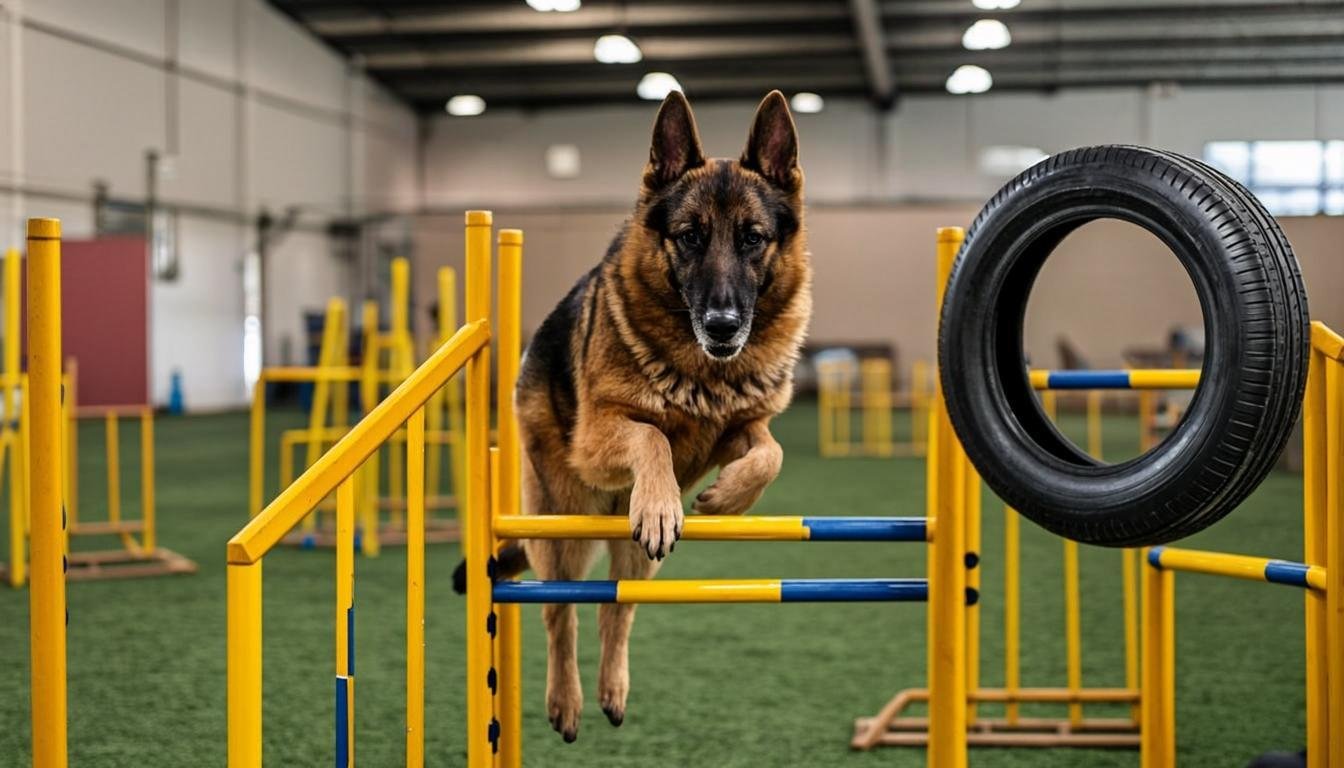
Is agility right for your dog’s temperament?
Physical readiness gets all the attention, but temperament decides whether german shepherd agility is fun or frustrating. The ideal candidate has three traits: confidence around novel surfaces and noises, food or toy motivation strong enough to survive distractions, and enough handler focus to work with you while excited. Most well-bred Shepherds check all three boxes, but every dog is an individual, and forcing a sound-sensitive or low-drive dog into a noisy competition environment helps nobody.
Assess honestly before investing. Does your dog recover quickly from startles, or does a dropped plank end the session? Does a moving bicycle pull attention completely away from you, or can a treat recapture it within seconds? Dogs with soft nerves can still enjoy low-key agility at home, but competition venues — with speakers, crowds, and crating areas — need a resilient temperament. German shepherd agility should be the highlight of your dog’s week; if the overall picture is anxiety, build confidence through other sports first. Our German Shepherd training and behavior guide“>training and behavior guide covers the foundations that help here, and the breed’s official AKC breed profile explains the working drives behind the sport’s popularity.
Age matters to temperament too. Adolescents between 8 and 18 months often have the physical energy for german shepherd agility but the emotional brakes of a teenager, which is exactly why foundations are trained young and equipment intensity is saved for adulthood. Handlers who use those months for obedience and conditioning rather than jumping end up with the fastest, safest adult dogs — patience during adolescence is not lost time, it is the investment phase.
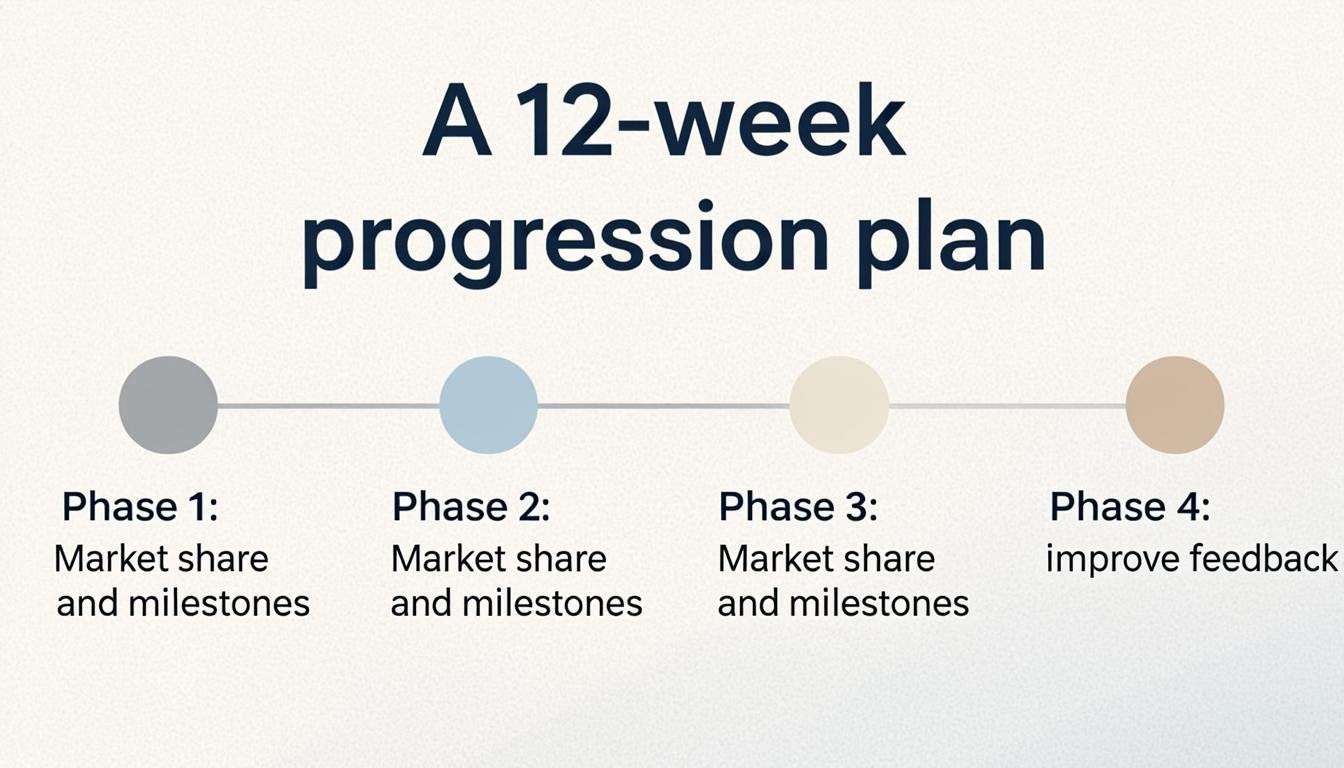
A 12-week progression plan, week by week
This example plan assumes a healthy adult dog cleared by a vet, with basic obedience already in place. It builds from body awareness to simple sequences, deliberately keeping jumping low and rare. Adjust pace to your dog, not the calendar — german shepherd agility rewards consistency over intensity, and every week here can be repeated without guilt if your dog needs more time.
| Weeks | Focus | Key exercises | Success marker |
|---|---|---|---|
| 1–2 | Body awareness | Wobble board, rear-foot targets, cavaletti walking | Calm, confident movement on unstable surfaces |
| 3–4 | Handler engagement | Restrained recalls, wing wraps without bars, tunnel sends | Attention returns to you after every obstacle |
| 5–6 | Obstacle fluency | Low straight tunnel, one low jump, platform targets on contact end | Fast, happy obstacle performance at low height |
| 7–8 | Short sequences | Jump–tunnel, tunnel–jump pairs, simple turns | Clean two-obstacle runs both directions |
| 9–10 | Weave foundations | Channel weaves open wide, entries from angles | Confident entry and 4–6 poles guided |
| 11–12 | Mini courses | 4–5 obstacle loops, simple crosses | Smooth loops with excitement under control |
Throughout all twelve weeks, joint health stays in the conversation. Before starting, ask your vet whether screening images make sense for your lines — resources like OFA on hip dysplasia and OFA on elbow dysplasia explain what evaluations look for, and our article on German Shepherd hip dysplasia“>hip dysplasia signs and prevention covers the breed-specific picture. Warm up for five minutes before every german shepherd agility session, cool down after, and treat any limp as a full stop rather than a note to self.
FAQ: german shepherd agility readiness
What age can a German Shepherd start german shepherd agility?
Foundations — attention, body awareness, low cavaletti, flat tunnels — can begin in puppyhood alongside socialization. Full jumping and contact equipment generally wait until growth plates have closed and a vet has cleared high-impact work, commonly around 12 to 18 months. German shepherd agility is a long game, and dogs started slowly often outlast dogs started fast.
Do I need a big yard to train agility?
No. Foundations fit in a living room, and sequences fit in a standard yard or rented field. Many successful handlers train german shepherd agility skills in tiny spaces and save full courses for club nights. Space constraints improve creativity more than they limit progress.
How often should we train agility each week?
Three short sessions beat one long one: two skill sessions and one conditioning session is a sustainable week for most adult dogs. During german shepherd agility weeks with new equipment, drop intensity elsewhere so total load stays reasonable.
Is agility safe for a Shepherd with mild hip dysplasia?
It depends entirely on the individual case and your vet’s guidance. Controlled groundwork and cavaletti are often therapeutic, while repetitive jumping may be off the table. Never self-prescribe; bring your dog’s imaging to the conversation and design a german shepherd agility plan around what is actually cleared.
What does joining a club add beyond equipment?
Instruction, spacing safety, and course variety. Self-taught handlers develop habits that are invisible until a coach points them out, and german shepherd agility timing skills improve fastest with feedback. A trial month at a local club answers most questions you could ask online.
Joining a club: what the first month looks like
At some point every home trainer faces the same fork: keep practicing solo or join an agility club. The home foundation work in this guide covers readiness, but a club adds the three things no backyard can — full-height regulation equipment under instruction, controlled spacing with other dogs, and weekly eyes on your handling. Knowing what the first month actually involves removes most of the hesitation, and it is less intimidating than most people imagine.
Finding the right club. Search for reward-based agility clubs in your region and audit before committing: watch a beginner class and look for three things — dogs working one at a time or well-spaced, handlers talking rather than yelling, and dogs leaving the field with tails up. Ask whether trial classes are offered and what equipment your dog will start on; a well-run beginner program starts on low heights and short sequences regardless of breed. Mention your Shepherd’s age and any orthopedic history openly; good instructors build plans around it rather than pushing through it.
The typical first four weeks. Week one is usually orientation: crate manners, ring entry procedures, and groundwork while your dog settles into a novel environment — do not be surprised if a dog who is flawless at home looks briefly average in a new field; that is normal learning, not lost progress. Weeks two through four layer sequences on familiar obstacles, add handler positioning drills, and introduce the waiting culture that makes agility classes safe. Bring the obedience foundations from this guide and you will likely be ahead of the curve, because german shepherd agility progress in class tracks almost exactly with the attention skills built at home.
Etiquette that earns goodwill. Agility fields run on shared space: keep your dog leashed and behind the designated line until your turn, respect the dog-in-the-ring silence rule, and reset bars even when the next dog knocked them. Shepherds are vocal and enthusiastic, which some venues read as noise pollution, so practice quiet crating at home before session one. The AKC agility program overview describes the class structures and title paths if you want the long map before your first session, and it pairs well with the realistic goals section earlier in this guide.
The payoff for that first awkward month is a dog with a hobby — a weekly appointment that burns energy, builds your relationship, and fills the working brain this breed ships with. Whether you stay recreational or catch the trial bug, the readiness work you did here is what makes club nights fun instead of stressful. German shepherd agility was never about rushing to a course; it was always about arriving prepared, and a club is simply the place where preparation gets room to breathe.
Checklist / Takeaways
- Get veterinary clearance before regular agility training, especially for young or previously injured dogs.
- Prioritize obedience, attention, and reward-based methods before complex sequencing.
- Build core strength and aerobic fitness with low-impact exercises and progressive load.
- Introduce equipment slowly using scaled heights, safe footing, and targets for contacts.
- Match goals to your dog’s age, temperament, and physical capacity—competition is not the only worthwhile aim.
- Monitor for signs of soreness or fatigue and consult a vet if you observe persistent issues.
- Consider professional instruction from a reward-based agility trainer for safe, efficient progress. For general agility information and official sport details, the AKC offers a helpful overview at AKC: Agility.
- For breed-specific traits relevant to training and sport suitability, refer to the AKC breed page: AKC: German Shepherd Dog.
Sources and Limits
Sources referenced in this article include practical sport resources and breed information to help owners make informed decisions. For sport organization guidance see AKC: Agility. For breed-specific traits that affect sport suitability, see AKC: German Shepherd Dog. For breed working traits and owner considerations, refer to our article on the working abilities of the breed, and for exercise and daily management guidance consult the piece on daily exercise and management considerations.
Limits: This guide provides general information, not individualized medical or behavioral advice. Any health concerns, lameness, or behavioral problems should be evaluated by a qualified veterinarian or a certified, reward-based behavior professional. Never substitute this article for in-person assessment of your dog’s fitness, orthopedic status, or suitability for competitive sports. Training environments, local facilities, and rules differ by country and organization; always follow local regulations and the safety recommendations of your instructor or hosting organization.
If you’re unsure how to start safely, a single consultation with a veterinarian experienced in sports medicine or a certified agility instructor can provide a personalized plan and practical demonstrations tailored to your German Shepherd’s needs.