
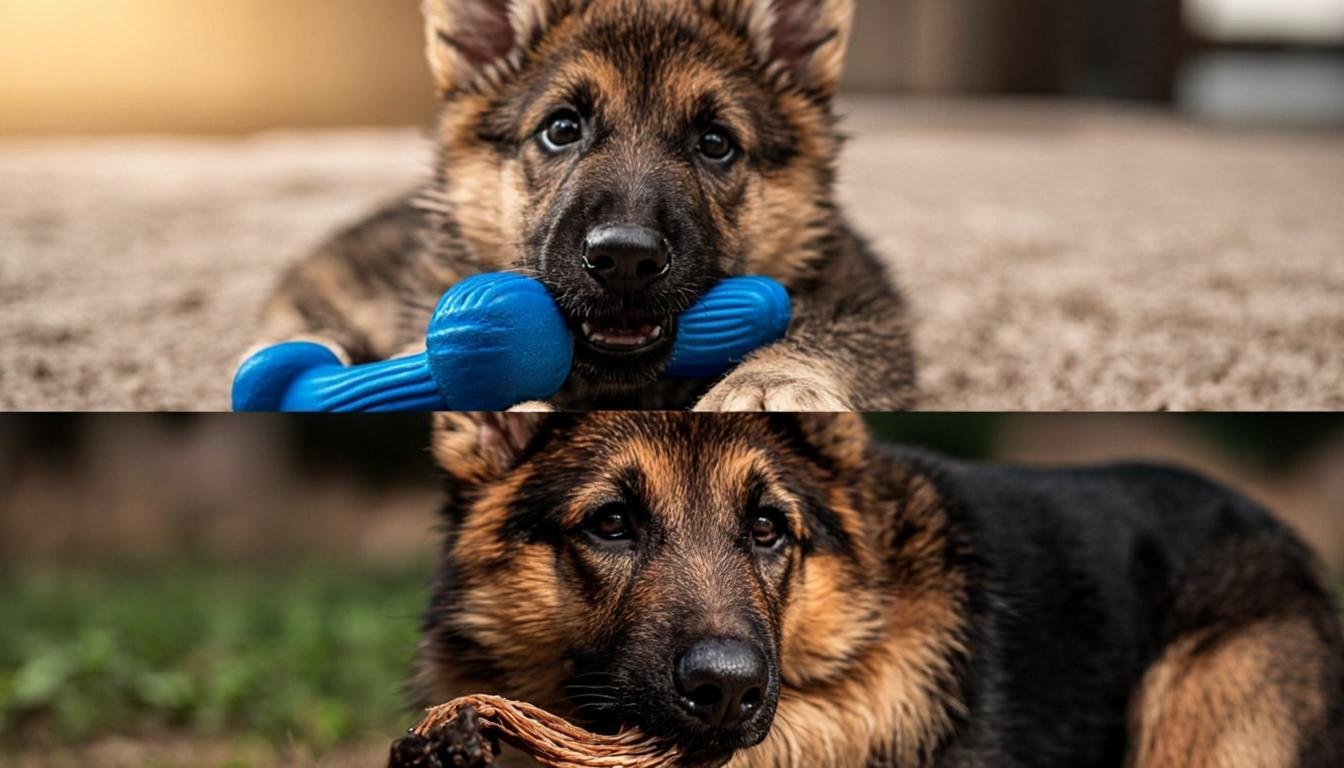
German shepherd chewing has destroyed more phone chargers, chair legs, and baseboards than any owner wants to count. The behavior is normal — puppies teethe, adolescents explore, and bored working dogs improvise. What separates a manageable phase from ongoing destruction is structure. This guide attacks german shepherd chewing from every angle: honest assessment, daily management, enrichment, training steps, and the special situations like anxiety-driven destruction that need their own playbook.
Why german shepherd chewing starts in the first place
Understanding the reasons behind chewing is the first step toward effective prevention. German Shepherds are intelligent, active, and often driven by strong working instincts. Chewing can serve different purposes depending on the dog’s age, physical state, and emotional needs: Reading the why behind german shepherd chewing is what makes the fix stick.
- Teething in puppies—chewing soothes sore gums and builds jaw muscles.
- Boredom or under-stimulation—intelligent dogs need mental work as much as physical exercise.
- Attention-seeking—some dogs learn that chewing triggers predictable reactions from people.
- Separation-related distress—chewing can be a coping behavior when left alone.
- Exploration and play—mouthing is a primary way dogs learn about objects.
- Medical or dental discomfort—pain or dental disease can increase chewing or oral focus.
Each cause suggests different management and training responses. Always consider multiple factors rather than assuming one single reason. German shepherd chewing usually has more than one driver, so plan for two.
Assessing the Problem: Where, When, and What
Before you change the environment or start training, gather information. A short, focused assessment helps you choose solutions that actually target the cause.
Keep a chewing diary
For a week, note details each time chewing occurs: the item chewed, time of day, who was present, the dog’s age/state, and preceding events (e.g., long wait after exercise). Patterns often emerge—chewing after you leave, chewing at night, or chewing only certain textures. Patterns turn german shepherd chewing from mystery into management.
Categorize the items
Is the dog targeting soft toys, shoes, wood, wiring, or fabric? Dogs showing preference for soft, plush items may be motivated by play or seeking comfort; targeting wires or baseboards may suggest anxiety or specific oral fixation. This helps prioritize safety: wires and toxic materials require immediate management to prevent harm. Safety triage comes first with german shepherd chewing; training comes second.
Daily management basics that prevent german shepherd chewing damage
Daily management reduces opportunities for failure while you teach alternatives. Management is not a substitute for training, but it’s essential during learning. Management buys quiet weeks while you retrain german shepherd chewing habits.
Recommended gear for this stage:
- Durable large-breed chew toys (Amazon) — legal chew outlets that survive Shepherd jaws.
- Bitter anti-chew sprays (Amazon) — makes off-limits items taste not worth it.
- Puzzle feeders (Amazon) — boredom-busting work for the jaw and brain.
- Dog-proof the environment: put shoes, laundry, and easily destroyed items out of reach. Use closed doors, baby gates, and elevated storage.
- Limit unsupervised freedom: when you can’t watch, restrict access to a safe area rather than leaving a houseful of tempting items.
- Provide appropriate chew alternatives: safe, durable chew toys should be clearly different from personal items and rotated to keep interest.
- Remove dangerous objects: hide electrical cords, remove toxic plants, and keep small objects out of reach.
- Use deterrents carefully and humanely: bitter sprays or texture deterrents can help protect specific items but are not a long-term solution by themselves.
Management is about setting up success. If the dog cannot access tempting items, you give yourself the time to teach preferred behaviors without constant failure. Fewer rehearsals mean german shepherd chewing loses strength every week.
Exercise, Mental Enrichment, and a Predictable Routine
German Shepherds thrive with a predictable routine that balances physical activity and mental challenge. Insufficient exercise or unpredictable schedules increase the risk of destructive behaviors.
Physical exercise that fits the dog
A tired dog is easier to manage. Exercise need not be long runs every day for every dog; it should be appropriate to age, health, and fitness. Mix walks, play sessions, and controlled training exercises. For high-energy dogs, incorporate structured games like recall practice, scent work, or fetch with rules. A tired Shepherd has little appetite for german shepherd chewing projects.
Mental enrichment that reduces boredom
Mental work can be more fatiguing than physical work. Puzzle feeders, food-dispensing toys, hide-and-seek games, and short obedience or trick-training sessions give cognitive engagement that reduces the urge to chew out of boredom. Rotate enrichment tools so they remain novel and interesting. Rotation matters because german shepherd chewing often starts with simple boredom.
Supervision, Safe Spaces, and Humane Crate Use
Supervision and well-designed safe spaces let your dog rest and learn without risking destruction.
Supervision strategies
- Use baby gates or exercise pens to limit access when you are home but occupied.
- Keep the dog near you during transitional times—after you come home, before you leave, and during periods of high arousal—so you can redirect before chewing starts.
Humane crate and den training
Crates can provide a calm, secure environment if introduced positively and used correctly. The crate should be a comfortable place with appropriate chew toys and access to water. Never use a crate for punishment, and avoid long confinement without breaks for exercise, elimination, and mental activity. Crate time is a management tool while teaching alternatives, not a solution on its own. Crates protect furniture and redirect german shepherd chewing toward safe outlets.
Teaching What’s Okay to Chew — Practical Training Steps
Training teaches your German Shepherd which items are appropriate and builds impulse control. Use reward-based methods—praise, treats, and play—to make the right choices more rewarding than the wrong ones.
Start with easy rewards and clear choices
Offer a high-value chew toy and reward the dog when they choose it over a house item. Make the chew toy more attractive by putting a small food reward inside or by initiating a short play session. Repeat in short, frequent sessions so the dog learns the connection between the toy and positive outcomes. Value transfer is how german shepherd chewing gets pointed at legal targets.
Redirect and reinforce
If you catch the dog chewing something inappropriate, calmly redirect to an approved toy and reward immediately when they engage with the toy. Avoid yelling or punishment—these can increase anxiety and make chewing worse. Consistency and timing are critical: reward close to the moment the dog accepts the right item so they link the reward to the behavior. Fast timing is the difference between training german shepherd chewing and just watching it happen.
Teach ‘Leave It’ and ‘Drop It’
Two practical cues are essential for safety and management. Teach ‘Leave It’ to prevent picking up forbidden items, and ‘Drop It’ to exchange items safely. Use brief, frequent training sessions and positive reinforcement. For more comprehensive obedience and life-skill work, follow structured approaches in established resources like our core training techniques. Drop it can save a Shepherd’s life when german shepherd chewing meets a dropped sock.
Puppy Teething vs Adult Chewers
Puppies and adults chew for different reasons and require different responses.
Puppy teething guidance
Puppies mouth everything as they explore and to ease teething pain. Provide a selection of safe teething toys, rotate them to maintain novelty, and supervise closely. Teach bite inhibition with gentle redirection to toys. If puppy mouthing is intense or you’re unsure how to manage it safely, consult a trainer experienced with puppy development for tailored strategies. Our related mouth-behavior guidance covers additional puppy-focused steps. Teething makes german shepherd chewing temporarily louder, not unmanageable.
Adult dogs and learned habits
Adult dogs often chew out of habit, boredom, or anxiety. Focus on predictable routines, enrichment, and clear training plans. If an adult dog begins new destructive chewing, review exercise, environment, and health—changes in behavior can be a sign that something in the dog’s life or body has changed. Adult german shepherd chewing that starts suddenly always deserves a second look.
Handling Destructive Chewing Linked to Anxiety or Separation
When chewing is a symptom of anxiety—especially separation-related distress—it requires a patient, structured plan. Avoid approaches that isolate or punish the dog, which can worsen anxiety. Anxiety-driven german shepherd chewing improves with confidence work, not confinement.
- Gradual desensitization to departures: practice short, low-key absences and slowly increase duration, paired with calming routines and enrichment.
- Counter-conditioning: build positive associations with being alone by providing long-lasting, safe enrichment items at departures.
- Consult professionals: certified reward-based trainers and veterinary behaviorists can design individualized plans. If chewing risks the dog’s health (e.g., ingesting dangerous materials), contact your veterinarian promptly for advice on safety and next steps.
Resources like the ASPCA’s guidance and the RSPCA’s training advice provide general direction on managing anxiety-related behaviors and safe training approaches. Pair those guides with a vet visit if german shepherd chewing escalates fast.
When to Seek Professional Help
If chewing is frequent, dangerous, or not responding to consistent management and training, reach out for professional help. Signs you should consult a qualified professional include:
- Chewing of electrical cords, toxic materials, or items causing repeated medical issues.
- Severe destruction that places the dog’s safety or household members at risk.
- Chewing that appears linked to intense anxiety or other behavioral changes.
- Lack of progress after consistent management and simple training attempts.
Look for reward-based trainers or certified behaviorists who use positive reinforcement and provide a clear plan with measurable steps. If the dog may have an underlying medical issue, a veterinarian should evaluate pain, dental disease, gastrointestinal concerns, or other health problems before or alongside behavioral intervention. Pain and german shepherd chewing are linked more often than owners expect.
Sample plans that stop german shepherd chewing fast
Below are two short example plans you can adapt to your situation. They are templates, not one-size-fits-all prescriptions.
Example A: Young adult dog chewing shoes after owner leaves
- Management: Keep shoes in a closed closet; use gates to limit access to bedroom area when leaving.
- Enrichment: Provide a food-dispensing toy loaded just before departure to occupy the dog for 10–20 minutes.
- Exercise: 15–30 minute walk or play session before departure to reduce excess energy.
- Training: Teach ‘drop it’ and practice short, low-key departures starting at 1–2 minutes, gradually increasing time while rewarding calm behavior.
- Review progress weekly; if no improvement after consistent work, consult a reward-based trainer for a tailored plan.
Example B: Puppy teething and chewing furniture legs
- Management: Keep puppy in puppy-proofed area with access to appropriate chew toys when unsupervised.
- Enrichment: Rotate chew toys and introduce frozen, vet-approved teething toys to soothe gums.
- Training: Redirect mouthy mouthing to toys; reward engagement with toys and brief calm periods.
- Supervision: Use short periods of supervised freedom; as the puppy matures and learns, extend freedom gradually.
- Consult a puppy-focused trainer if biting escalates or if you need stepwise socialization and household integration guidance.
German shepherd chewing by life stage: a quick timeline
German shepherd chewing changes character as your dog ages, and matching your response to the stage prevents months of frustration. A strategy built for a teething puppy will fail an anxious adolescent, and vice versa. The timeline below shows what to expect and what each stage demands, so you can check whether your current struggle is a normal phase or a signal worth escalating.
| Age | What is happening | Typical chewing pattern | Priority response |
|---|---|---|---|
| 8–16 weeks | Puppy teeth erupting; world exploration | Anything within reach, especially soft and paw-sized | Management + frozen teething toys + heavy supervision |
| 4–6 months | Adult teeth replacing puppy teeth | Intense gum pressure; furniture legs and corners | Rotation of textures + redirect-and-reward drills |
| 6–18 months | Jaw power arrives; adolescence | Destructive potential spikes; boredom-driven projects | Exercise budget + durable toys + structured alone time |
| 18 months–3 years | Maturity; habits consolidate | Chewing becomes selective and habitual | Habit audit: which items, which moods, which rooms |
| Adult 3+ years | Stable adult patterns | Mostly appropriate; sudden changes are signals | Any new destruction = vet or behavior check |
Two stages deserve extra vigilance. The 6-to-18-month window is where german shepherd chewing does its real financial damage, because jaw strength arrives before impulse control matures — an adolescent Shepherd can open a “heavy-duty” bed in an afternoon that a puppy would have nibbled for a week. Budget accordingly, supervise generously, and treat that period as temporary rather than permanent. The second watch point is the adult column: a three-year-old Shepherd who suddenly starts destroying things is not being naughty, he is being informative, and the message is usually pain, stress, or a routine collapse.
Use the timeline to set expectations with everyone in the household. Families who understand that the six-month furniture assault has an expiration date manage it with good humor; families who think it will last forever start punishing, and punishment teaches a dog to chew secretly rather than less. German shepherd chewing is a phase you scaffold, a habit you retrain, and a signal you read — rarely a war you win by force.
Chew toys that survive this breed’s jaw power
Not all toys are equal against a Shepherd’s jaws, and buying the wrong category twice teaches you what the table below summarizes in one view. The right chew toy for german shepherd chewing is durable enough to survive, engaging enough to compete with your baseboards, and safe enough that failure does not mean surgery. Match the toy to your dog’s chewer type — the power devourer, the nibbler, and the shredder need different answers.
| Chewer type | Best toy categories | What to avoid | Safety notes |
|---|---|---|---|
| Power devourer | Rubber stuffable cones in extreme grade, nylon bones sized up, hard rubber balls | Rawhide knots, soft plush, cooked bones, antlers for tooth risk | Size up one level; check for cracks monthly |
| Nibbler | Edible dental chews with the VOHC seal, bully sticks, rubber toys with treat paste | Nothing major — just watch calories | VOHC-accepted products carry dental evidence |
| Shredder | Cardboard dig boxes, snuffle mats, fabric-less puzzle feeders | Anything with stuffing, squeakers, or glued eyes | Supervise paper and fabric play; trade for food |
Rotation is the multiplier on any toy budget. A study-quality rubber cone that appears every third day stays interesting for years; the same cone available hourly becomes wallpaper within a week. Build a german shepherd chewing rotation of five to seven items in two or three categories, store most of them out of sight, and swap daily. Novelty, not quantity, is what keeps legal chewing more attractive than illegal chewing — and our best products for German Shepherds guide“>product guide reviews specific durable options that survive this breed.
Calories count too, especially with edible chews. Bully sticks and dental chews carry real energy, and a working breed that adds two dense chews daily on top of meals will gain weight quietly; our best treats for German Shepherds guide“>treat guide covers the budget math so chew enrichment does not turn into a diet problem. Whatever you choose, inspect weekly: a toy that used to be safe becomes a hazard the day it cracks, and german shepherd chewing power grows faster than most owners update their toy inventory.
Room-by-room management that ends destruction
German shepherd chewing concentrates where the dog spends unstructured time, so effective management works room by room rather than house-wide. Walk your home at knee height — your dog’s actual horizon — and you will spot the magnetic items instantly: charger cables behind the sofa, shoe racks in the hall, kids’ toys under the coffee table, and that one chair leg every dog in history has tested. Manage the top three rooms first and most destruction simply evaporates.
The living room is usually ground zero. Cable organizers, a closed basket for remotes, and a firm rule that shoes live in closets remove ninety percent of temptation here. Kitchens and bathrooms mostly need trash security and cleaning-product storage, since those items are safety issues rather than annoyance issues. Bedrooms matter most for dogs with separation patterns, because german shepherd chewing that happens only in your absence is anxiety wearing a chewing costume — our separation anxiety training plan“>separation anxiety guide is the essential read for that specific pattern, since the fix there is confidence work rather than toy upgrades.
Then add one positive station per room. A defined bed or mat in the living room, a water-and-chew corner in the kitchen, a crate or pen setup wherever the dog rests unsupervised: each station gives german shepherd chewing a legitimate default. Dogs do not distinguish between good and bad chewing targets as carefully as we assume; they chew what is available and rewarding. When the environment consistently offers better options first, the architecture of the house starts training your dog even when you are not in the room — which is exactly the point of management done well.
FAQ: german shepherd chewing
When does german shepherd chewing from teething finally stop?
Adult teeth are fully in around six months, but jaw-development chewing continues into the second year. Expect the teething intensity to fade by seven or eight months while total chewing interest tapers across months six to eighteen. Good chew rotation makes every stage manageable.
Are antlers and hooves safe for German Shepherds?
They are controversial for good reason: hard enough to satisfy, hard enough to split teeth. Many vets advise against antlers for power chewers specifically because german shepherd chewing force can crack molars. Rubber and nylon alternatives carry lower dental risk.
Why does my dog chew only my things and nobody else’s?
Your scent marks items as high-value, and items that smell most like you are the most comforting to mouth — especially when anxious. That is why german shepherd chewing targets shoes, remotes, and pillows. Management plus independence training addresses both halves.
Do bitter sprays work on furniture?
Sometimes, briefly. Sprays help as a second layer on specific items, but dogs vary wildly in sensitivity to them. Pair sprays with attractive legal alternatives, because a deterrent without replacement just moves german shepherd chewing down the hallway.
When is chewing a vet issue instead of a training issue?
Sudden onset in a mature dog, chewing focused at the body or paws, chewing plus drooling or pawing at the mouth, or destruction paired with appetite changes all warrant an exam first. Training solves behavior; german shepherd chewing with a medical engine needs the medical cause treated.
How long can I leave a Shepherd alone with a chew?
Match the item to the session: durable rubber toys for longer absences, edible chews only for supervised or short windows. Any chew that can be broken into swallowable chunks is a supervised item in a german shepherd chewing household — no exceptions for convenience.
Reading the signs: is your chewing plan working?
After two or three weeks on the plan from this guide, the evidence of progress shows up in specific, checkable places — and knowing where to look keeps you from quitting right before the payoff. German shepherd chewing declines in a predictable order: frequency first, then intensity, then selectivity. Frequency means fewer incidents per week; intensity means the incidents that do happen cause less damage; selectivity means your dog increasingly restricts chewing to the legal items even when tempted. Track all three on a simple calendar and the trend line will tell you whether the plan needs patience or adjustment.
The strongest early signal is what happens at the moment of temptation. A dog who glances at the shoe rack, looks at you, and then walks to his toy basket is performing the entire decision sequence you have been training — pause, remember the better option, choose it. Celebrate that moment quietly with a reward, because each rehearsed correct choice makes the next one easier. Owners often miss these micro-wins while waiting for a perfect week, yet german shepherd chewing is defeated exactly here, in seconds-long decisions nobody would notice without watching for them.
Plateaus deserve their own read. If incident counts stall for ten days, audit the three usual suspects before changing anything: management holes (an item available during one unsupervised window), reward thinning (praise replaced the treat too early), and exercise drift (the pre-departure block quietly shortened). Fix the audit findings rather than adding new tools — the plan is usually sound, and german shepherd chewing rebounds when its fuel returns. If counts rise instead of stalling, especially alongside pacing, whistling at windows, or door scratching, shift attention from chewing to the emotional driver and revisit the anxiety section above, because the toy strategy alone will not carry an anxious dog.
Finally, plan the fade-out. Once you log fourteen quiet days, keep management but stretch enrichment variety, rotate the toy bank less often, and let normal life resume without ceremony. Dogs do not need the training scaffolding forever; they need it long enough for the habits to consolidate. Most households reach that point between month two and month four depending on the starting damage — and the AKC puppy teething guide offers a useful stage-by-stage reference for owners still navigating the early months, while the AVSAB position statements remain the reference for keeping every step humane.
Checklist: Daily Management for Reducing Chewing
- Remove tempting items and dog-proof key rooms.
- Provide at least one purposeful enrichment activity daily.
- Give appropriate physical exercise before long periods of confinement.
- Rotate chew toys and use interactive feeders to maintain interest.
- Supervise and use safe confinement when you cannot directly manage access.
- Teach and reinforce ‘leave it’ and ‘drop it’ with positive rewards.
- Monitor for changes in behavior and consult a vet or certified trainer when needed.
Affiliate disclosure: As an Amazon Associate, German Shepherd Haven earns from qualifying purchases made through marked links on this page, at no extra cost to you.
Sources and Limits
This article summarizes practical management and reward-based training strategies that commonly help reduce destructive chewing in German Shepherds. It is not a substitute for individualized veterinary diagnosis or professional behavior consultation. If your dog chews dangerous items, displays sudden behavior changes, or shows signs of medical issues (pain, gastrointestinal upset, dental problems), contact your veterinarian promptly. For complex behavioral problems—especially those involving anxiety or long-standing destructive patterns—seek a certified, reward-based behavior professional.
Useful general resources referenced in this article include the ASPCA’s overview of common dog behavior issues: ASPCA: Common Dog Behavior Issues, and the RSPCA’s training advice: RSPCA: Dog Training. For more on puppy mouth behaviors and structured obedience skills, see our in-depth pieces on related mouth-behavior guidance and core training techniques. Between management, enrichment, and training, most german shepherd chewing resolves within weeks.
Limits: Recommendations here are general. Individual dogs vary widely, and what works for one household may not suit another. When in doubt, consult professionals who can observe your dog in person, assess health and environment, and recommend targeted, humane strategies.
Checklist takeaway: reduce access, increase purposeful exercise and mental enrichment, teach alternatives with rewards, supervise or confine safely, and consult a veterinarian or qualified reward-based trainer when problems persist. Consistency, not intensity, is what ends german shepherd chewing for good.