
Discover how often to bathe your German Shepherd based on coat type, activity, and skin health. Follow our step-by-step guide for safe bathing at home.
How often should you bathe a German Shepherd? It is one of the most common questions owners ask. The right frequency depends on a mix of coat type, lifestyle, skin condition, and product choice. Done well, bathing keeps the coat healthy, controls odor, and supports skin hygiene. Done too often or with the wrong products, it can dry skin and strip natural oils. This guide explains how to make coat-care decisions, step-by-step bathing basics, and when to seek professional or veterinary help.
The seven coat-care rules this guide follows, at a glance:
- Start from an activity-based schedule: a healthy adult German Shepherd baseline is every 6–8 weeks.
- Let skin condition override the calendar — itchy, flaky, or infected skin belongs with the vet first.
- Brush between baths; brushing does more for the coat than extra shampoo ever will.
- Rinse with clean water after every swim, then dry the undercoat fully.
- Never use human shampoo — the pH is wrong for dogs.
- Dry the dense undercoat completely after every bath to prevent damp-spot odor.
- Call the vet for persistent itching, hot spots, or odor that survives a proper bath.
Table of Contents
- Why there is no single “right” answer
- Key factors that determine bathing frequency
- How Often Should You Bathe a German Shepherd? Practical Schedules
- How to tell your German Shepherd needs a bath
- Safe bathing steps for German Shepherds
- Choosing shampoos and products
- Brushing and routine coat care between baths
- Swimming, Mud, and Quick Rinses Between Baths
- When a vet should be involved
- Puppies, seniors, and special cases
- Country-aware and seasonal considerations
- Common mistakes and how to avoid them
- Practical examples and scenarios
- Checklist: Quick decisions before you bathe
- Frequently Asked Questions About Bathing a German Shepherd
- Sources and limits
Why there is no single “right” answer
German Shepherds are a versatile breed with a double coat and individual variation. Some have denser undercoats, while others carry a sleeker topcoat. Activity levels range from apartment pets to working dogs that spend hours outdoors. Because of this diversity, a single universal bathing interval doesn’t suit every dog. Instead, use practical factors to set an appropriate schedule for your individual dog.
Key factors that determine bathing frequency
Coat type and shedding pattern
Most German Shepherds have a dense double coat: a water-resistant outer layer and a soft undercoat. The undercoat sheds seasonally (typical “blowout” in spring and/or fall). During heavy shedding you may need more brushing and occasional baths to help loosen and remove dead undercoat hair. However, frequent full baths aren’t required solely because of shedding.
Activity level and environment
Dogs that roll in mud, swim in lakes, work outdoors, or get particularly dirty will need baths more often than indoor pets or those that stay on paved walks. Exposure to allergens, dust, or strong odors can also increase the need for bathing.
Skin condition and health
If your dog has dry, flaky, itchy, or inflamed skin, bathing frequency and product choice should be guided by a veterinarian. Certain skin conditions benefit from medicated or therapeutic shampoos prescribed by a vet. Never try to diagnose or treat a skin disease without professional input.
Owner preference and tolerance for smell
Owners vary in how tolerant they are of typical dog scent. Some families prefer to bathe their dog more frequently for cleanliness or household reasons. That’s reasonable so long as products and technique protect the coat and skin.
How Often Should You Bathe a German Shepherd? Practical Schedules
Use these as general starting points, then adjust for your dog’s needs.
- Low-activity indoor dog with healthy skin: every 3 months or when visibly dirty.
- Moderate-activity dog (regular walks, occasional dirt): every 6–8 weeks.
- High-activity outdoor or working dog: every 4–6 weeks, or as needed after soiling.
- Dogs with chronic skin conditions: follow veterinary recommendations — sometimes medicated baths are needed weekly, sometimes less often.
These schedules assume you supplement with regular brushing between baths to remove loose hair, distribute oils, and reduce tangling. Regular brushing is often more important than frequent bathing for keeping the coat in good condition.
How to tell your German Shepherd needs a bath
- Noticeable dirt, mud, or debris on the coat.
- Strong or unusual odor that grooming and brushing don’t reduce.
- Greasy or matted fur, especially around the neck, tail base, or undercarriage.
- After exposure to irritants (e.g., road salt, pesticide-treated grass) — rinse or bathe as appropriate for the substance and local safety guidance.
- Veterinarian or groomer recommends a bath to assist treatment or hygiene.
Safe bathing steps for German Shepherds
Before you start: gather supplies
- A dog shampoo suitable for your dog’s skin type (see product guidance below).
- A non-slip mat for the tub or wash area.
- Towels and, if used, a dog-friendly blower on a low setting or a household hair dryer on low heat.
- A brush appropriate for double coats (slicker, undercoat rake, or bristle brush depending on your dog’s coat).
- Optional: a detangling spray or conditioner formulated for dogs, if recommended by a groomer or vet.
Step-by-step bathing technique
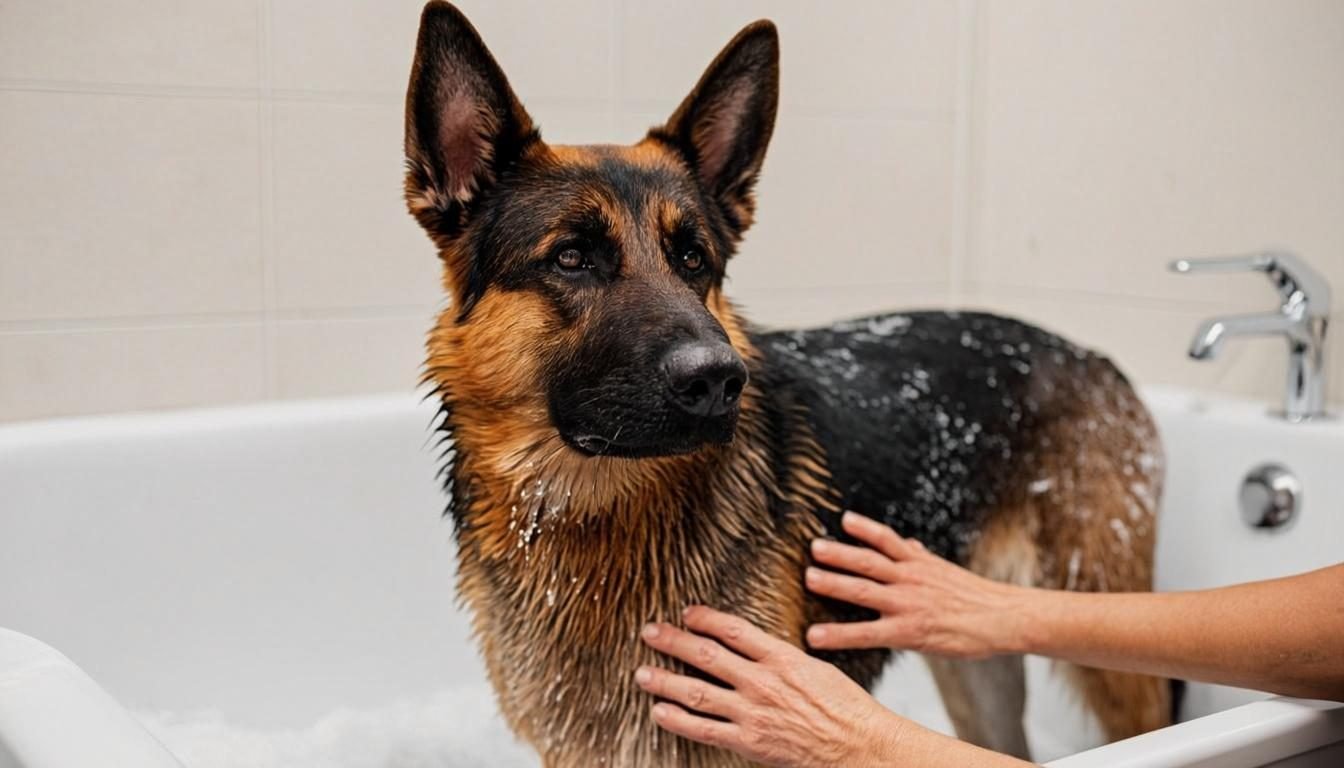
- Brush thoroughly before wetting. Remove loose hair and mats so water and shampoo reach the skin evenly.
- Use lukewarm water — dogs are sensitive to extremes. Test temperature on your wrist.
- Wet the coat completely, aiming for the skin. Apply shampoo sparingly and work from neck to tail, paying attention to undercoat areas and armpits. Use a light touch; avoid harsh scrubbing that irritates skin.
- Rinse thoroughly. Any shampoo left in the coat can cause itching or flaking.
- Apply conditioner only if the product is formulated for dogs and your dog tolerates it. Rinse well.
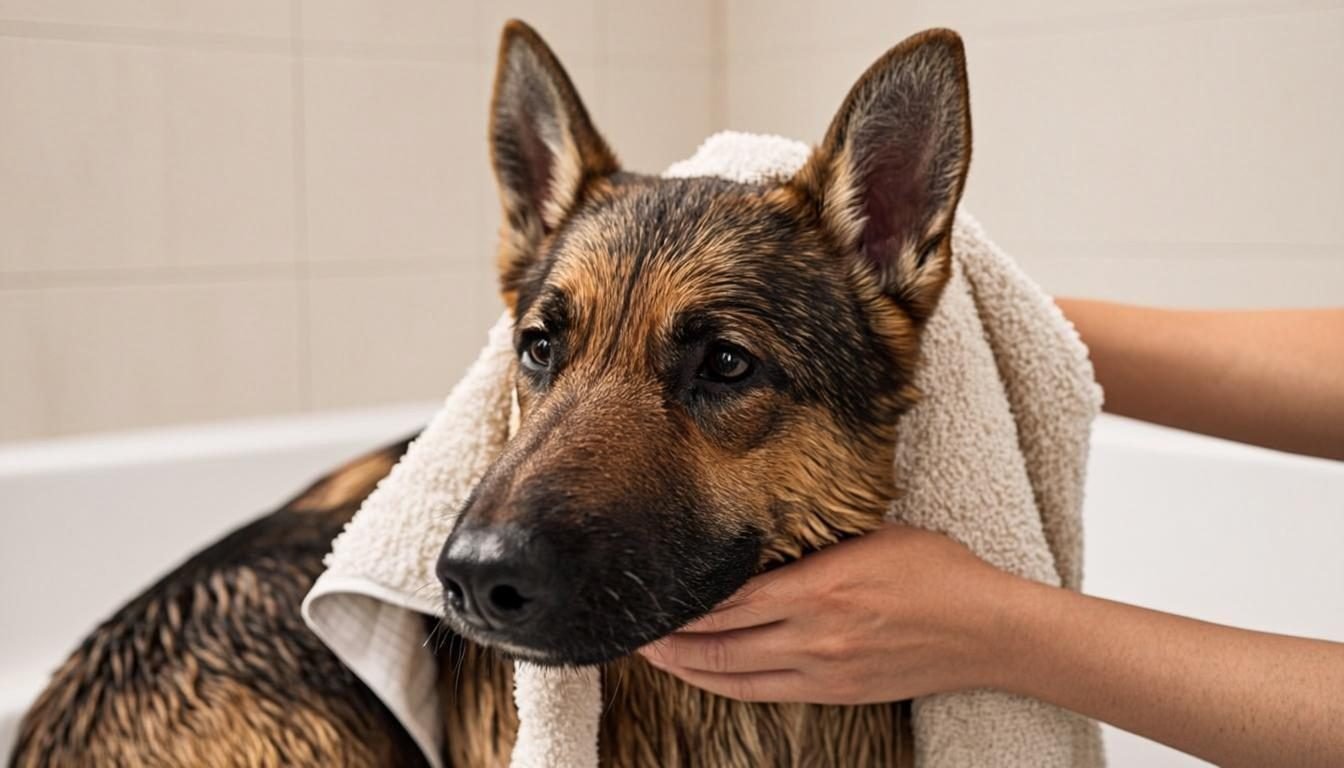
- Dry the dog: towel-dry first, then use a blow dryer on low cool/warm settings if the dog tolerates it. Keep the dryer moving and avoid hot air on the skin. For heavy undercoats, drying well helps prevent odor and skin problems.
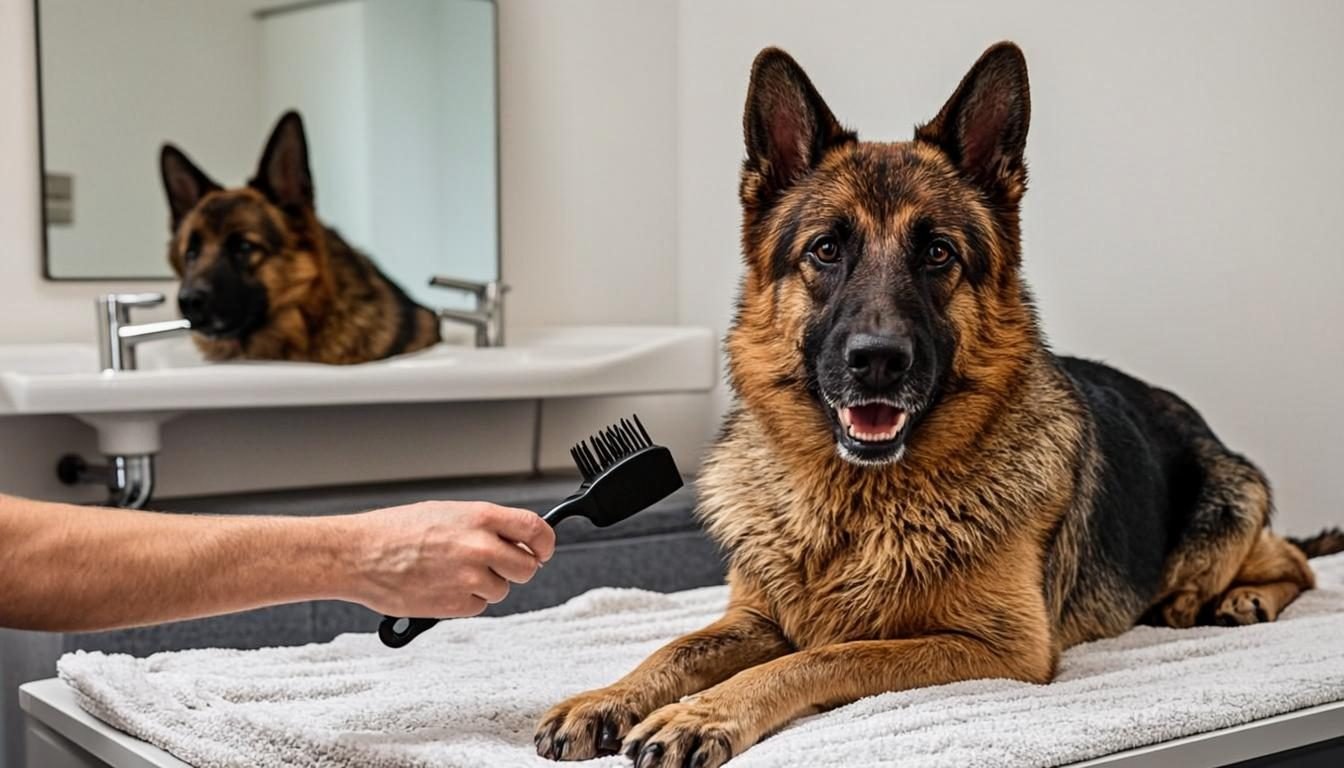
- Brush again after the coat is dry to remove loosened hair and restore coat lay.
If you or your dog are anxious about bathing, start with short, positive sessions and reward calm behavior with treats and praise. If bathing at home feels overwhelming, consider a professional groomer. The RSPCA offers advice on choosing the right groomer and what to expect: RSPCA: Choosing the Right Dog Groomer.
Choosing shampoos and products
Not all shampoos are created equal. Look for products labeled for dogs and designed for your dog’s skin type (sensitive, normal, oily). Human shampoos typically change pH balance and can dry a dog’s skin.
- Avoid shampoos with harsh detergents or strong fragrances if your dog has sensitive skin.
- For occasional deodorizing between baths, a gentle, dog-formulated rinse or waterless shampoo can help — but don’t overuse them.
- If your dog has fleas, ticks, or a skin infection, talk to your vet before choosing insecticidal or medicated products.
For practical guidance on selecting safe, effective items, consult our responsible product-selection criteria. When in doubt, a groomer or veterinarian can recommend brands and formulations suitable for your dog.
Brushing and routine coat care between baths
Bathing is only one part of coat care. Regular brushing removes loose undercoat, spreads natural oils, and reduces the need for frequent baths. During shedding seasons, increase brushing frequency to daily or several times a week depending on hair loss.
For an overview of tools and brushing technique that work well for German Shepherds, see our guide to the complete grooming routine, which covers brushes, deshedding tools, and step-by-step daily and monthly tasks.
Swimming, Mud, and Quick Rinses Between Baths
Swimming wets the coat, but lake, river, or pool water is not a substitute for a shampoo bath. Chlorine and natural bacteria can linger in the dense undercoat, so a quick rinse with clean, lukewarm water after every swim helps prevent irritation and odor. A rinse-only session is gentle enough to repeat as often as your dog swims, provided you towel-dry the undercoat thoroughly afterward and keep your German Shepherd warm until fully dry.
Mud works the opposite way: it is easiest to remove once it has dried and been brushed out of the guard hairs, rather than being washed into the drain after every muddy outing. For a truly filthy dog — a rolling-in-something situation — a targeted body wash with a mild dog shampoo beats a full immersion bath, and routine spot-cleaning of paws and undercarriage after rainy walks keeps most German Shepherds comfortable between full baths.
When a vet should be involved
Bathing isn’t a substitute for veterinary care. Contact your veterinarian if you observe:
- Persistent itching, hot spots, scabs, or hair loss.
- Red, inflamed, or oozing skin areas.
- An unusual odor that doesn’t resolve after cleaning, particularly with systemic signs like lethargy or loss of appetite.
- Any suspected chemical exposure — rinse and seek urgent veterinary advice based on local guidelines.
For skin conditions, your vet may recommend specific medicated shampoos, topical therapies, or investigation into allergies or endocrine causes. Always follow a vet’s guidance for treatment frequency and product choice.
Puppies, seniors, and special cases
Puppies
Puppies should be introduced gently to bathing. Use a puppy-safe shampoo and avoid frequent baths unless necessary. Puppies also benefit from early positive handling so washing becomes a calm, predictable event.
Seniors
Older dogs may be more sensitive to temperature and may have mobility issues. Use non-slip surfaces, keep sessions short, and dry them thoroughly. If your senior has fragile skin or health concerns, check with your vet before bathing.
Country-aware and seasonal considerations
Local climate, water quality, and common environmental exposures affect decisions. In rainy or muddy climates, you may need to clean the feet and undercarriage more often. In extremely dry climates, limit baths to avoid stripping oils and focus on brushing and spot-cleaning with damp cloths.
If you travel or take your dog abroad, be aware that recommended products, available ingredients, or grooming practices may vary by country; consult local veterinary guidance when needed.
Common mistakes and how to avoid them
- Overbathing: frequent bathing with improper products can dry and irritate the skin. Match frequency to need and use dog-formulated shampoos.
- Insufficient rinsing: leftover shampoo causes itching. Rinse until water runs clear.
- Skipping brushing: brushing before and after bathing prevents mats and improves drying.
- Using human products: pH differences can be harmful; use shampoos made for dogs.
Practical examples and scenarios
Example 1: Apartment companion
Lucy, a low-drive pet-line German Shepherd, lives in an apartment and walks on paved paths. She doesn’t roll in mud and has healthy skin. Brushing twice weekly and a bath every 3–4 months usually keeps her coat clean and fresh. Spot-clean paws after rainy walks.
Example 2: Active, outdoor working dog
Max, a working-line German Shepherd, runs trails and swims in rivers. He often picks up burrs and vegetation. Brushing after outdoor days, rinsing off salty or chemically contaminated water, and bathing every 4–6 weeks works well. If he’s particularly dirty after an event, clean and dry affected areas promptly.
Example 3: Dog with sensitive skin
Rory, a sensitive-skinned German Shepherd, shows occasional itching and dry patches. His owner consults a veterinarian who prescribes a medicated shampoo to be used under guidance. Baths are limited to the widely recommended schedule, and gentle brushing is used between baths to remove loose hair.
Checklist: Quick decisions before you bathe
- Is the dog visibly dirty or smelly beyond what brushing solves?
- Are there any skin problems that require vet guidance before bathing?
- Do you have a dog-safe shampoo and a non-slip wash area ready?
- Can you dry the coat thoroughly to avoid damp undercoat issues?
- Is the dog calm and cooperative, or should you seek a professional groomer?
Further reading: More coat-care resources for a spotless dog: choosing a professional German Shepherd groomer the best shampoo for a German Shepherd the best brush for a German Shepherd.
Frequently Asked Questions About Bathing a German Shepherd
Can I bathe my German Shepherd every week?
Weekly baths are rarely necessary and can thin the coat’s natural oil layer over time, leaving skin dry and the coat dull. Unless your veterinarian has prescribed a medicated bathing routine for a diagnosed skin condition, most German Shepherds do better with baths spaced four to eight weeks apart, supported by weekly brushing and quick spot-cleans in between.
How often should you bathe a German Shepherd puppy?
Treat puppies like adults with a gentler setup: a puppy-formulated shampoo, shallow lukewarm water, a non-slip surface, and a warm room — roughly every four to six weeks or whenever they get genuinely dirty. Keep sessions short and positive, because early baths set the tone for a lifetime of cooperative grooming.
What happens if I bathe my dog too often?
Overbathing strips the sebum that waterproofs the outer coat and cushions the skin. Watch for flaking, scratching, a bleached or dull look, and — paradoxically — a coat that turns greasy faster as the skin compensates. If your German Shepherd shows these signs, stretch the interval and replace a bath with an extra brushing session.
Should I brush my dog before or after the bath?
Both, if you can spare ten minutes. Brushing before the bath removes dead undercoat and breaks up mats so water and shampoo can reach the skin evenly. Brushing again once the coat is completely dry lifts out the loose hair a bath dislodges and leaves a smoother, glossier finish with far less shedding on your floor.
What water temperature is safest?
Lukewarm — close to what you would use for a baby’s bath. Dogs run hotter than people, so water that feels merely cool to your hand can be unpleasant for them, and hot water dries the skin quickly. Test the flow on your inner wrist, keep pressure gentle, and aim the spray with the coat, not straight into the face or ears.
Sources and limits
For practical grooming tips, the ASPCA provides general dog grooming guidance, including bathing and coat maintenance: ASPCA: Dog Grooming Tips. For choosing a groomer and understanding professional services, see the RSPCA’s guidance: RSPCA: Choosing the Right Dog Groomer.
Limitations: This article offers general, non-diagnostic information about bathing frequency and coat care. It is not a substitute for veterinary advice. If your German Shepherd has persistent skin symptoms, behavioral issues during bathing, or any health concerns, consult a qualified veterinarian or a certified, reward-based behavior professional. For product choices and equipment, follow the guidance in our responsible product-selection criteria and grooming overview in the complete grooming routine. Professional groomers and veterinary teams can offer individualized recommendations based on your dog’s coat, health, and lifestyle.
With consistent brushing, sensible bathing intervals tailored to your dog, and appropriate products, most German Shepherds thrive with clean, healthy coats and comfortable skin. When in doubt, seek professional advice rather than making abrupt changes to bathing or treatment routines.