
Updated for November 2026. Finding a dependable GPS tracker for German Shepherd owners is less about choosing the longest advertised battery life and more about matching the device to your dog’s size, your local coverage, and the way you travel. A tracker can help you look for a missing dog, but it cannot guarantee a location fix or prevent an escape.
How this comparison was prepared: We compared current manufacturer documentation and support pages, not hands-on test results. Product features, service coverage, subscription plans, and prices may change. Verify the details for your location before ordering.
Affiliate disclosure: As an Amazon Associate I earn from qualifying purchases. Links marked as paid may generate commissions at no extra cost to you. Read our affiliate disclosure. Manufacturer information links are editorial sources, not affiliate links.
In this guide
Quick answer: which GPS tracker should you consider?
For a typical German Shepherd owner who wants a phone-based escape alert, start by comparing Tractive DOG 6 XL and Fi Series 3+. If you prefer an attachable unit with family sharing, consider Pawfit 3. For hikes and other settings where cellular signal may be unreliable, consider a Garmin Alpha T 20 system with a compatible handheld. These are use-case recommendations, not lab-tested rankings.
| Device | Best-fit scenario | Connection | Battery claim / consideration | Important trade-off |
|---|---|---|---|---|
| Tractive DOG 6 XL | Large dog; daily location and escape alerts | GPS + mobile network | Up to 6 weeks with power-saving zones, per Tractive | Separate subscription and mobile coverage required |
| Fi Series 3+ | Integrated smart collar for everyday routines | GPS with connected services | Multi-week, conditional manufacturer estimates | Membership and compatible collar sizing matter |
| Pawfit 3 | Collar-mounted tracker and shared family access | GPS + 4G mobile network | Up to 8 days, according to Pawfit’s model comparison | Subscription and regional coverage vary |
| Garmin Alpha T 20 | Off-grid/outdoor tracking with compatible handheld | Dedicated Garmin radio/tracking system | Depends on tracking settings and battery configuration | Requires a compatible handheld; more gear and higher upfront complexity |
Battery figures are vendor claims under stated conditions, not results from our tests. See the linked source pages below. No live prices are shown because seller prices and subscription offers can change.
GPS tracker for German Shepherd: how we compared these four options
Choosing a GPS tracker for German Shepherd owners starts with a close look at the fit, durability and signal rather than the breed label alone. A German Shepherd may have a substantial neck, a thick coat and an active lifestyle, but breed name alone never determines device fit. We assessed each option against six buying questions: coverage, tracking method, attachment security, battery needs, ongoing cost and recovery workflow. We did not assign fabricated performance scores or claim to have tested collars on our own dogs.
- Coverage: Check your home’s location, daily walking routes, vacation areas and any remote trails. GPS satellites and the cellular network serve different purposes; a device can determine a position but still fail to send it promptly without data coverage.
- Collar attachment: Measure neck circumference and check how the tracker clips to a collar or harness. Consider whether it can detach during rough play.
- Tracking speed: Read the manufacturer’s current description of normal updates versus an emergency or live mode. More frequent updates can increase battery drain.
- Battery routine: Ask how frequently you are realistically willing to recharge the device, especially if you travel.
- Total cost: Compare the device, required subscription, compatible collar, possible replacement clips and renewal terms over a full year.
- Recovery plan: Test notifications before you need them; maintain ID tags and a registered microchip as independent safeguards.
1. Tractive DOG 6 XL — for large dogs and phone-based escape alerts
Tractive’s DOG 6 lineup provides live location tracking, virtual fences and alerts using GPS and a mobile-data connection. The company positions the DOG 6 XL for dogs over 20 kg, making it a model worth evaluating for many adult German Shepherds. The standard DOG 6 is also an option if its attachment and size work better for your dog.
If you are looking for a GPS tracker for German Shepherd dogs that connects with a phone, Tractive is worth comparing with the other cellular options. What stands out: Tractive quotes up to six weeks for the DOG 6 XL with power-saving zones. The regular DOG 6 is quoted at up to two weeks under specified conditions. Those figures are not guarantees for an escape scenario when live location updates are frequent.
Potential drawbacks: A separate subscription is required. Service depends on supported cellular networks in the country and area where you plan to use it. Confirm collar compatibility and how the tracker fastens before ordering.
Who should shortlist it: Owners who want a clear smartphone-based tracking workflow, virtual-fence alerts, and a model designed for larger dogs.
Check Tractive DOG 6 / DOG 6 XL specifications and regional coverage.
2. Fi Series 3+ — for an integrated smart-collar setup
Fi’s Series 3+ combines its tracker with a smart-collar format. The company markets GPS location, escape alerts and activity-related features. Compared with a clip-on module, an integrated collar may simplify everyday use, but choosing the right band and fit becomes especially important.
This GPS tracker for German Shepherd owners differs from clip-on devices in its all-in-one collar design. What stands out: Fi advertises extended battery life under favorable use conditions; published claims can differ by whether a home base and power-saving connections are used. Treat marketing maximums as best-case figures, not a promise of weeks of continuous emergency tracking.
Potential drawbacks: Review membership costs and feature availability in your region. Assess neck fit and the collar’s durability for your dog’s activities. A phone app alone does not overcome gaps in mobile service.
Who should shortlist it: Owners who prefer a collar-integrated system instead of attaching a separate tracker.
Review the current Fi Series 3+ range and membership details.
3. Pawfit 3 — for a clip-on GPS tracker with family sharing
Pawfit 3 is a collar-mounted tracker that uses GPS together with a 4G mobile connection. Pawfit describes live location access and family sharing, which can be useful when several household members look after the same dog.
As an alternative GPS tracker for German Shepherd households, Pawfit 3 emphasizes family sharing and an attachable unit. What stands out: The company states that up to six family members and friends can share access to the pet’s location and activity information. Its comparison documentation lists up to eight days of battery life for Pawfit 3; actual performance depends on use.
Potential drawbacks: The embedded SIM requires a subscription for network-based location updates. Confirm the available service area, retention clip, water resistance and subscription terms for your country. Pawfit lists IP68 water resistance, but no wearable should be treated as impossible to lose or damage.
Who should shortlist it: Owners wanting a separate tracker that can be attached to a suitable collar, particularly in households with shared dog-care responsibilities.
Check Pawfit 3 specifications and compare Pawfit models.
4. Garmin Alpha T 20 — for compatible handheld-based outdoor tracking
The Garmin Alpha T 20 belongs to a different type of system. It pairs with compatible Garmin dog-tracking handhelds rather than simply behaving like a standalone smartphone tracker on a general-purpose cellular data plan. Garmin describes the model as a dedicated tracking collar for outdoor use, with its performance determined by terrain and compatible equipment.
A dedicated GPS tracker for German Shepherd working-dog trips requires a different buying checklist from smartphone collars. What stands out: A suitable Garmin radio-based system may be relevant to owners who spend significant time away from reliable cellular coverage. Garmin has described tracking range of up to nine miles under favorable conditions with compatible handheld equipment; buildings, foliage and terrain can reduce practical range.
Potential drawbacks: You must factor in the handheld unit, supported pairing, training-related features of specific models, local radio rules and the learning curve. This is not the simplest option for an ordinary neighborhood walk.
Who should shortlist it: Experienced outdoor users who already own compatible Garmin hardware or have a specific need for a dedicated tracking system.
Check Garmin handheld/collar compatibility and Alpha T 20 specifications.
Five mistakes to avoid before buying
- Choosing by battery headline alone. Battery estimates often assume energy-saving behavior; live mode drains power faster.
- Ignoring the subscription. A low device price can be misleading if the service renewal does not fit your budget.
- Skipping the coverage check. Look at the network and countries supported by the precise model, not only the brand name.
- Forgetting fit and retention. A tracker attached to an insecure or poorly fitting collar can be left behind when a dog slips free.
- Assuming tracking prevents escape. A tracker is one part of a safety plan; secure fencing, supervised walks, recall training and identification remain essential.
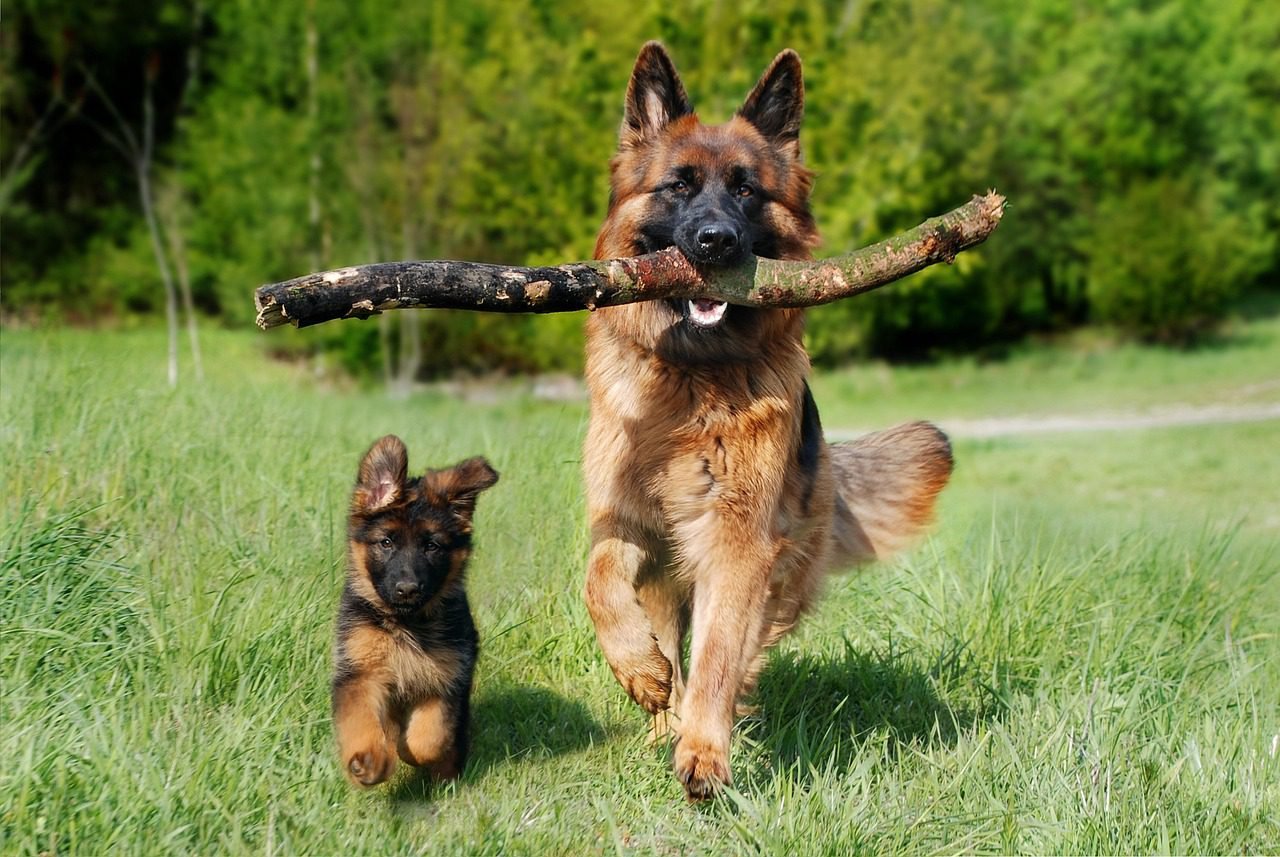
How to fit and test a tracker on a German Shepherd
Measure the neck and, for clip-on devices, check the width of the collar strap as well as the manufacturer’s attachment instructions. Check whether thick fur interferes with contact or positioning. Follow the maker’s fit guidance, avoid restricting breathing or movement, and inspect for skin irritation after the first few outings.
Before relying on a tracker, charge it, activate the appropriate service, confirm that the app can display a current location, test its safe-zone alert, and practice locating the collar outside your home. Keep the battery reminder and subscription renewal reminder somewhere you will actually see them. Recheck after software updates and whenever the collar or clip is replaced.
For everyday walking equipment, see our German Shepherd harness comparison. For recall and walking skills, browse our German Shepherd training guide. These provide important context: a GPS unit does not replace training or a secure harness.
GPS tracker vs microchip vs ID tag
For any GPS tracker for German Shepherd safety, identification is a separate issue. They solve different problems. A GPS tracker can help provide a location if its battery, attachment and connection are working. A microchip contains an identification number that a suitable scanner can read; it does not send out your dog’s location. A visible ID tag can help someone contact you immediately without needing a scanner. The American Veterinary Medical Association explicitly notes that a microchip is not a GPS device.
Keep your microchip registration details current, use a legible ID tag and take clear photographs of your dog. Consult the AVMA microchipping FAQ for identification information, and see our German Shepherd puppy care guide for general ownership context.
What should you budget for?
A responsible comparison calculates total cost of ownership, not just the sticker price. Write down the device price, first-year service, renewal terms, a collar or mount if sold separately, and any plausible replacement accessories. Over three years, use this simple worksheet:
3-year estimate = device + installation/accessories + service fees for 36 months + expected replacements.
When comparing a GPS tracker for German Shepherd owners, also budget for a replacement mounting clip and remember that membership terms can differ by region and bundled offer.
Do not rely on a static price in an article that may remain online for months. Check the official checkout page and the subscription contract on the day you buy. We intentionally omit live prices until retailer offers have been verified.
Frequently asked questions
What is the best GPS tracker for German Shepherd owners in 2026?
There is no universal best model. Tractive DOG 6 XL and Fi Series 3+ are useful starting points for phone-based everyday tracking, Pawfit 3 offers a clip-on alternative, and Garmin Alpha T 20 is worth studying for compatible outdoor handheld setups. Coverage, fit and recurring cost should decide the purchase.
Does a dog GPS tracker work without cellular coverage?
Many everyday trackers depend on mobile data to send the dog’s GPS location to your app, so coverage can be the limiting factor. Dedicated Garmin systems work differently and need compatible hardware. Compare exact coverage and operating limits before using any model off-grid.
Can a GPS collar replace a microchip?
No. A microchip provides identification through a scanner; a GPS tracker helps with location under appropriate conditions. Keep both, together with a readable ID tag.
Will the tracker fit a German Shepherd puppy?
Do not rely only on the breed name or an adult size estimate. Check the individual product’s minimum weight, physical dimensions and secure fit; measure frequently as the puppy grows.
Are battery life estimates guaranteed?
No. Treat published figures as conditional manufacturer claims. Live tracking, cold weather, weak coverage and frequent location checks can reduce endurance.
Will a GPS tracker prevent my dog from escaping?
No. It may help you search after an escape, but proper containment, supervised outings, training and identification are still necessary.
Exact Amazon product links: check the model before ordering
Amazon product links (paid): The four links below point to individual product ASINs rather than search pages. The model numbers were matched against independently indexed retail catalog records in November 2026. Amazon’s live product pages and stock status could not be checked from our editorial environment. Confirm model, color, size, subscription bundle, seller and availability on Amazon before purchase.
- View Tractive DOG 6 XL (2026, black) on Amazon.com (paid link)
- View Fi Series 3+ (blue, large, 6-month membership bundle) on Amazon.com (paid link)
- View Pawfit 3 GPS pet tracker on Amazon.com (paid link)
- View Garmin Alpha T 20 GPS collar (handheld sold separately) on Amazon.com (paid link)
Some devices require a separate membership and Garmin Alpha T 20 requires a compatible handheld. Prices and product offers may change without notice. This page does not publish unverified live prices, star ratings or stock claims.
Final verdict
For most readers, first narrow the choice to a cellular smart tracker versus a dedicated handheld system. Then choose the precise model that fits your dog’s collar, has confirmed service where you walk, offers a realistic recharging routine, and fits your ongoing budget. For an everyday large-dog cellular shortlist, start with Tractive DOG 6 XL and Fi Series 3+. Consider Pawfit 3 for an alternative collar-mounted workflow, or a compatible Garmin system for specialized outdoor use.
Editorial note: Product features were checked against manufacturer or support documentation in November 2026. This guide does not claim independent field tests, live retailer pricing, or guaranteed tracking results.