
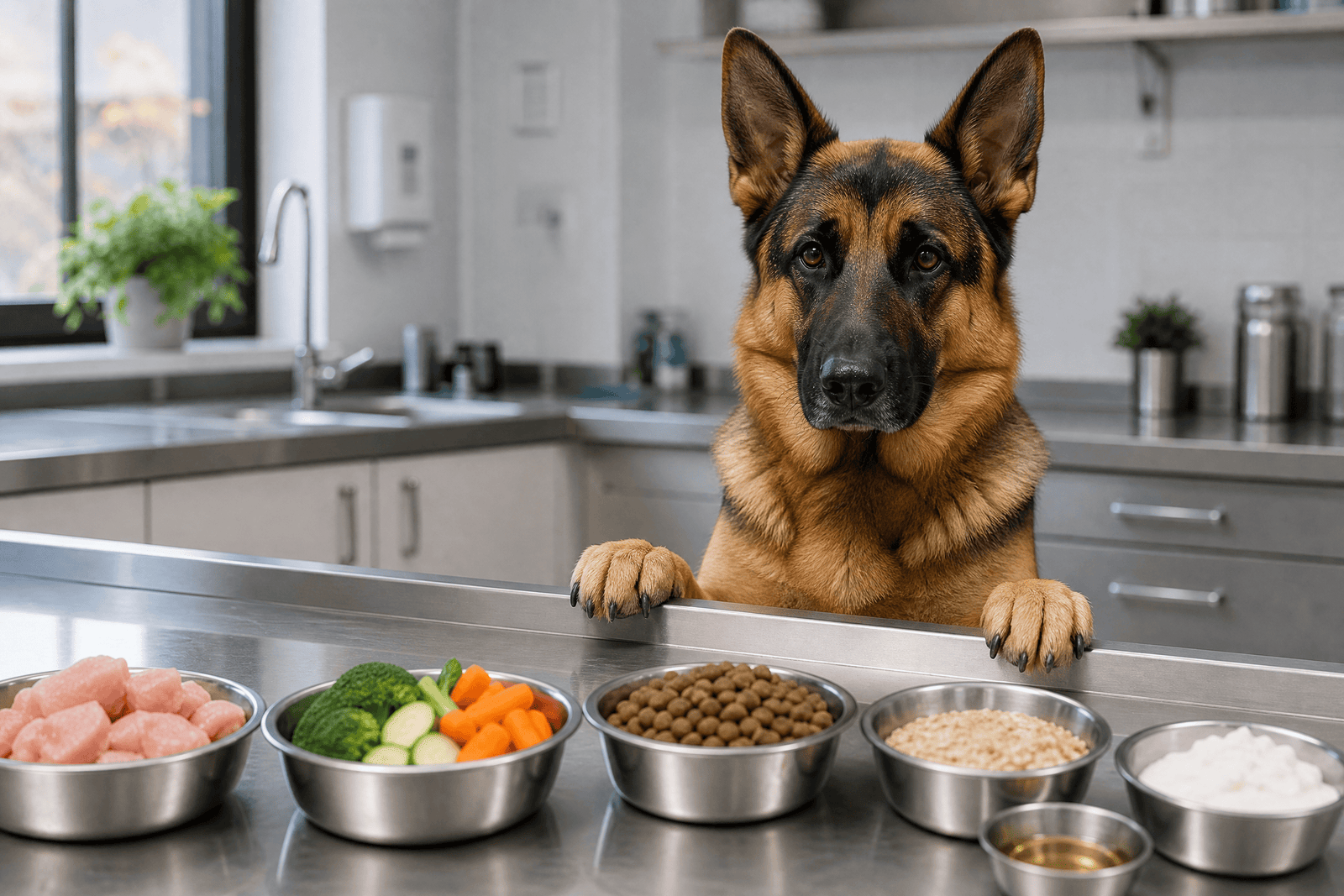
A raw diet for a German Shepherd contains uncooked animal ingredients. The main decision is whether its risks and practical demands fit your household—not whether raw food is inherently healthier. This guide explains the evidence, label checks, and questions to take to your veterinarian.
There is no demonstrated health advantage over a balanced cooked diet. WSAVA identifies nutritional and infectious risks, while the CDC and Public Health Agency of Canada advise against feeding raw pet food. These recommendations apply to raw treats as well as meals. See the sources below.
Affiliate disclosure: German Shepherd Haven may earn from qualifying purchases through marked links, at no extra cost to you. Read the disclosure.
What Is a Raw Diet for German Shepherds?
Products may be fresh, frozen, dehydrated, or freeze-dried. A product described as raw is not the same as a cooked fresh food. BARF and prey-model labels describe approaches to ingredient selection; they do not establish nutritional adequacy.
Do not use a meat–bone–organ ratio or a percentage of body weight as proof that a recipe is complete. Ask for the nutritional adequacy statement, intended life stage, calorie content, and feeding instructions. A complementary food or topper is not a complete daily diet.
How to Evaluate Claims About Raw Feeding
Separate measurable goals from testimonials. If the goal is to investigate itching, improve stool quality, or manage weight, start with a veterinary assessment and a defined plan. Switching to raw does not establish what caused a symptom or prove that raw feeding treated it.
A cooked complete diet may address your priorities without introducing the same raw-animal-food risks. Our feeding and nutrition guide explains life-stage needs and diagnostic diet trials.
Main Risks: Germs, Nutrient Imbalance, and Bones
Infection risk
Raw animal foods can contain harmful bacteria. A pet that appears healthy can still spread germs through food handling, feces, or contact. High-pressure processing and freezing should not be treated as guarantees of sterility. Households with young children, pregnant people, older adults, or immunocompromised people need particular caution.
Nutritional imbalance
Both homemade raw and homemade cooked diets can contain nutrient deficiencies or excesses. Growing puppies are particularly vulnerable. Adding a general supplement or varying organs does not automatically correct an unformulated recipe.
Bone injuries
Raw bones can fracture teeth or cause obstruction. Supervision does not remove these risks. Do not give chicken wings or necks as a supposedly safe introduction, and do not adjust bone quantities to treat loose stools.
Before Changing Your Dog’s Diet
- Write down the current food, quantities, treats, supplements, and symptoms.
- Ask your veterinarian whether a food change or diagnostic testing comes first.
- Check the proposed food’s nutritional adequacy, calories, storage requirements, and manufacturer support.
- Agree on portions, transition pace, and a review date suited to the dog.
Do not begin an improvised raw transition for a puppy or an unwell dog. Repeated vomiting, significant lethargy, weight loss, or persistent diarrhea require assessment. Separating kibble and raw into different bowls does not remove the microbial or nutritional risks.
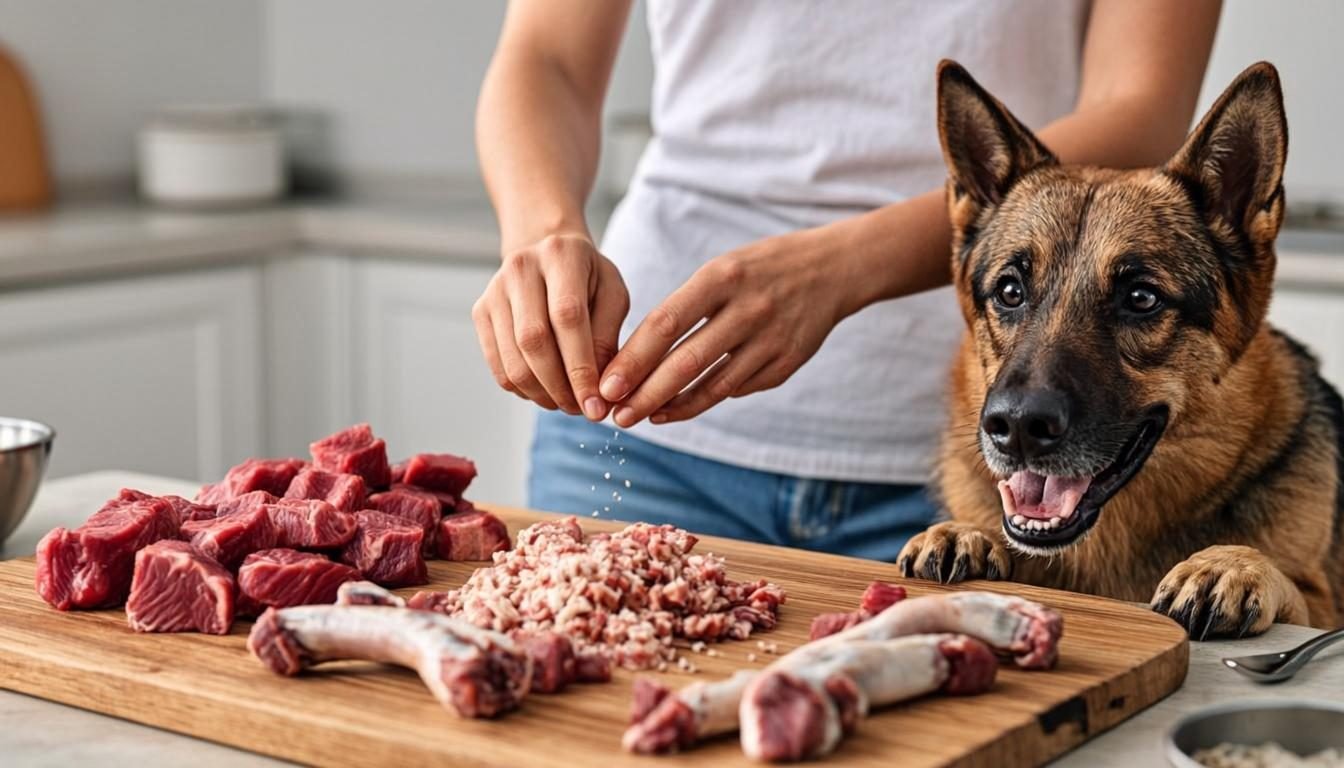
What a Professionally Formulated Meal Plan Should Specify
This article does not provide a universal raw recipe. A usable individual plan should specify exact ingredients and weights, preparation method, required supplements, daily calorie allowance, permitted substitutions, and monitoring. Ask a board-certified veterinary nutritionist to formulate home-prepared meals.
Take this checklist to the consultation: age, current and target weight, body-condition assessment, activity, medical history, household food-safety needs, and realistic budget. Keep written instructions rather than estimating portions by eye.
Compare Costs Using the Actual Daily Portion
Calculate monthly food cost as daily portion cost multiplied by 30. Include shipping, refrigeration, waste, professional formulation, and any prescribed supplements. Compare diets at the same calorie allowance; bag price or price per kilogram alone can mislead.
| Format | Costs and questions to check |
|---|---|
| Complete dry or canned food | Daily calories, portion cost, storage after opening. |
| Complete cooked fresh food | Delivery, fridge/freezer space, expiry, complete versus complementary labeling. |
| Commercial raw | All of the above plus raw-food handling and contamination risks. |
| Home-prepared diet | Formulation, exact ingredients and supplements, preparation time, review visits. |
Use current local quotes. Raw feeding should not be budgeted as a way to avoid veterinary bills.
Common Mistakes to Avoid
- Assuming a commercial product is complete without checking its label.
- Substituting ingredients or supplements without reviewing the recipe.
- Using bone, kelp, liver, or fish oil as an automatic correction for symptoms.
- Treating a normal routine blood panel as proof that every nutrient intake is adequate.
- Using online anecdotes as evidence of treatment for allergy, pancreatic disease, or arthritis.
German Shepherd Puppies Need a Growth-Specific Plan
Choose a complete diet suitable for large-breed growth with your veterinarian. Do not feed a puppy using a generic adult raw ratio or a percentage of its projected adult weight. For home-prepared feeding, professional formulation and growth monitoring are essential.
Read our puppy nutrition guide and bring any planned recipe to your veterinary appointment.
Raw Food Is Not a Treatment Plan
Food allergy
Raw meat can contain the same allergenic proteins as other forms of that ingredient. A supervised elimination trial uses a carefully selected diet and a planned challenge; casually rotating raw meats is not equivalent. University of Illinois guidance explains the diagnostic process.
Joint and digestive problems
Do not use raw bones as joint treatment or an over-the-counter digestive supplement as a substitute for pancreatic enzyme therapy. Have stiffness, weight loss, and recurrent digestive signs assessed. Our health guide explains when to seek help.
Frequently Asked Questions
Is raw feeding risk-free if the recipe is balanced?
No. Nutritional balance and foodborne infection are separate questions; a balanced raw recipe can still carry pathogens.
Can I mix raw food with kibble?
Mixing or separating meals does not solve raw-food safety concerns. Ask your veterinarian whether any topper fits the complete diet and calorie allowance.
Should I add supplements?
Follow the specific formulation. Do not add kelp, calcium, vitamins, or oils by guesswork, and do not assume a multivitamin makes an incomplete recipe complete.
What if my dog improves after a switch?
Record the change, but discuss it with your veterinarian. Several ingredients, calories, or other factors may have changed at once; improvement alone does not establish the reason.
How should raw food be handled if I already use it?
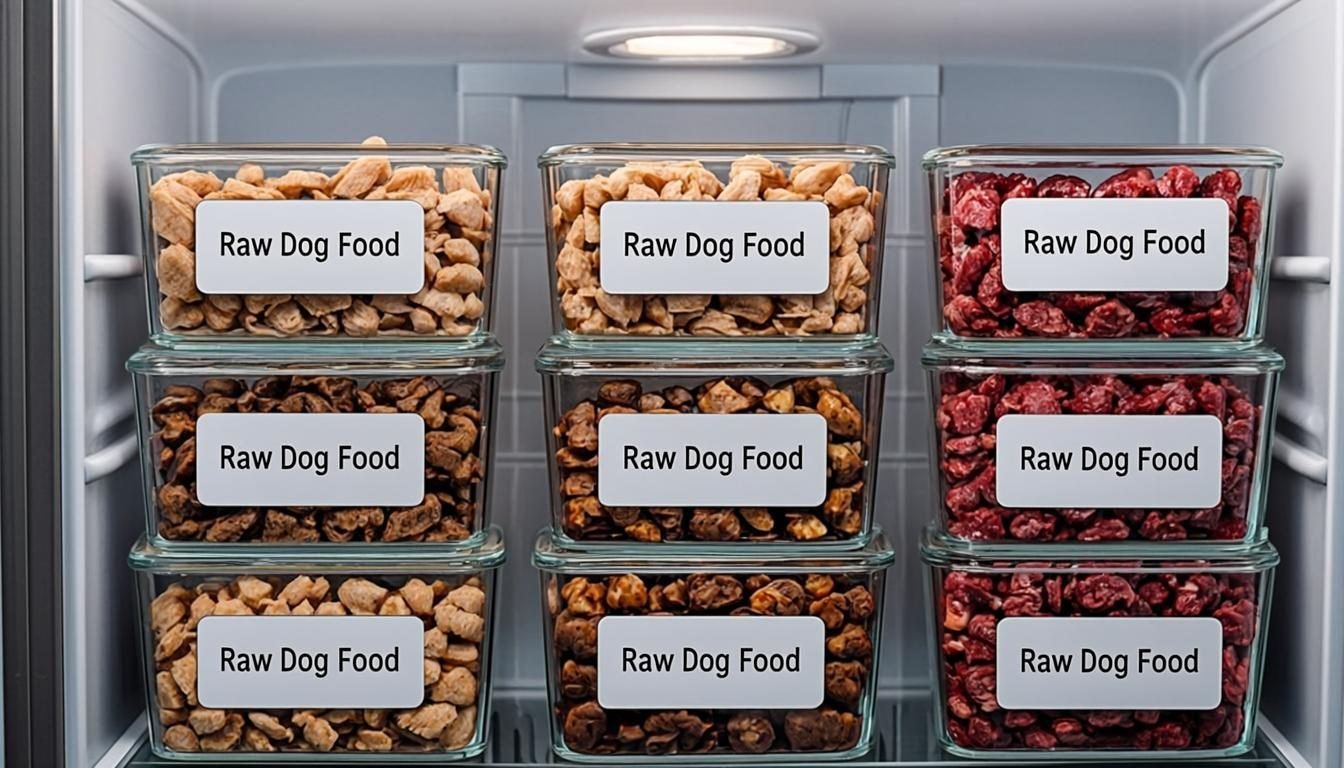
Follow the label, thaw in a sealed container in the refrigerator, keep utensils separate, wash hands and food-contact equipment, and discard leftovers after feeding. Prevent face licking and contact with open wounds. Canadian public-health guidance provides handling advice while recommending safer food options.
Choosing a Diet for Your Household
Start with nutritional adequacy, the dog’s medical needs, and household safety. A complete cooked option is a reasonable alternative to raw. If you want home-prepared food, invest in an individual formulation and follow-up rather than an internet recipe.