
Learn how to reward your German Shepherd without overfeeding: the 10% treat rule, daily calorie budgeting, healthy low-calorie treats, and smart training tips. In practice, German Shepherd treats and calorie budgeting are two sides of the same habit: every reward you hand out spends part of a daily calorie budget this breed’s joints and digestion cannot afford to overspend.
Table of Contents
- Why German Shepherd Treats and Calorie Budgeting Matters
- How to estimate your German Shepherd’s daily calorie needs
- Setting a treat calorie budget
- Reading treat labels and measuring portions
- Low-calorie treat options and portion tricks
- Practical training examples and treat math
- When treats affect weight and when to adjust
- Common pitfalls and how to avoid them
- Checklist: practical steps to start budgeting treats
- Practical tools and tips
- When to get professional help
- Sources and limits
Treats are one of the easiest ways to bond with your German Shepherd and speed training progress. But because German Shepherds are large, food-motivated dogs, it’s easy for rewards to add significant calories and contribute to unwanted weight gain. This guide shows practical, humane ways to budget treats into your dog’s daily calorie allowance, measure portions, and use lower-calorie options without sacrificing training effectiveness or your dog’s enjoyment.
Why German Shepherd Treats and Calorie Budgeting Matters
Treats can be nutritious, motivating, and great for reinforcing good behavior. However, calories from treats are still calories: they count toward total daily intake and can push an active maintenance diet into a surplus that leads to weight gain over time. Excess weight increases joint stress, reduces stamina, and raises risks for common health issues in medium-large breeds like German Shepherds.
Budgeting treats helps you:
- Use food rewards without unintentionally overfeeding.
- Maintain a healthy body condition for activity, work, or aging management.
- Keep training frequent and effective by using appropriately sized, low-calorie treats.
For a full look at treat types and choices, see the existing treats guide for German Shepherds and the daily feeding principles that explain overall meal planning.
How to estimate your German Shepherd’s daily calorie needs
Individual calorie needs vary by age, sex, neuter status, activity level, body condition, and metabolism. A useful starting point for calculations is the Resting Energy Requirement (RER) formula and then applying an appropriate activity factor to get the Maintenance Energy Requirement (MER).
RER is commonly estimated as 70 × (body weight in kg)^0.75. Then you multiply RER by an activity factor: for many adult, moderately active dogs this is often between 1.4 and 1.8, but the exact factor depends on your dog’s lifestyle. Highly active working dogs or athletes will need higher energy; sedentary or neutered dogs may need less.
Because every dog differs, these calculations are a starting point. Review results with a veterinarian to set a safe, individual calorie target and routinely monitor body condition score rather than weight alone.
Setting a treat calorie budget
Most nutrition experts, including the World Small Animal Veterinary Association (WSAVA), emphasize moderation when feeding treats. A commonly recommended guideline is to keep treats to about 10% of the dog’s total daily calorie intake. That keeps the majority of calories coming from a balanced daily diet, which is crucial for overall nutrient needs.
Follow these steps to set a treat budget:
- Estimate your dog’s daily caloric requirement (MER) using RER × activity factor.
- Decide on a treat percentage—10% is a common, conservative target for most dogs.
- Convert 10% of daily calories into actual treat pieces using the treat’s calories-per-piece from the package or a scale.
Example: calculating a treat budget
These examples are for illustration only; consult your veterinarian to confirm targets for your dog.
- Example A — 30 kg (66 lb) adult German Shepherd, moderately active
- RER = 70 × (30^0.75) ≈ 70 × 12.7 ≈ 889 kcal/day.
- If activity factor = 1.6, MER ≈ 889 × 1.6 ≈ 1,422 kcal/day.
- 10% treat budget = 142 kcal/day for treats.
- Example B — 40 kg (88 lb) active German Shepherd
- RER = 70 × (40^0.75) ≈ 70 × 16.9 ≈ 1,183 kcal/day.
- If activity factor = 1.6, MER ≈ 1,183 × 1.6 ≈ 1,893 kcal/day.
- 10% treat budget = 189 kcal/day for treats.
Next, divide the treat calorie budget by the calories per treat to determine how many pieces you can safely give. If one training treat is 6 kcal, 142 kcal/day allows about 23 treats; if a treat is 25 kcal, the same budget only allows about 5–6 treats.
Remember: calories in treats include any table scraps, chews, or toppers you add to meals.
Reading treat labels and measuring portions
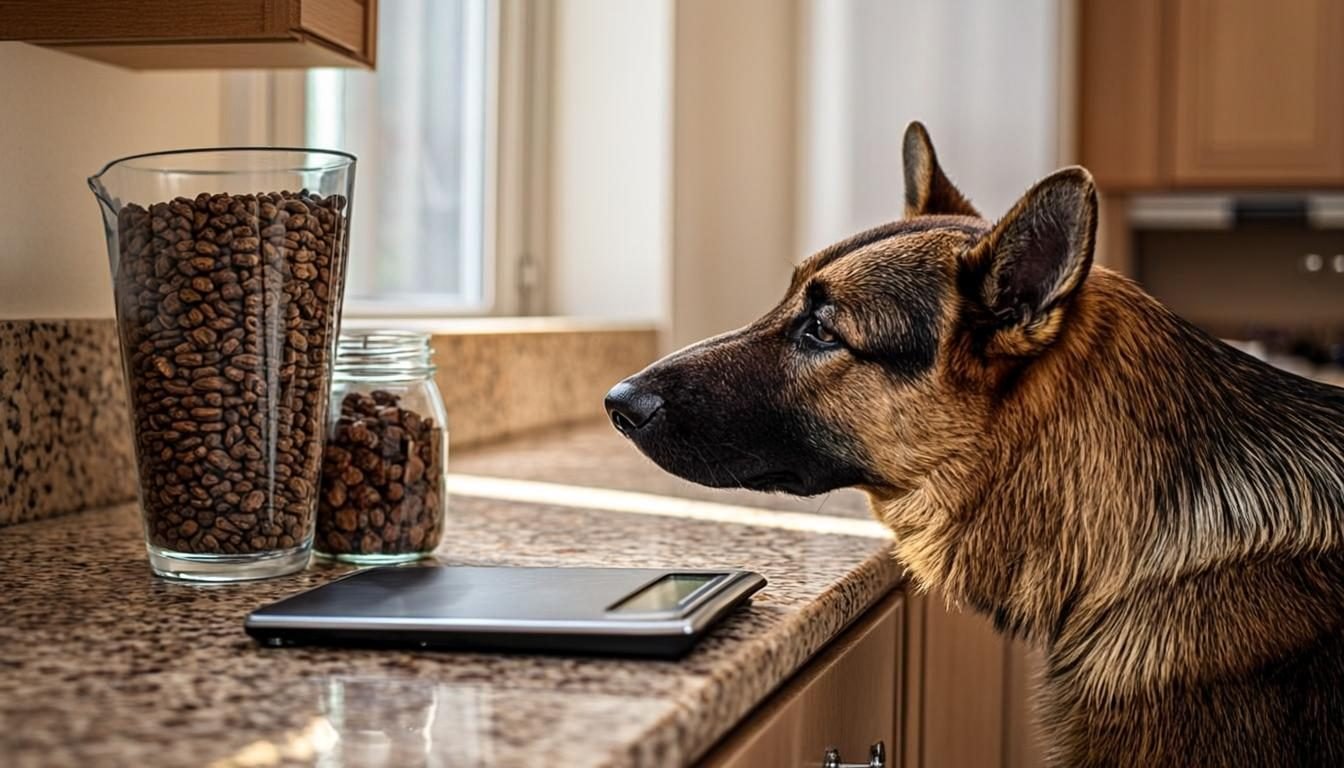
To convert a treat budget into everyday practice, you need two pieces of information: calories per serving (kcal) and how many pieces are in that serving. If a package lists calories per 100 g, use a kitchen scale to weigh an individual treat and calculate calories per piece: calories per 100 g × (weight of one treat in g) / 100.
When no label is available (homemade or fresh treats), use a food scale and online calorie databases or your veterinarian’s guidance. Keep a small digital notebook or app log for a week so you learn how many treat calories you typically give during training, outings, and at-home reinforcement.
Low-calorie treat options and portion tricks
Lower-calorie options let you reward more frequently without exceeding the budget. Consider:
- Small, soft training treats designed for repeated reinforcement — these are often 2–6 kcal per piece.
- Using part of your dog’s regular kibble as training rewards. This keeps total calories in the same diet while allowing high-frequency reinforcement.
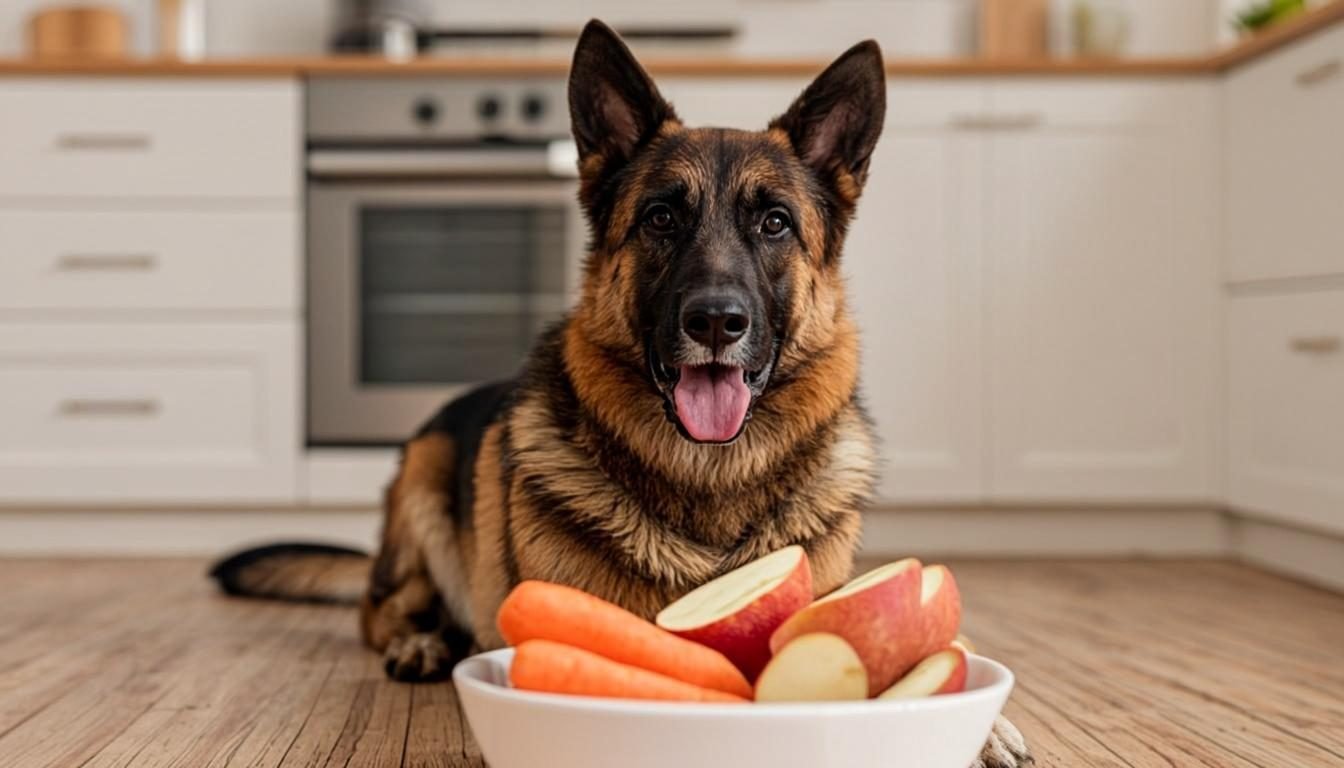
- Fresh vegetables and fruits that are dog-safe in small amounts—thin carrot slices, apple pieces (no core/seeds), green beans—after checking with your veterinarian for any dietary cautions.
- Breaking larger treats into tiny pieces. One pig ear or jerky strip can be divided into dozens of small bites.
Also use non-food rewards to supplement: praise, play with a favorite toy, a brief tug, or life rewards like door access or sniffing time. These count zero calories but can be powerful motivators when paired with food reinforcement.
Practical training examples and treat math
For obedience and learning new cues, you typically need frequent, immediate reinforcement. Here are practical ways to keep calories reasonable while training effectively:
Example: teaching sit to a new dog
- Use tiny training treats (~3 kcal each). If your dog’s treat budget is 150 kcal/day, you could give up to 50 tiny treats if you used only them for reinforcement that day. In practice, use a mix of food and non-food rewards.
- Deliver very small pieces immediately at the cue. The bite should be just enough to be noticed.
Example: high-value reinforcement for distraction training
- Reserve a few higher-calorie treats for particularly challenging contexts (busy park, working trials). Because these are higher value, you’ll use fewer pieces; count them against the daily budget. Save more of the budget for low-cal treats around the house.
When treats affect weight and when to adjust
Monitor body condition score (BCS) regularly. BCS is a hands-on assessment of fat coverage and muscle that gives a clearer picture than weight alone. If your dog is gaining unwanted fat, reduce treat calories by lowering treat frequency, switching to lower-cal options, or decreasing meal kilocalories slightly under veterinary guidance.
Minor short-term increases in treats (holidays, special training sessions) are usually fine if you compensate by reducing meal calories or increasing activity over the following days. For persistent weight gain, consult your veterinarian to rule out medical causes and to create a safe weight-loss plan if needed.
Common pitfalls and how to avoid them
- Giving “treats” that are actually entire meals: avoid counting whole canned toppers or table scraps as negligible—those calories add up quickly.
- Underestimating portion sizes: a small handful can be many treats; use a scale until you know typical weights.
- Using only high-calorie rewards for every cue: reserve the highest-value treats for the most important training moments and use low-cal options for routine reinforcement.
- Not tracking treats: a short daily tally for a week can reveal surprising habits and is an easy way to find quick reductions.
Checklist: practical steps to start budgeting treats
- Estimate your dog’s MER (use RER × activity factor as a starting point).
- Set a treat budget (try 10% of daily calories as a guideline and confirm with your vet).
- Weigh or check label kcal for your treats; calculate calories per piece.
- Choose low-cal treats or use kibble for high-frequency training.
- Break larger treats into smaller pieces for many quick rewards.
- Incorporate non-food rewards (play, praise, access to activities).
- Track treats for a week, then adjust based on body condition and training needs.
Practical tools and tips
Useful items to keep on hand:
- Small kitchen scale for weighing treats and portions.
- Measuring spoons if you use kibble as training rewards.
- Clicker or short marker word to improve timing so you can use smaller treats effectively.
- Treat pouch with separate compartments for low- and high-value treats so you can choose appropriately for the situation.
Label treat containers with kcal per piece to make on-the-spot math faster. Keep a simple phone note with your dog’s daily kcal target and treat budget for quick reference at the park.
Rule of thumb: frequent, tiny rewards win over fewer large ones when you want lots of repetitions without blowing the calorie budget.
When to get professional help
If your dog is overweight or gaining weight despite your best efforts, or if you need a highly specific feeding or training plan, consult professionals:
- Your veterinarian can assess body condition, rule out medical causes of weight gain, and give tailored calorie and meal recommendations.
- A qualified, reward-based training professional can help you structure reinforcement so you use fewer calories while maintaining training effectiveness.
For authoritative guidance on treats and feeding, see the WSAVA resources on global nutrition and treats: WSAVA: Global Nutrition Guidelines and WSAVA: Feeding Treats to Your Dog.
Sources and limits
This article provides practical strategies for budgeting treats and calculating approximate calorie allowances for German Shepherds. It references general nutrition methods and WSAVA guidance but does not replace individualized veterinary advice. Exact energy requirements and safe treat allowances depend on your dog’s age, health, activity, and metabolism; a veterinarian should confirm any calorie targets, diagnose weight-related health issues, or design a weight-loss plan.
For more on treat choices and safe ways to reward your German Shepherd, see the existing treats guide and the daily feeding principles. If you have questions about nutrition and health, contact a qualified veterinarian. For behavior or training-specific plans, consult a certified reward-based trainer.
External references used in this article:
Internal links used in this article: