
German shepherd jumping looks friendly from inside the family and hazardous from everywhere else — 70-plus pounds of enthusiasm landing on a guest, a child, or an older relative. The fix is not suppression; it is a better offer. This reward-based plan replaces german shepherd jumping with habits your dog can win with: a fluent sit, a sit-to-greet routine, and a mat behavior that survives doorbells. Expect visible progress in two to three weeks of short daily sessions.
Why german shepherd jumping on people happens
Understanding the reasons behind jumping helps you choose effective strategies. Common motivations include: Knowing the trigger lets you predict when german shepherd jumping is most likely.
- Greeting and affection: Dogs often jump to reach a human face and be closer when they want attention or petting.
- Excitement and arousal: Anticipation of a walk, play, or visitor can raise arousal and trigger jumping.
- Attention-seeking: If jumping reliably gets you to interact, even scolding can act as a reward.
- Fear or startle response: Some dogs jump up to move away from something unfamiliar while still seeking reassurance from a person.
Recognizing your dog’s motivation makes it easier to pick a suitable replacement behavior — one that meets the dog’s needs without putting people at risk. The best replacement behaviors make german shepherd jumping unnecessary, not just unwelcome.
Why reward-based training is the right approach
Humane, reward-based methods focus on teaching an alternative behavior and reinforcing it reliably. This aligns with professional guidance: the American Veterinary Society of Animal Behavior (AVSAB) advocates for force-free, reward-focused approaches because they reduce fear and increase learning effectiveness. See their position statements for more detail here. Reward-based methods interrupt german shepherd jumping without adding fear to the mix.
UK-based organisations also recommend positive reinforcement and consistent routines; the RSPCA provides practical training advice that emphasizes rewards and clear communication rather than intimidation or physical corrections. You can read their guidance here. Their research consistently shows that positive plans outlast suppression when it comes to german shepherd jumping.
Set up for success: management and prevention
Before you start formal training, change the environment so your dog has fewer chances to practice jumping. Management is not cheating — it prevents reinforcement of unwanted behavior while you build new habits. Every prevented rehearsal matters: german shepherd jumping strengthens each time it works.
Recommended gear for this stage:
- Wide pet gates (Amazon) — manage doorways so jumping is never practiced.
- Defined place mats (Amazon) — a visible target for the go-to-mat greeting routine.
- Treat pouches for instant rewards (Amazon) — reinforce four paws on the floor immediately.
- Use baby gates, leash or harness during visits so you can control greetings while training.
- Ask visitors to ignore the dog until it is calm, then reward calm behavior.
- Remove high-value triggers during early training (for example, keep the door closed when delivery drivers arrive).
- Teach children and guests safe routines for meeting your dog; for more on keeping families safe around dogs see our family-safety considerations.
Start with small, achievable steps and frequent reinforcement. Consistency makes training easier and faster. Small wins compound; german shepherd jumping fades when calm gets paid reliably.
Step-by-step plan to stop german shepherd jumping
This plan focuses on teaching alternative behaviors that are incompatible with jumping. Work in short, frequent sessions (3–10 minutes) multiple times per day. Use high-value treats, praise, or a toy, depending on what your dog values most.
1. Teach “sit” with enthusiasm
A reliable sit is one of the fastest ways to interrupt a jump. Teach or refresh sit in low-distraction areas before adding greetings.
- Hold a treat at the dog’s nose and slowly lift it back over the head; most dogs sit to follow the treat. When the rear touches the floor, mark with a cue like a click or a calm verbal marker (“yes”) and reward. A fluent sit is the foundation skill for stopping german shepherd jumping.
- Repeat until your dog sits immediately and consistently for the treat. Add the word “sit” as you practice.
- Practice sit while standing, walking toward the dog, and with mild distractions before using it for greetings.
2. Teach a greeting routine: “Sit to meet”
Build a greeting routine that rewards the dog for staying on all fours and calm behavior. Sit-to-greet is the core replacement for german shepherd jumping because it pays the same social goal.
- Ask the dog to sit a few steps away from a friend or family member who will be the greeter.
- The greeter approaches slowly, avoids eye contact, and tosses a treat to the dog’s nose as they arrive if the dog remains seated.
- If the dog tries to stand or lunge, the greeter stops, steps back, and waits until the dog sits again. Then approach and reward.
- Gradually reduce treat frequency but always reward calm greetings with a pat or calm praise so the dog learns that polite greetings are worthwhile.
3. Teach “go to mat” as a practical alternative
Having a dedicated mat or bed gives your dog a clear, trained place to settle during arrivals. Mat training gives german shepherd jumping a competing behavior it cannot win.
- Introduce the mat: reward the dog for any orientation toward the mat (look, sniff, step) and then for lying down on it.
- Mark and reward proximity, then gradually require the dog to lie down and stay for short periods before rewarding.
- Use the mat during door greetings: cue the dog to the mat before opening the door, ask for a sit or down on the mat, then reward calmly if they remain settled while you open the door and greet visitors.
4. Reward attention and calmness instead of punishment
When the dog keeps all four paws on the floor, reward immediately with a treat or praise. If the dog jumps and you step away or turn your back, you’re withholding attention — a valid, humane consequence that teaches jumping loses access to people. Avoid shouting, pushing, or harsh corrections; these escalate arousal or damage trust. Punishment adds adrenaline, and adrenaline is the fuel of german shepherd jumping.
Practice scenarios and scripts
Train in realistic situations so the dog learns to generalize calm greetings. Here are practical scripts you can give to guests or family members: Scripts keep humans consistent, and consistency is what extinguishes german shepherd jumping.
- Doorbell: Ask a helper to stand outside. Before opening the door, put the dog on a leash or cue “go to mat.” Open the door only if the dog is calm. If the dog jumps, shut the door and try again once settled.
- Arriving home: Park or enter quietly. Keep greetings low-key. Ask the dog to sit or go to mat before you give attention or leash off.
- Strangers in the park: Practice asking for a sit and rewarding calmness with a treat on approach. If the dog becomes overexcited, increase distance and reward for calm before walking closer.
Puppy, adolescent, and adult approaches — adjustments for age and energy
Puppies often jump because they are still learning manners and have bursts of energy. Keep sessions very short and use frequent, tiny rewards. For adolescents who test boundaries, increase consistency, maintain management, and step up practice in real-life situations. Adult dogs may require more repetitions to unlearn long-standing habits; patience and predictable routines are essential. Adolescence is peak season for german shepherd jumping, so expect a longer runway.
Remember that German Shepherds are a high-drive, intelligent breed — mental and physical exercise reduces excess energy that otherwise contributes to jumping. Enrich your dog’s day with short training sessions, puzzle feeders, and appropriate play before practice sessions. A calm dog simply has less fuel for german shepherd jumping.
Troubleshooting german shepherd jumping setbacks
If progress stalls, consider these possibilities and solutions:
- Inconsistent reinforcement: Everyone who interacts with the dog must follow the same rules. Write down the greeting script and ask guests to follow it until the dog is reliably calm.
- Too much distraction too soon: Return to easier settings, increase reinforcement frequency, and gradually add challenge.
- High arousal: Calm the dog first with a walk or short play session before practicing greetings.
- Jumping during excitement (e.g., playing): Teach an alternative game pattern that begins with a sit or down before play starts.
- Regression: Regression is common after breaks or inconsistent practice. Restart the plan and reduce distractions until the dog rebuilds the behavior. Regression never means the plan failed; german shepherd jumping returns when reinforcement thins out.
Management and safety considerations
While training is underway, manage risk so guests and household members are safe:
- Use gates or a leash to separate the dog from visitors until greeting manners are solid.
- Teach children how to stand still and avoid petting until the dog has all four paws on the floor; small children are most vulnerable to accidental jumps.
- Post simple instructions for visitors: “Please ignore the dog until calm. No eye contact or petting until all four paws are on the floor.” This helps the dog learn that polite behavior is the only way to get attention.
- For families, refer to our family-safety considerations for more ideas on keeping kids and dogs safe together. Guest rules work because german shepherd jumping needs a consistent audience to stop.
When to seek professional help
Most jumping can be resolved at home with consistent reward-based training and management. Seek a qualified, force-free behavior professional or trainer if: Professional help is also the right call when german shepherd jumping comes with growling or snapping.
- Your dog shows signs of fear, growling, or snapping when prevented from jumping.
- Jumping is accompanied by other worrying behaviors such as resource guarding or reactivity.
- You’ve tried consistent reward-based strategies for several weeks with no measurable improvement.
Work with a certified trainer or behaviorist who uses positive reinforcement methods. The AVSAB resources explain why force-free approaches are recommended and can help you evaluate prospective professionals here. If there’s any concern about underlying medical causes for sudden behavior change, consult your veterinarian first. Sudden german shepherd jumping in an older dog deserves a medical check before a training plan.
Practical examples and quick scripts
Use these short scripts to coach family members and guests:
- Visitor arrives: “Please ignore Fido until he sits. Once he keeps all four paws down, you can calmly say hello and give a treat.”
- Child meeting the dog: “Stand quietly with your hands at your sides. If the dog sits, you may pet gently.”
- Delivery person: “Please place the package down and step back. We’ll retrieve it after our dog is calm.”
These scripts keep interactions predictable for the dog and consistent across different people. Consistency is the active ingredient in every german shepherd jumping fix.
German shepherd jumping scenarios: doors, streets, and parks
German shepherd jumping is not one behavior but a family of them, each with its own trigger pattern and fix emphasis. Treating every situation identically is why many owners plateau — the door jump and the park jump need slightly different rehearsal setups even though the core skill is the same. The table below maps the three scenarios owners face most, so you can prioritize the one causing the most trouble first.
| Scenario | What fuels it | Primary fix | Progress marker |
|---|---|---|---|
| Door arrivals | Doorbell arousal + blocked view + excitement | Mat station + sit-to-greet routine | Dog goes to mat on doorbell before you open |
| Street meetings | Novel person + handler distracted + leash slack | Auto-sit on approach + short paid greetings | Auto-sit holds for strangers without cueing |
| Park reunions | History of big emotional greetings | Low-key arrival ritual + four-paws rule | Settled within 30 seconds of leash off |
Start with the scenario that happens most often, because frequency is your training opportunity. Door arrivals are usually the best first target: they are predictable, easy to stage with a willing helper, and success there transfers downhill to the harder scenarios. Street meetings come next with their built-in approach structure, and park reunions improve almost automatically once the other two contexts teach your dog that calm arrivals pay better than aerial ones. German shepherd jumping shrinks fastest when rehearsals are staged rather than survived.
Whatever the scenario, the reward economy stays constant: four paws on the floor buys everything your dog wants — attention, greetings, leashes clipped, doors opened — while jumping buys a calm turn-away and a reset. No scolding, no kneeing, no shouting; the absence of payoff does the teaching. Within a couple of weeks of consistent staging, most dogs begin offering sits preemptively at doors and streets, which is the moment german shepherd jumping officially becomes a former habit.
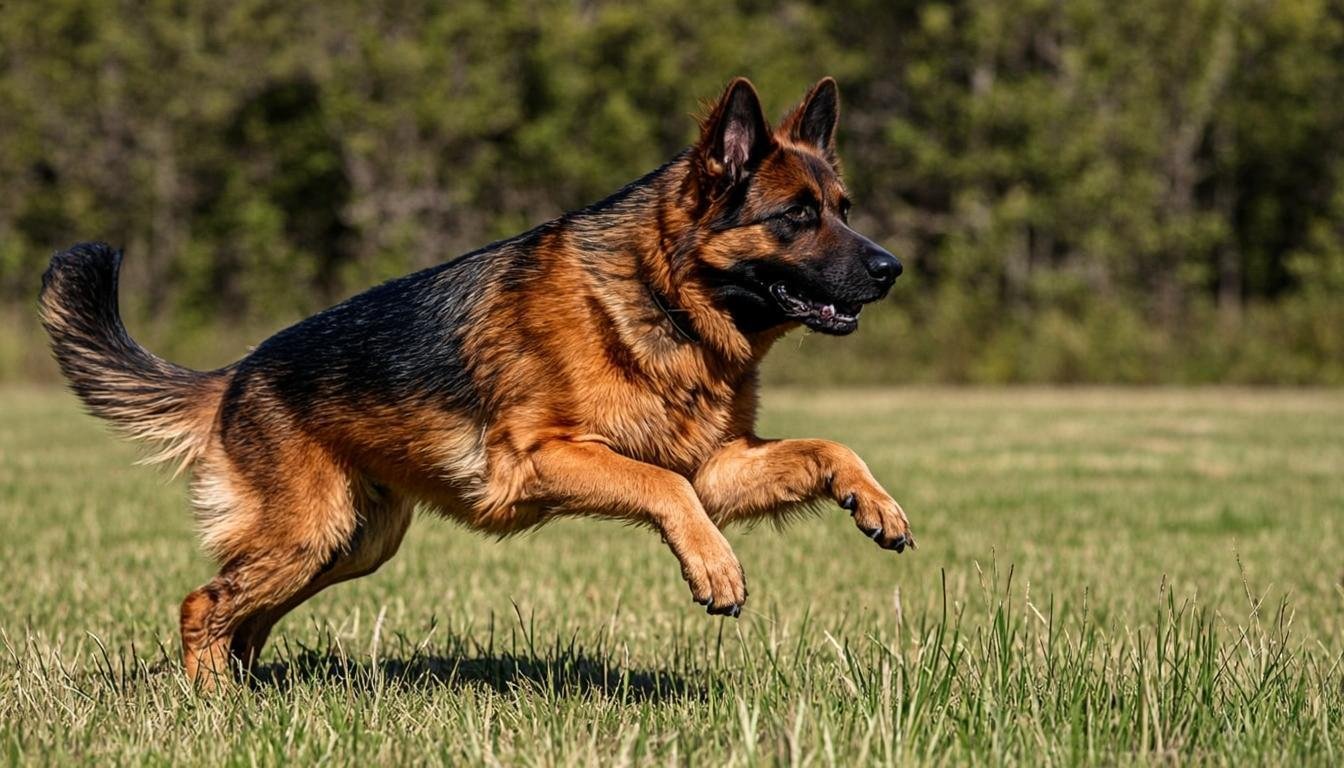
Why punishment makes jumping worse
The old advice — knee the chest, step on toes, grab paws — still circulates, and it deserves a clear burial. Punishment does not remove the motivation behind german shepherd jumping; it adds pain and unpredictability to an already aroused state. Arousal plus aversion is a recipe for conflict behaviors: some dogs become wary of greetings entirely, some redirect to mouthing, and some simply learn to jump only when the punisher is absent. None of those outcomes is the polite greeter you wanted.
There is also a trust arithmetic that punishment ruins. German shepherd jumping is, at root, social enthusiasm aimed at people. Every harsh correction taxes the dog’s confidence that people are safe to approach, and Shepherds — a breed bonded tightly to their handlers — feel that tax sharply. The reward-based approach in this guide keeps the enthusiasm intact and redirects its expression, which is why it holds up in real life: your dog still loves visitors, just with a sit instead of a launch. The AVSAB position statement on humane training summarizes the evidence behind this choice.
Punishment also fails practically because of timing. To work at all, a correction must land within a second of the behavior, and german shepherd jumping happens in bursts nobody can police that precisely — especially when the offender is mid-air toward a guest. Management plus replacement outperforms enforcement in every realistic household scenario. If you have already tried corrective methods and seen increased arousal, mouthing, or wariness, our German Shepherd training and behavior guide“>training and behavior guide explains how to rebuild trust while restarting the plan, and our aggression training guide“>aggression guide helps distinguish leftover arousal from emerging conflict behavior.

Honest timelines: how long the fix takes
Honest timelines keep owners committed, so here is the realistic picture. A young puppy with no jump history often converts in one to two weeks because there is nothing to unlearn. An adolescent with months of successful jumping behind him needs three to six weeks of consistent staging before the new pattern outweighs the old. An adult with years of rewarded greetings — especially one who greets dozens of admirers on walks — may need two to three months, and the plan still works; it simply competes against a longer history.
Progress is also nonlinear, and knowing the shape of the curve prevents discouragement. Most dogs improve quickly for ten days, then hit a stubborn plateau where german shepherd jumping appears fixed at maybe thirty percent of former intensity. That plateau is where consistency pays: the dogs whose humans keep the four-paws rule for another two to three weeks almost always break through, while dogs whose households relax at the plateau slide back to day one. Every person your dog meets is either training the sit or training the jump — there is no neutral audience.
Three variables shorten any timeline. First, staging beats real life: five planned door rehearsals with a helper teach more than twenty accidental deliveries. Second, pay generously at first — the habit is expensive to build, and cheap treats produce cheap results. Third, manage between rehearsals so unplanned successes cannot rehearse german shepherd jumping when you are not ready to train it. Follow all three and the honest timeline becomes the fast one. And if progress has genuinely stalled for weeks despite all of this, our private German Shepherd trainer guide“>trainer selection guide helps you find professional eyes worth hiring.
FAQ: german shepherd jumping
Why does my German Shepherd only jump on certain people?
Dogs jump most on the people who historically reacted biggest — often the ones who greet with high energy or push them away, both of which are attention. German shepherd jumping targets whoever pays, so audit reactions before assuming the dog is selectively rude.
Is ignoring alone enough to stop german shepherd jumping?
Ignoring removes the payoff but does not build a replacement. Turn-away works best paired with a trained alternative — sit or mat — so the dog always has a profitable answer to the question “how do I greet?”
Should I hold my dog’s collar when guests arrive?
Collar restraint prevents practice but adds frustration. A mat station or baby gate achieves the same management with less conflict, and german shepherd jumping fades faster when management feels routine rather than restrictive.
Can an older German Shepherd still learn not to jump?
Yes. Adult dogs learn replacement behaviors reliably; only the timeline stretches. A two-year jump veteran typically needs six to eight weeks of the same reward-based steps, and senior dogs often convert fastest because their arousal runs cooler.
What about jumping during play or fetch?
Play jumping responds to the same economy: the game restarts only on the floor. Pause, wait for four paws, then throw. German shepherd jumping in play contexts disappears quickly once the throw itself becomes the reward.
A 30-day door-greeting bootcamp
For owners who want structure, this four-week bootcamp turns the plan above into a calendar. It assumes one willing helper for staged arrivals and two five-minute sessions on most days. The goal by day 30 is specific and testable: your dog hears the doorbell, goes to the mat without being told twice, and holds the sit while one guest enters and greets calmly. German shepherd jumping does not survive a month of this rehearsal schedule, because every stage pays the replacement behavior more reliably than the old habit pays itself.
Week 1 — foundations without visitors. No guests all week; you are building vocabulary. Session A polishes sit fluency with distractions: sit while you walk circles, sit while you touch the door handle, sit while the doorbell rings on your phone. Session B builds the mat: reward every interaction, then downs, then ten-second stays while you step back. Keep a tally of clean reps versus retries — the ratio tells you when to move on. Finish each session while your dog is still keen, because enthusiasm carries into week two.
Week 2 — staged arrivals, easy mode. Your helper now becomes the rehearsal guest, and every arrival follows the full script: doorbell, mat cue, helper enters, walks past without eye contact, drops a treat by the mat, exits. Repeat four to six arrivals per session. If your dog breaks position, the helper exits immediately and calmly — the door closing is itself the information. Most dogs need two to four sessions before german shepherd jumping stops competing with the mat; the moment that happens, you will see the dog glance from door to mat and choose the mat without prompting.
Week 3 — real-ish greetings. The helper now greets properly: calm approach, brief chin scratch, quiet voice — everything your actual guests should do. Ask the helper to vary energy levels across arrivals, including one deliberately enthusiastic entrance, because life is not calm and the training must survive it. Add a second family member arriving separately mid-session. If your dog holds the sit for the greeting and releases politely when told, week three is on track. Two failed sessions in a row simply mean week two needs another pass — the ASPCA behavior library describes the same graduated approach for excitable greeters.
Week 4 — generalize and stress-test. Move rehearsals to different doors — front, back, garage — because dogs generalize poorly and each doorway is its own classroom. Stage one evening with two helpers arriving minutes apart, and one daytime delivery-style knock with the helper leaving a package without greeting at all. End the month with the full test: a real invited guest, doorbell, mat, calm greeting, release. Most dogs pass with pride, and the family members watching realize they have witnessed the end of german shepherd jumping at the door — the highest-traffic version of the problem.
After the bootcamp, maintenance is light but real: the mat stays available, guests still follow the ignore-until-calm script, and one rehearsal a week keeps the machinery oiled. If street or park jumping is your remaining frontier, run the same four-week shape in those contexts using the scenario table earlier in this guide — the skill transfers faster the second time, usually in half the sessions. And if a specific week keeps failing despite honest repetitions, that is the point to bring in a professional set of eyes; our private German Shepherd trainer guide“>trainer selection guide shows how to hire someone worth the money, and the RSPCA training advice keeps every step firmly on the reward-based side of the line.
Checklist: Quick training and management summary
- Set up management: gates, leash, or mat for initial practice.
- Teach a reliable sit and a “go to mat” behavior before practicing greetings.
- Reward calm, all-four-paws-on-the-floor behavior every time.
- Ask guests to ignore jumping and reward calmness consistently.
- Short, frequent training sessions (3–10 minutes) using high-value rewards.
- Increase difficulty gradually: low-distraction → moderate → real-world situations.
- If progress stalls or fear/aggression appears, consult a qualified reward-based professional and your veterinarian as needed.
Affiliate disclosure: As an Amazon Associate, German Shepherd Haven earns from qualifying purchases made through marked links on this page, at no extra cost to you.
Sources and limits
We base the recommendations here on widely supported, humane training principles. For professional position statements on evidence-based, force-free training, see the American Veterinary Society of Animal Behavior: AVSAB position statements. For practical, public-facing guidance on dog training with an emphasis on positive methods, see the RSPCA’s training advice: RSPCA: Dog Training.
Limits: This article provides general guidance and is not a substitute for individualized assessment. Behavior problems can have many causes, including medical issues. If your German Shepherd’s behavior is sudden, severe, or includes growling or snapping, consult your veterinarian and a qualified, reward-based behavior professional. For foundational skills that support the methods described here, see our piece on positive training foundations. Those foundations transfer to every situation where german shepherd jumping shows up.
Using consistent, humane training and sensible management, most owners can significantly reduce or eliminate jumping. Reward the calm behaviors you want, prevent accidental reinforcement, and reach out for professional help when needed to keep everyone safe and happy.