
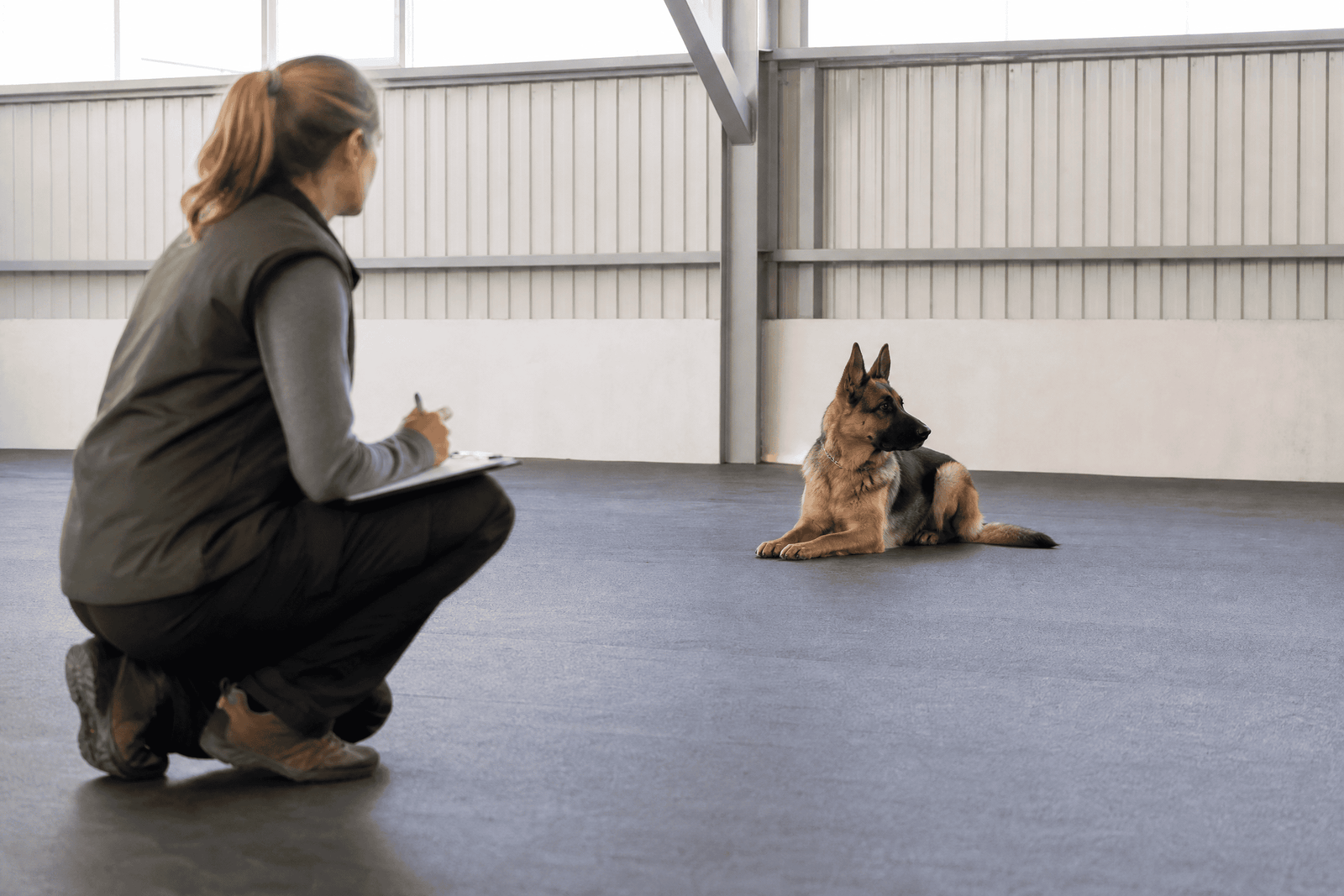
You adopted a German Shepherd hoping for a loyal protector, and instead you’re dealing with growling, snapping, or worse. I’ve been there — my rescue GSD, Kaiser, would lunge at every strange dog and stiffen when anyone reached for his food bowl. German Shepherd aggression training isn’t about dominance or punishment. It’s about understanding what your dog is actually saying and giving him a better way to cope. Here’s the exact process I used, step by step.
If your GSD shows aggression, stop guessing. The fastest path to safety is a vet check, then a certified behavior professional. But you can start understanding the root causes today.
Table of Contents
- Why German Shepherds Become Aggressive
- Step 1: Rule Out Medical Causes
- Step 2: Proper Socialization (Yes, Even for Adult Dogs)
- Step 3: Solid Foundation in Obedience
- Step 4: Counter-Conditioning & Desensitization (CC&D)
- Step 5: Manage the Environment to Prevent Rehearsal
- Step 6: Adequate Exercise & Mental Stimulation
- Step 7: When to Call a Professional
- Sustaining the Gains
- Frequently Asked Questions about German Shepherd Aggression Training
- Key Takeaways: German Shepherd Aggression Training That Works
- Your Next Step
Why German Shepherds Become Aggressive
Aggression in German Shepherds rarely comes from nowhere. Most often it’s fear, pain, or learned behavior. A GSD that wasn’t socialized as a puppy may see every stranger as a threat. Resource guarding — over food, toys, or even a spot on the couch — is common. And sometimes aggression is a health issue: hip dysplasia, dental pain, or thyroid problems can make an otherwise gentle dog cranky.
I remember the first time Kaiser snapped at a guest. My heart sank. But labeling him “dominant” would have been wrong. He was terrified. Once I understood that, the training clicked.
Fear Aggression vs. Frustration Aggression
Fear aggression: the dog tries to increase distance by acting scary. Ears back, tail tucked, maybe retreating first. Frustration aggression: often on leash, the dog sees another dog and wants to greet, but can’t, so he lashes out. Leash reactivity is super common in GSDs. Knowing which type you’re dealing with changes the training approach.
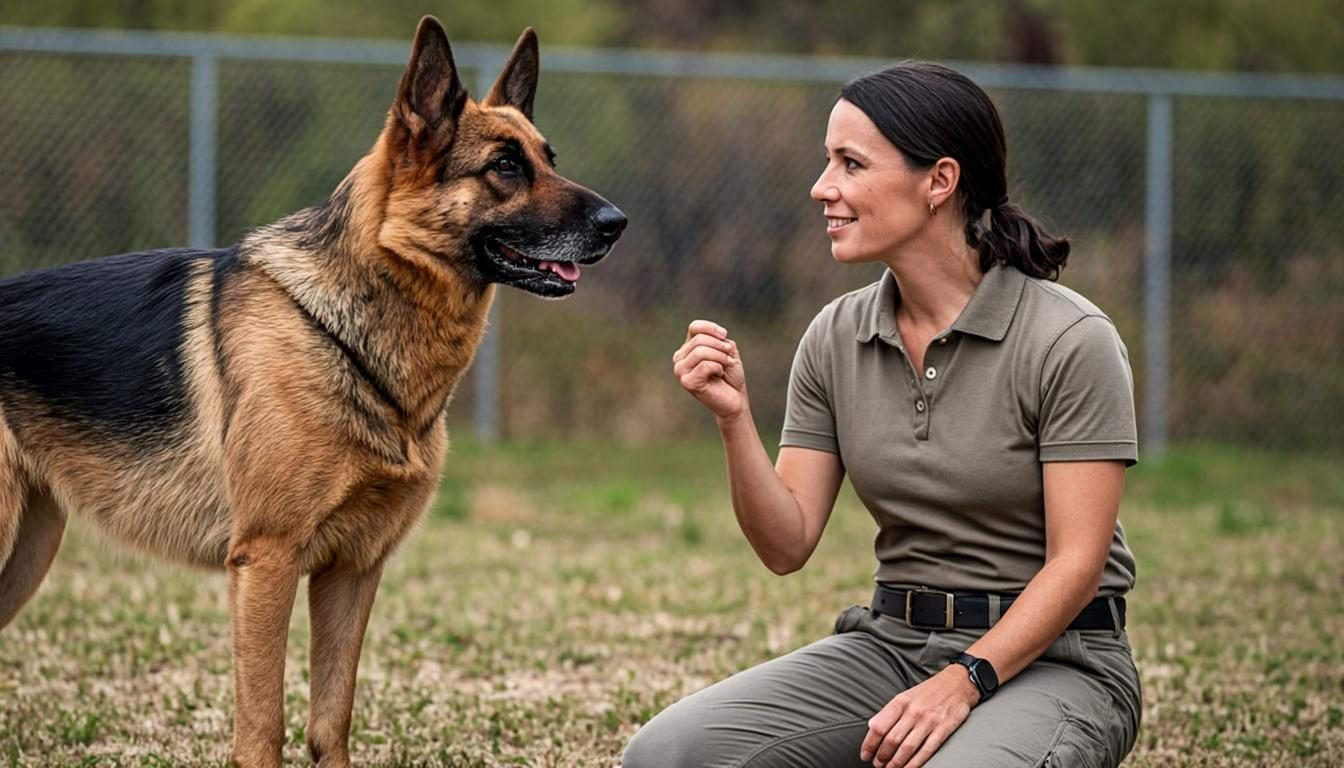
Step 1: Rule Out Medical Causes
Before any training, see your vet. A full physical, bloodwork, and thyroid panel. German Shepherds are prone to hip and elbow dysplasia, eye problems, and allergies. Pain from any of these can tip a GSD into aggression. My vet found that Kaiser’s aggression spiked during allergy season — his skin itched so badly he was on edge all day.
A 2022 study in Veterinary Medicine and Science found that dogs with chronic pain are 2.5 times more likely to show aggression . So yes, treat the pain first.
Step 2: Proper Socialization (Yes, Even for Adult Dogs)
Socialization is the vaccine against fear. A German Shepherd that misses the window between eight weeks and six months often reads every new face as a threat, and that is where german shepherd aggression training has to begin: at a distance where your dog can eat, play and think. Build positive associations one trigger at a time, and the German Shepherd learns that strangers predict good things instead of danger.
Many owners think socialization is only for puppies. Nope. Adult GSDs can learn new associations, but it’s slower and requires careful management. The goal isn’t to force your dog to love everyone — it’s to teach him that strangers, dogs, and novel situations are safe or at least neutral.
Start with distance. If your dog reacts at 50 feet, stand at 60 feet and reward calm behavior. Use high-value treats — cheese, hot dog bits, freeze-dried liver. Move closer only when your dog is consistently relaxed. This is called counter-conditioning and it works, but you must go at your dog’s pace.
I made the mistake of pushing Kaiser too fast early on. He regressed. Slow is fast when it comes to aggression training.
Step 3: Solid Foundation in Obedience
Obedience is the language you will use in every hard moment. A German Shepherd that fluently offers heel, place and a rock-solid recall gives you options before tension escalates, which is why every serious german shepherd aggression training plan starts with five minutes of obedience a day. Build the behaviors when nothing is wrong, and the German Shepherd reaches for them when everything feels wrong.
You can’t fix aggression without basic control. Your dog should respond to sit, down, stay, leave it, and a solid recall — even when distracted. I’ve used the positive techniques from The Ultimate German Shepherd Training & Behavior Guide, which emphasizes relationship over force.
For aggression specifically, “leave it” and “look at me” are lifesavers. Practice in low-stress environments first, then gradually add difficulty. Every time your dog chooses to look at you instead of reacting, reward heavily.
Step 4: Counter-Conditioning & Desensitization (CC&D)
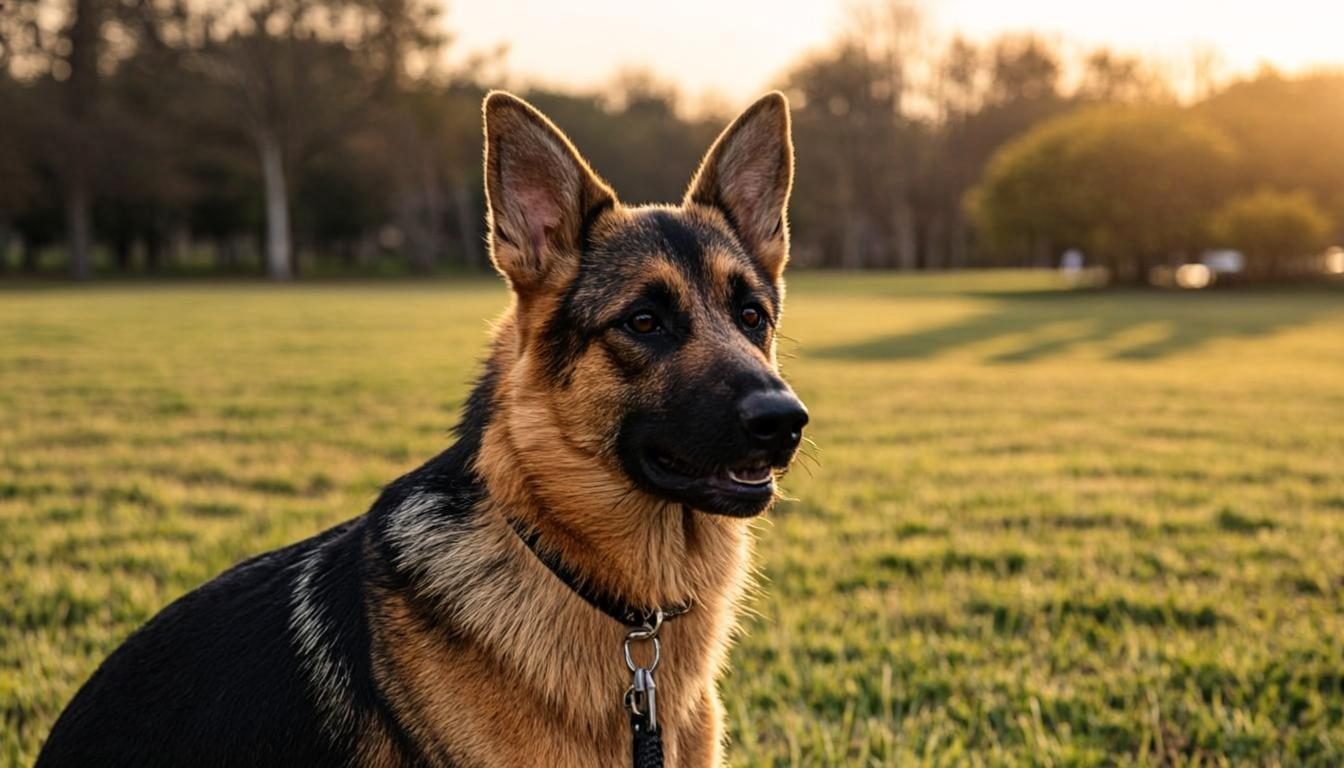
Counter-conditioning sounds technical, but it is simple pairing. Every time the trigger appears, food appears; when the trigger disappears, the food stops. Done at the right distance, a german shepherd aggression training plan like this rewires the emotional response underneath the lunging, which is why the German Shepherd stops choosing conflict on its own.
This is the core of German Shepherd aggression training. You change the emotional response from “that’s scary” to “that means treats are coming.”
Here’s a real example: Kaiser would bark and lunge at cyclists. I started by having a friend ride a bike far away — far enough that Kaiser noticed but didn’t bark. Every time a bike appeared, I fed him chicken. Over weeks, he began looking at me expectantly when he saw a bike wagging his tail. That’s a changed emotional state.
Do this for every trigger: strangers, dogs, doorbells, you name it. Keep sessions short (5-10 minutes) and always end on a success.
Step 5: Manage the Environment to Prevent Rehearsal
Every time your dog practices aggression, it gets reinforced. So you need management tools while training progresses.
- Muzzle training: A properly fitted basket muzzle is not cruel. It’s a safety tool. Kaiser wore one on walks for the first three months of training. It allowed me to relax, which made him relax.
- Leash and harness: A front-clip harness gives you better control without choking. I avoid prong collars for aggression because they can increase fear.
- Baby gates and crates: Use them to give your dog a safe space when guests come over.
- Don’t force interactions: If your GSD is growling from his crate, don’t make him come out. Let him choose to engage.
Management is temporary. Training is permanent. But you need both.
Step 6: Adequate Exercise & Mental Stimulation
Exercise is not a cure, but it is the floor everything else stands on. A German Shepherd with its drive drained takes treats, thinks clearly and recovers fast – exactly the state german shepherd aggression training needs to work. Skip the workout and even a well-rehearsed German Shepherd will fail the moment tension hits the leash.
A tired German Shepherd is less reactive — up to a point. Over-exercising can sometimes amp up arousal, so aim for a mix of physical activity and brain games. Snuffle mats, puzzle toys, and nose work are great. I found that a 45-minute brisk walk plus 15 minutes of obedience drills reduced Kaiser’s threshold distance by half in two weeks.
Also consider breed fulfillment: GSDs were bred to work. A dog that gets to use his brain is less likely to be anxious. Interactive toys and a proper diet also support balanced behavior.
Step 7: When to Call a Professional
Professional help is a strength, not a surrender. A certified behaviorist has seen dozens of cases that look exactly like yours, and a german shepherd aggression training program under professional eyes gets measured, adjusted and documented. If your German Shepherd has bitten, or if you feel fear around your own dog, skip the do-it-yourself stage entirely.
You can do a lot on your own, but aggression is serious business. If your dog has bitten someone, if you’re afraid, or if you’re not seeing progress after a month of consistent CC&D, hire a certified behavior consultant (e.g., IAABC or DACVB). Avoid trainers who promote “alpha rolls” or punishment — those often backfire with GSDs.
Costs vary: group classes $150-$300, private behavior consults $300-$600 for a session, but a board-certified veterinary behaviorist might run $500-$1,500. It’s an investment, but cheaper than a lawsuit or surrendering your dog.
Sustaining the Gains
Maintenance is quiet on good weeks and decisive on bad ones. Keep rehearsing the basics, reward calm choices without being asked, and bank the wins. When life throws a move, a new baby or an injury at your household, tighten the management again – german shepherd aggression training is a dial you control, not a switch you flip once, and the German Shepherd responds to that consistency for life.
German Shepherd aggression training is not a one-and-done thing. Maintenance means continuing to reinforce calm behavior, managing triggers during high-stress periods (like moving or new baby), and keeping your dog healthy. My Kaiser is now 8 years old and still alerts me to guests, but he wags his tail instead of snarling. It took a year of consistent work, but it was absolutely worth it.
Further reading: Solve leash and greeting manners next: polite German Shepherd greetings on leash stopping jumping on visitors.
Frequently Asked Questions about German Shepherd Aggression Training
- Can I train aggression out of an adult German Shepherd? Yes, but it takes patience. Adult GSDs can absolutely learn new responses using positive reinforcement and counter-conditioning. Success depends on the root cause, consistency, and your willingness to manage the environment.
- Is my German Shepherd aggressive or just playing? Watch body language: stiff body, hard stare, raised hackles, growling that escalates. Play bows, loose wagging tail, and open mouth are usually play. If unsure, separate and consult a trainer.
- Should I use a shock collar for aggression? No. Shock collars can increase fear and worsen aggression, especially in sensitive breeds like GSDs. The American Veterinary Society of Animal Behavior strongly opposes their use for behavior modification .
- How long does it take to fix aggression? Depends on severity. Mild leash reactivity can improve in 4-8 weeks. Deep-seated fear aggression may take 6-12 months. Progress isn’t linear; expect plateaus and small setbacks.
- Will neutering stop aggression? It can reduce hormonally influenced aggression (like intact male aggression toward other males), but it won’t fix fear or anxiety-based aggression. Talk to your vet about timing; early neutering may actually increase fear in some dogs.
- What should I do if my GSD bites someone? First, separate everyone and seek medical attention if needed. Report the bite to animal control as required by law. Then work with a certified behavior professional immediately. Do not punish the dog — he’s acting on instinct.
- Can a German Shepherd be too aggressive to train? Very rarely. Most aggression can be managed and improved. The exception is severe neurological issues or pain that can’t be treated. In those cases, a veterinary behaviorist should guide you; in extreme cases, humane euthanasia may be the kindest option. That’s heartbreaking but honest.
Key Takeaways: German Shepherd Aggression Training That Works
Aggression is a symptom, not a personality. Rule out pain first, socialize deliberately, build obedience you can lean on, and change the emotion behind the trigger with counter-conditioning. Manage the environment so the German Shepherd never gets to rehearse, and bring in a certified professional the moment you feel out of your depth. Consistent german shepherd aggression training turns a reactive dog back into the steady guardian the breed was meant to be.
Your Next Step
Start with a vet visit. Then pick one trigger to work on — don’t try to fix everything at once. Keep a log of reactions, successes, and setbacks. And if you have other questions, explore our full training guide or puppy biting guide for more specific help. You’ve got this. Your GSD is counting on you.
About the author: GSD owner since 2014. I’ve trained three German Shepherds, including a fear-aggressive rescue who now happily greets strangers. This article is based on personal experience and professional education, not veterinary or financial advice. Always consult your veterinarian for health concerns.
Sources and Further Reading
The following authoritative resources provide additional context for the guidance in this article. They do not replace advice from a qualified veterinarian or behavior professional.