


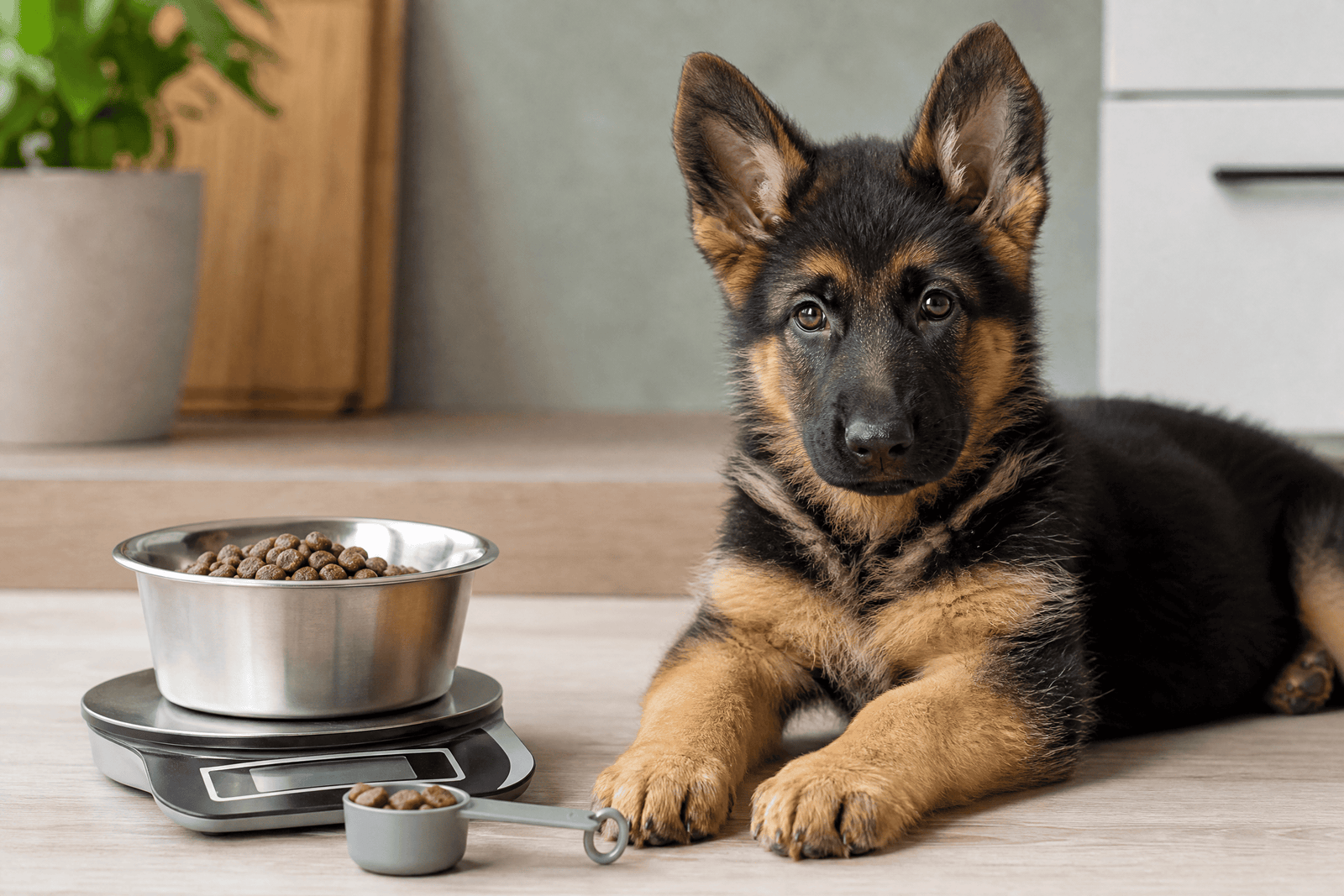
How much to feed German Shepherd puppy? Discover age-based feeding charts, cups per day, meal schedule, and vet-backed tips to keep your GSD puppy lean, healthy, and bloat-free
You bring home a German Shepherd puppy, and within days, you realize that tiny fluffball eats like a horse. I’ve been there—three times now. The question “how much to feed German Shepherd puppy” isn’t as simple as scooping kibble. Get it wrong, and you risk bloat, obesity, or stunted growth. I’ve made the mistakes so you don’t have to. This guide covers exact portions, growth-stage adjustments, and the feeding schedule that kept my dogs lean, healthy, and happy. No fluff—just what works.
Direct answer: Feed a German Shepherd puppy 3–4 meals per day until 6 months, then 2 meals. Portions range from 1.5 to 4 cups of high-quality puppy food daily, depending on age, weight, and activity. Always follow the bag’s guidelines as a starting point, but adjust based on body condition.
Disclosure: Some links in this article are affiliate links. If you purchase through them, I earn a small commission at no extra cost to you. I only recommend products I’ve used or researched thoroughly.
Why German Shepherd Puppies Need Different Feeding Than Other Breeds
German Shepherds are large-breed puppies, which means they grow fast—really fast. A 8-week-old pup weighing 10–15 pounds can hit 70 pounds in under a year. That rapid growth puts stress on bones and joints, especially the hips and elbows. Overfeeding or feeding the wrong food can lead to developmental orthopedic diseases like hip dysplasia.
From my experience, I’ve seen owners feed their GSD puppy like a Labrador—more food, more often. Bad idea. Large-breed puppies need controlled calcium and phosphorus levels, and a slower growth rate to avoid joint issues. That’s why you should use a large-breed puppy formula, not generic puppy chow. The Association of American Feed Control Officials (AAFCO) sets nutrient profiles, and large-breed formulas have lower calcium (around 1.0–1.5% dry matter) compared to regular puppy food.
Pro tip: I always check the guaranteed analysis on the bag. If calcium is above 1.5%, I look for another brand. My vet told me that’s the sweet spot for GSD puppies.
Feeding Chart by Age: How Much to Feed German Shepherd Puppy
Here’s a practical chart based on my own dogs and vet recommendations. These are starting points—adjust based on your puppy’s body condition.
| Age | Meals per Day | Daily Portion (cups) | Weight Range (lbs) |
|---|---|---|---|
| 8–12 weeks | 4 | 1.5–2 | 15–25 |
| 3–6 months | 3 | 2–3 | 25–50 |
| 6–12 months | 2 | 3–4 | 50–70 |
| 12–18 months | 2 | 3–4.5 | 65–85 |
These numbers assume a high-quality dry food with around 350–400 kcal per cup. If you feed a raw diet or wet food, adjust accordingly. I’ve used this chart for three puppies, and each stayed at a healthy body condition score of 4–5 out of 9.
How to Measure a Cup of Kibble
Don’t guess. Use a standard 8-ounce dry measuring cup. I’ve seen owners use a coffee mug—that’s 12–16 ounces. That extra 50% adds up. A level cup, not heaped. I scoop, then level with a knife. Simple habit, big difference.
From my experience: My first GSD puppy, Kaiser, I overfed by about half a cup per meal. By 4 months, he was pudgy. I cut back, and within two weeks his ribs were easily felt. That’s the goal—you should feel ribs without pressing hard.
How to Adjust Portions Based on Body Condition
Every puppy is different. A working-line GSD from a breeder who does Schutzhund will need more calories than a show-line couch potato. Activity level, metabolism, and even the time of year matter. In winter, my dogs burn more calories staying warm.
Use the body condition score (BCS) system. Run your hands along your puppy’s ribs. You should feel them with a light layer of fat. If ribs are visible, increase food by 10–15%. If you can’t feel ribs, cut back by 10%. Check every two weeks.
Common mistake: Owners see a growing puppy and think “more food = bigger dog.” Actually, overfeeding leads to fat cells that stay for life. A chubby puppy is not a healthy puppy. I’ve seen it at the vet—overweight GSD puppies are more prone to hip dysplasia and pancreatitis.
Feeding Schedule: When and How Often
Consistency is key. Puppies thrive on routine. Here’s what I’ve used successfully:
- 8–12 weeks: 7am, 12pm, 5pm, 9pm. Last meal at 9pm helps them sleep through the night (mostly).
- 3–6 months: 7am, 12pm, 6pm. Drop the late meal.
- 6+ months: 7am and 6pm. Two meals for life.
I always feed after walks or play, not before. This reduces bloat risk—a life-threatening condition where the stomach twists. German Shepherds are deep-chested and prone to bloat. Waiting 30 minutes after exercise before feeding is a rule I never break.
Pro tip: Use a slow feeder bowl. GSD puppies inhale food. My second puppy, Luna, ate so fast she vomited. A slow bowl solved it. Also, never elevate the bowl unless your vet recommends it—some studies suggest elevated bowls increase bloat risk .
Choosing the Right Food for Your German Shepherd Puppy
Not all puppy foods are equal. For a GSD, you need a large-breed puppy formula with controlled calcium, DHA for brain development, and glucosamine for joints. I’ve tried a dozen brands. Here’s what I recommend based on experience and research:
| Brand | Type | Key Features | Price per lb | My Rating |
|---|---|---|---|---|
| Royal Canin German Shepherd Puppy | Dry kibble | Breed-specific, tailored kibble shape, calcium 1.1% | $3.50 | 9/10 |
| Purina Pro Plan Large Breed Puppy | Dry kibble | DHA, glucosamine, probiotics, calcium 1.2% | $2.80 | 8/10 |
| Hill’s Science Diet Large Breed Puppy | Dry kibble | Omega-3s, antioxidant blend, calcium 1.0% | $3.00 | 8/10 |
| Orijen Large Breed Puppy | Dry kibble | High protein (38%), fresh ingredients, calcium 1.3% | $5.00 | 7/10 |
| Blue Buffalo Life Protection Large Breed Puppy | Dry kibble | Deboned chicken, LifeSource Bits, calcium 1.1% | $3.20 | 7/10 |
I’ve fed Royal Canin German Shepherd Puppy to all my dogs. The kibble shape is designed for their deep muzzle, and it reduced my puppy’s gas. That alone is worth the price. For a deeper dive, check out our Best Dog Food for German Shepherd Puppy: 2026 Complete Guide.
What I’d do: Start with a large-breed formula from a brand that meets AAFCO standards. Avoid grain-free unless your vet recommends it—some studies link grain-free diets to dilated cardiomyopathy (DCM) in large breeds .
Transitioning to Adult Food: When and How
Most GSDs reach skeletal maturity around 18–24 months. I switch to adult food at 18 months, but some breeders wait until 24 months for males. Signs your puppy is ready: they stop gaining height, their growth plates have closed (vet X-ray confirms), and they maintain weight on adult portions.
Transition slowly over 7–10 days. Day 1–3: 75% puppy, 25% adult. Day 4–6: 50/50. Day 7–9: 25% puppy, 75% adult. Day 10: 100% adult. I’ve rushed this and ended up with diarrhea. Slow is safe.
From my experience: My male GSD, Rex, hit 85 pounds at 18 months. I switched to adult food, and his energy leveled out. He stopped growing taller but filled out over the next year. Adult food has lower calories and calcium, which prevents obesity and joint stress.
Common Feeding Mistakes and How to Avoid Them
I’ve made almost every mistake in the book. Here are the ones that cost me time, money, or vet visits:
- Free-feeding: Leaving kibble out all day. GSD puppies will eat until they’re sick. I did this with Kaiser—he gained 5 pounds in two weeks. Portion control is non-negotiable.
- Too many treats: Treats should be no more than 10% of daily calories. I use training treats that are 2–3 calories each. One bully stick can be 100 calories—that’s a meal for a small puppy.
- Ignoring growth spurts: Puppies grow in fits and starts. During a growth spurt (around 4–5 months), they may need an extra half-cup for a week. Watch their body condition, not the calendar.
- Switching food abruptly: I learned this the hard way. A sudden switch gave my puppy bloody diarrhea. Always transition over a week.
- Feeding table scraps: Human food, especially onions, garlic, grapes, and chocolate, can be toxic. Even safe foods like chicken can cause pancreatitis if fatty.
For more on health issues, see our German Shepherd Health Problems Guide.
Feeding a Raw Diet: Pros and Cons
Some owners swear by raw feeding. I tried it for six months with Luna. She had a shinier coat and smaller stools, but it was expensive ($200–$300/month) and time-consuming. I worried about bacterial contamination and nutritional imbalances.
If you go raw, work with a veterinary nutritionist. A raw diet must include muscle meat, organ meat, bones, and vegetables in specific ratios. Too much liver causes vitamin A toxicity. Too little calcium leads to fractures. I eventually switched back to kibble because it was easier to balance.
For a balanced view, read our Raw Food Diet for German Shepherds Pros and Cons Review.
When to Consult a Vet About Feeding
If your puppy is not gaining weight, has diarrhea for more than 24 hours, or seems lethargic, see a vet. Also consult if you notice: vomiting after meals, excessive gas, or a distended belly. These could indicate food allergies, parasites, or bloat.
Food allergies are common in GSDs. Symptoms include itchy skin, ear infections, and loose stools. If you suspect allergies, try a limited-ingredient diet. Our guide on Food Allergies in German Shepherds Symptoms Explained can help.
Pro tip: I keep a feeding log for the first year. Write down what, how much, and when you feed, plus any stool changes. It’s invaluable for vet visits.
Frequently Asked Questions
How much should I feed my 8-week-old German Shepherd puppy?
At 8 weeks, feed 1.5 to 2 cups of large-breed puppy food per day, split into 4 meals. Each meal should be about 1/3 to 1/2 cup. Use a measuring cup, not a scoop. Monitor body condition: you should feel ribs without seeing them. If your puppy seems hungry between meals, add a tablespoon of canned pumpkin (unsweetened) for fiber. Avoid free-feeding—it leads to overeating and obesity. Adjust based on activity; a very active puppy may need the higher end of the range.
Can I feed my German Shepherd puppy adult food?
No, not until skeletal maturity at 18–24 months. Adult food has lower calcium and protein, which can stunt growth or cause joint problems in a growing puppy. Puppy food is formulated with higher DHA for brain development and controlled calcium for bone growth. Feeding adult food too early increases the risk of hip dysplasia and other developmental issues. Stick with a large-breed puppy formula until your vet confirms growth plates are closed, usually via X-ray at around 18 months.
How do I know if my German Shepherd puppy is overweight?
Run your hands along your puppy’s ribs. You should feel them with a light layer of fat—like the back of your hand. If you can’t feel ribs, your puppy is overweight. Also check the waist: when viewed from above, there should be a visible tuck behind the ribs. From the side, the abdomen should curve upward. If your puppy has a round belly with no waist, reduce food by 10–15% and increase exercise. An overweight puppy is at higher risk for hip dysplasia, diabetes, and pancreatitis.
How many times a day should I feed a German Shepherd puppy?
Feed 4 times daily from 8 weeks to 3 months, 3 times from 3 to 6 months, and 2 times from 6 months onward. Frequent small meals help maintain stable blood sugar and prevent bloat. Puppies have small stomachs and high metabolisms, so they need regular fuel. I feed at 7am, 12pm, 5pm, and 9pm for young puppies. After 6 months, morning and evening meals work well. Consistency also helps with house training—puppies often poop 20–30 minutes after eating.
Should I add water or broth to my puppy’s kibble?
Yes, adding warm water or low-sodium chicken broth can help soften kibble for young puppies and increase hydration. I add about 1/4 cup of warm water per cup of kibble for puppies under 12 weeks. It also makes the food more aromatic and appealing. Avoid broth with onion or garlic powder—those are toxic to dogs. As your puppy gets older, you can reduce the liquid. Some dogs prefer dry kibble. Always provide fresh water separately. Adding water is especially useful if your puppy doesn’t drink enough.
What human foods can I safely give my German Shepherd puppy?
Safe human foods include plain cooked chicken (no bones or skin), carrots, green beans, blueberries, plain yogurt, and pumpkin puree. These make great training treats or meal toppers. Avoid grapes, raisins, onions, garlic, chocolate, xylitol (artificial sweetener), and fatty foods like bacon. Even safe foods should be given in moderation—no more than 10% of daily calories. I use small pieces of boiled chicken for training. Always introduce new foods one at a time to watch for allergies.
How do I transition my German Shepherd puppy to a new food?
Transition over 7–10 days to avoid digestive upset. Start with 75% old food and 25% new food for 2–3 days. Then 50/50 for 2–3 days. Then 25% old, 75% new for 2–3 days. Finally, 100% new food. If your puppy develops loose stools, slow down the transition—stay at the same ratio for an extra day. I always add a probiotic like FortiFlora during transitions. Avoid switching brands frequently; stick with one formula unless there’s a medical reason. Sudden changes can cause vomiting or diarrhea.
Is grain-free food good for German Shepherd puppies?
Generally, no. The FDA has investigated a potential link between grain-free diets and dilated cardiomyopathy (DCM) in large-breed dogs . Grain-free foods often replace grains with legumes like peas and lentils, which may interfere with taurine absorption. German Shepherds are already prone to DCM. Unless your puppy has a confirmed grain allergy (rare), stick with a grain-inclusive large-breed puppy formula. I feed Royal Canin, which contains grains. If you suspect a grain allergy, consult your vet before switching.
What is the best feeding schedule for a German Shepherd puppy?
The best schedule is consistent and matches your routine. For an 8-week-old, feed at 7am, 12pm, 5pm, and 9pm. For 3–6 months, 7am, 12pm, and 6pm. For 6+ months, 7am and 6pm. Always feed after exercise, not before, to reduce bloat risk. Stick to the same times daily—puppies thrive on predictability. I set phone alarms. The schedule also helps with potty training: puppies usually need to eliminate 20–30 minutes after eating. Take them out immediately after meals.
How much water should my German Shepherd puppy drink?
A general rule is 1 ounce of water per pound of body weight per day. A 20-pound puppy needs about 20 ounces (2.5 cups) daily. Puppies drink more when active or in hot weather. Always provide fresh, clean water. I change water twice a day and clean the bowl weekly. Monitor intake: excessive drinking can signal diabetes or kidney issues; too little can cause dehydration. During potty training, I limit water 2 hours before bedtime but still offer it during the day. Never restrict water for long periods.
Conclusion: Your Next Step
Feeding a German Shepherd puppy isn’t complicated, but it requires attention. Start with the chart above, adjust based on body condition, and stick to a consistent schedule. Use a large-breed puppy formula from a reputable brand. Avoid free-feeding, table scraps, and grain-free diets unless necessary. Monitor your puppy’s weight weekly and keep a log for the first year.
My advice: buy a good measuring cup, set phone alarms for meal times, and don’t skip the slow feeder bowl. Your puppy will thank you with a healthy body and a long life. If you’re still unsure, talk to your breeder or vet—they know your puppy’s lineage and health history.
For more resources, check out our The Ultimate German Shepherd Feeding & Nutrition Guide: Ensuring a Long, Healthy Life and Best Pet Insurance for German Shepherds in 2026: Complete Breed Guide. Now go feed that puppy—and enjoy every sloppy kiss.
Disclaimer: This article is for informational purposes only and does not constitute veterinary advice. Always consult your veterinarian before making changes to your puppy’s diet.
Author: GSD owner since 2014. Last updated: May 2026.
Sources and Further Reading
The following authoritative resources provide additional context for the guidance in this article. They do not replace advice from a qualified veterinarian or behavior professional.