
Discover the most effective German Shepherd hip dysplasia exercises to relieve pain and rebuild muscle. Our guide covers hydrotherapy, low-impact walks, and the best joint supplements to support your GSD’s mobility and health.
Watching a once-agile German Shepherd struggle to stand up is heartbreaking. Known for their fierce intelligence, unwavering loyalty, and high prey drive, these magnificent dogs are built for action. Yet, their unique sloping conformation makes them genetically predisposed to joint issues. When a diagnosis of canine hip dysplasia (CHD) is handed down, many owners fear their dog’s active days are over. This is a common concern we address in our GSD Health section.
The reality is far more hopeful. While hip dysplasia is a progressive condition, a targeted regimen of exercises for German Shepherd hip dysplasia can dramatically improve your dog’s quality of life. By focusing on low-impact movements that build the surrounding pelvic musculature, you can help stabilize the compromised joint, reduce pain, and keep your GSD moving comfortably for years to come. This guide provides a comprehensive overview of the best practices for managing this condition.
This authority guide, tailored for owners across the US, UK, Canada, and Australia, delves into the biomechanics of the German Shepherd, the most effective veterinary-recommended exercises, and the critical role of premium nutrition and pet insurance in managing this lifelong condition. We will explore a variety of safe and effective German Shepherd hip dysplasia exercises to implement into your daily routine.
Table of Contents
1. The Importance of a Veterinary Diagnosis
2 . Understanding the GSD’s Unique Anatomy and Hip Dysplasia
3.The Science Behind Joint Stability and the Role of Exercise
4.Top 5 German Shepherd Hip Dysplasia Exercises
5.Exercises to Strictly Avoid with a Dysplastic GSD
6. The Financial Reality: Surgery Costs and Pet Insurance
7 . Premium Nutrition and Joint Supplements for Hip Health
8. Comparing Conservative Management vs. Surgical Intervention
9. Frequently Asked Questions (FAQ) about GSD Hip Dysplasia Exercises
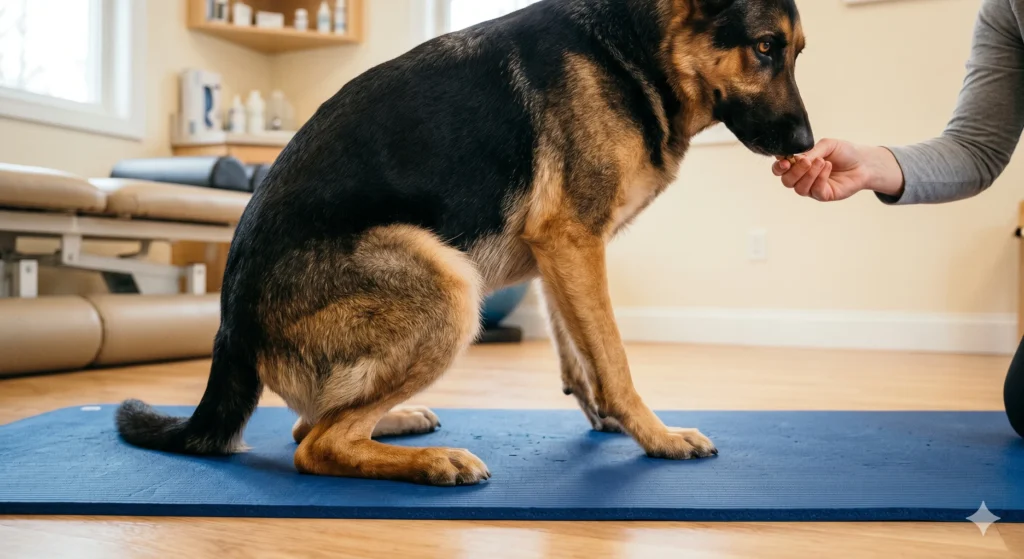
The Importance of a Veterinary Diagnosis
Before beginning any fitness program, it is absolutely critical to obtain a formal diagnosis from a qualified veterinarian. Self-diagnosing or starting a program based on suspected symptoms can be dangerous. A vet will perform a physical examination, including the Ortolani maneuver, to check for joint laxity and may require radiographs (X-rays) to assess the degree of dysplasia and rule out other conditions. This professional evaluation, as recommended by veterinary bodies like the American Kennel Club (AKC), is the only safe way to proceed with a plan for German Shepherd hip dysplasia exercises.
Understanding the GSD’s Unique Anatomy and Hip Dysplasia
The modern German Shepherd Dog possesses a distinct silhouette, characterized by a sloping topline and extreme angulation in the hindquarters. This structure, while iconic, places immense biomechanical stress on the coxofemoral (hip) joint. According to 2025 data from the Orthopedic Foundation for Animals (OFA), approximately 19.8% of tested German Shepherds show some degree of hip dysplasia. This condition occurs when the ball (femoral head) and socket (acetabulum) do not fit together snugly. Instead of gliding smoothly, they grind and rub, leading to cartilage deterioration, micro-fractures, and eventually, painful osteoarthritis.
Recognizing the early signs is crucial. Symptoms often manifest subtly: a slight “bunny hop” when running, reluctance to climb stairs, or stiffness after resting. Because GSDs are notoriously stoic, they often mask their pain until joint degradation is severe. Therefore, proactive management through controlled German Shepherd hip dysplasia exercises is not just beneficial; it is essential.
The Science Behind Joint Stability and the Role of Exercise
When the hip joint is structurally compromised, the body relies on surrounding soft tissues—the gluteal, hamstring, and quadriceps muscles—to provide stability. Think of these muscles as a biological brace. The stronger the brace, the less abnormal movement occurs within the joint capsule, which directly translates to reduced inflammation and pain. The goal of German Shepherd hip dysplasia exercises is to strengthen this muscular support system.
However, conditioning a dysplastic dog requires a delicate balance. The goal is to induce muscle hypertrophy without subjecting the fragile cartilage to concussive forces. This is where low-impact, high-resistance training becomes the cornerstone of any rehabilitation program. Veterinary specialists from resources like PetMD emphasize that consistency is far more important than intensity. Short, frequent sessions of targeted movements yield better results than sporadic, exhausting workouts. Always consult a certified canine rehabilitation practitioner (CCRP) before starting a new regimen.
Top 5 German Shepherd Hip Dysplasia Exercises
Implementing a structured routine of German Shepherd hip dysplasia exercises can significantly alter the trajectory of your dog’s condition. The following are widely endorsed by veterinary professionals.
1. Controlled Leash Walking
The foundation of any mobility program is the controlled leash walk. For a GSD weighing 65-90 lbs (30-40 kg), aim for two 15-20 minute walks daily on forgiving surfaces like grass or dirt. This simple, low-impact exercise is a core component of any set of German Shepherd hip dysplasia exercises.
2. Hydrotherapy and Swimming
Hydrotherapy is the gold standard. The water’s buoyancy supports the dog’s weight, removing stress from the hips while providing resistance. Underwater treadmills are ideal, but free-swimming in a calm lake (with a life jacket) is also excellent. This is one of the most recommended German Shepherd hip dysplasia exercises for building muscle safely.
3. Incline Walking (Hill Work)
Walking up a gentle, grassy slope forces the dog to engage their rear legs, targeting the glutes and hamstrings. This strengthening is crucial for supporting dysplastic hips. Manage the descent carefully to avoid stressing the front limbs. For more advanced techniques, see our GSD Training section.
4. Sit-to-Stand Exercises (Canine Squats)
This canine squat is phenomenal for building stability. On a non-slip surface, ask your dog to sit squarely, then lure them straight up into a stand. This simple movement is a powerful addition to your list of German Shepherd hip dysplasia exercises. Start with 3 sets of 5 repetitions.
5. Cavaletti Rails
Proprioception (spatial awareness) is often poor in dysplastic dogs. Walking slowly over a series of low poles (Cavaletti rails) forces the dog to consciously lift each paw, improving range of motion and coordination. This is a fantastic mental and physical exercise.
Exercises to Strictly Avoid with a Dysplastic GSD
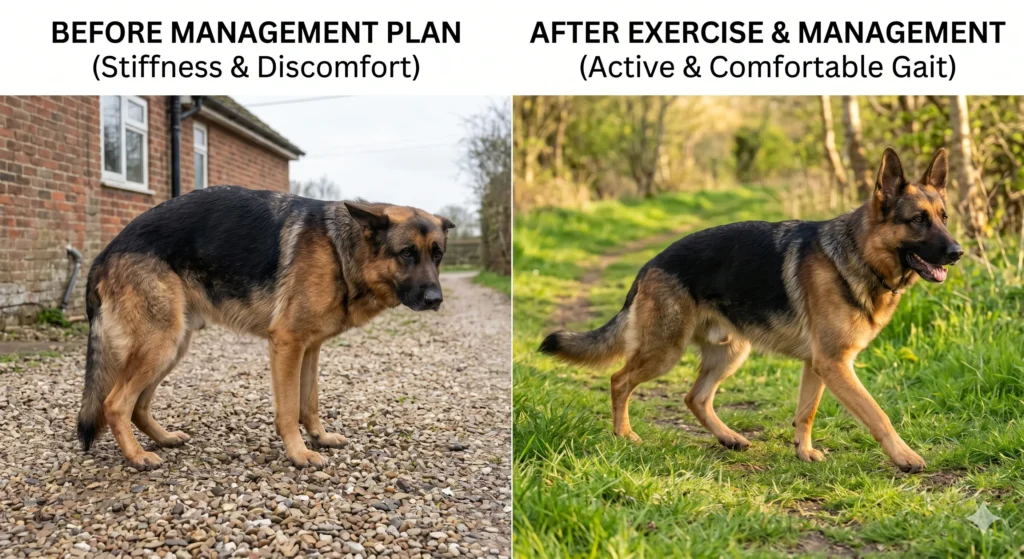
Just as important as performing the right German Shepherd hip dysplasia exercises is avoiding the wrong ones. The following activities can accelerate cartilage destruction:
•Fetch and Frisbee: The explosive starts, sharp turns, and high-impact landings are catastrophic for dysplastic hips.
•Jumping: Use ramps for cars and furniture. The landing force places immense shear stress on the joint.
•Roughhousing: Uncontrolled play with other dogs should be heavily monitored.
•Running on Hard Surfaces: Jogging on pavement is highly detrimental.
The Financial Reality: Surgery Costs and Pet Insurance
Managing a GSD with hip dysplasia is a significant financial commitment. While conservative management using German Shepherd hip dysplasia exercises is the first line of defense, surgery is often required for severe cases. A Total Hip Replacement (THR) can cost $5,000-$10,000+ per hip in the USA.
Given these figures, securing comprehensive pet insurance is paramount. Providers like Trupanion and Lemonade Pet offer policies covering hereditary conditions, but you must enroll before symptoms appear. Once diagnosed, it becomes a pre-existing condition and will not be covered.
Premium Nutrition and Joint Supplements for Hip Health
Exercise must be supported by the right building blocks. Nutrition plays a dual role: maintaining a lean body condition and providing nutraceuticals to support cartilage. Every extra pound places exponential stress on the hips.
Integrate high-quality joint supplements containing Glucosamine, Chondroitin, Omega-3s (from fish oil), and MSM. Brands like Dasuquin and Cosequin are vet-recommended. Also, consider an orthopedic bed, which you can find in our Product Reviews section, to reduce joint stiffness.
Comparing Conservative Management vs. Surgical Intervention
| Feature | Conservative Management (Incl. German Shepherd hip dysplasia exercises) | Surgical Intervention (e.g., Total Hip Replacement) |
| Primary Goal | Pain reduction, muscle building, slowing progression | Complete elimination of joint pain, restoring normal biomechanics |
| Ideal Candidate | Mild to moderate dysplasia, older dogs, high surgical risks | Severe dysplasia, young dogs, dogs unresponsive to medical management |
| Cost Estimate (USD) | $50 – $200/month (Supplements, therapy, meds) | $5,000 – $10,000+ per hip (One-time cost, plus rehab) |
| Recovery Time | Ongoing lifestyle modification | 8 to 12 weeks of strict crate rest and structured rehabilitation |
| Risks | Condition may eventually progress despite best efforts | Infection, implant failure, anesthetic complications |
| Expected Outcome | Improved mobility and comfort, but defect remains | Near-normal joint function and complete resolution of pain |
Frequently Asked Questions (FAQ) about GSD Hip Dysplasia Exercises
How often should I perform these German Shepherd hip dysplasia exercises?
Consistency is key. Aim for two 15-20 minute sessions of low-impact exercise daily, supplemented with 2-3 sessions of hydrotherapy or strengthening exercises per week. Monitor for fatigue and adjust as needed.
Can a German Shepherd live a full life with hip dysplasia?
Absolutely. With early detection, strict weight management, a tailored regimen of German Shepherd hip dysplasia exercises, and appropriate pain management, many GSDs live long, happy lives.
Is walking good for a dog with hip dysplasia?
Yes, controlled walking on forgiving surfaces is excellent. However, uncontrolled running or walking on hard pavement should be avoided as it increases concussive stress.
What is the best pet insurance for a GSD with potential hip issues?
The best insurance is one secured before symptoms appear. Read policies carefully for waiting periods and bilateral condition exclusions. This is a crucial investment for any GSD owner.
References
[1] Orthopedic Foundation for Animals. “Hip Dysplasia Statistics.” OFA.org.
[2] CareCredit. “Dog Hip Dysplasia Surgery Cost and Procedure Guide.” CareCredit.com.
[3] Lemonade Pet Insurance. “Dog Hip Dysplasia Surgery Costs.” Lemonade.com.
[4] PetMD. “German Shepherd Dog Breed Health and Care.” PetMD.com.