
Table of Contents
Discover common German Shepherd eye problems, from Pannus to cataracts. Learn about symptoms, treatments, and prevention for optimal German Shepherd eye health.
German Shepherds, renowned for their intelligence, loyalty, and versatility, are among the most popular dog breeds worldwide. Their keen senses, including their sharp eyesight, are integral to their roles as working dogs, family companions, and service animals. However, like all breeds, German Shepherds are predisposed to certain genetic health issues, and their eyes are no exception. Understanding common German Shepherd eye problems is crucial for every owner to ensure early detection, timely intervention, and lifelong ocular health for their beloved canine companions. This comprehensive guide delves into the various eye conditions that can affect German Shepherds, focusing on their causes, symptoms, diagnosis, treatment, and preventive measures, all while emphasizing the importance of proactive care in managing German Shepherd eye problems.
Pannus: A Prevalent German Shepherd Eye Problem
Among the most common and significant German Shepherd eye problems is Chronic Superficial Keratitis (CSK), widely known as Pannus. This immune-mediated condition primarily affects the cornea, the transparent outer layer of the eye responsible for protection and light focusing. While Pannus can affect various breeds, German Shepherds, along with Siberian Huskies, Australian Shepherds, and sighthounds, exhibit a notably higher predisposition, largely attributed to genetic factors [1]. Understanding Pannus is paramount for German Shepherd owners, as early recognition and consistent management are key to preserving vision.
What is Pannus and How Does it Manifest in German Shepherds?
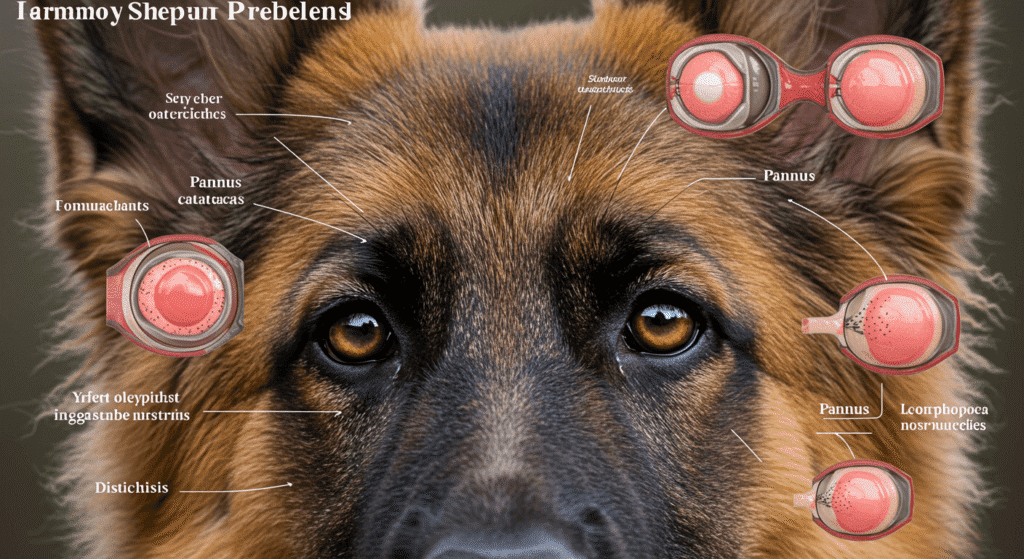
Pannus in German Shepherds is characterized by an inappropriate immune response where the dog’s own immune system attacks the corneal tissue. This leads to inflammation, which initially presents as raised, pinkish bumps on the cornea, typically starting from the outer edges and progressing inward. Both eyes are usually affected, though the severity may differ between them. As this German Shepherd eye problem advances, the inflamed areas flatten, spread, and become increasingly pigmented, turning dark brown or black. This pigmentation, along with scarring, can significantly obscure vision, potentially leading to blindness if left unaddressed [2].
Beyond the corneal changes, affected German Shepherds may also exhibit a thickened and inflamed third eyelid. A mucoid discharge from the eye can also be a symptom. It is crucial for owners to regularly inspect their German Shepherd’s eyes for any of these subtle changes, as early detection of this German Shepherd eye problem can dramatically influence the effectiveness of treatment.
The Underlying Causes and Exacerbating Factors of this German Shepherd Eye Problem
The exact cause of Pannus is not fully understood, but it is widely accepted to have a strong hereditary component, making it a significant genetic German Shepherd eye problem. This explains its higher prevalence within the breed. In addition to genetics, environmental factors play a crucial role in the development and progression of Pannus. Increased exposure to ultraviolet (UV) light is a primary exacerbating factor. German Shepherds living at higher altitudes, where UV radiation is more intense, or those spending extensive time outdoors without adequate eye protection, are at a greater risk of developing or experiencing a worsening of this condition [2]. This highlights the importance of environmental management in mitigating the impact of this particular German Shepherd eye problem.
Diagnosing Pannus in German Shepherds
Diagnosing Pannus typically begins with a thorough physical examination and a detailed medical history provided by the owner. A comprehensive eye examination by a veterinarian can identify the characteristic changes to the cornea consistent with Pannus. While these clinical signs are often sufficient for diagnosis, additional tests may be performed to rule out other German Shepherd eye problems with similar symptoms or to assess the overall ocular health. These diagnostic tools may include:
- Schirmer Tear Test: This test measures tear production, as reduced tear production can lead to dry eyes, redness, and discharge, potentially mimicking or exacerbating Pannus symptoms.
- Fluorescein Stain: A green dye is applied to the eye to detect corneal ulcers, which can occur due to trauma or underlying diseases and might complicate Pannus.
- Tonometry: This measures intraocular pressure, helping to rule out conditions like glaucoma or uveitis, which can also cause eye inflammation and discomfort in German Shepherds [2].
Accurate diagnosis is the first step towards effective management of this challenging German Shepherd eye problem.
Treatment and Management of Pannus: A Lifelong Commitment for German Shepherd Eye Health
Treatment for Pannus in German Shepherds is primarily focused on managing the immune response and preventing the progression of the disease, as it is not curable. The cornerstone of treatment involves the lifelong application of topical immunosuppressive medications. These typically include corticosteroids, such as dexamethasone or prednisolone, and other immune-modulating drugs like cyclosporine or tacrolimus. These medications are usually applied to the eyes multiple times a day, either alone or in combination, depending on the severity of the condition and the individual German Shepherd’s response [2].
For severe cases of this German Shepherd eye problem, veterinarians may recommend subconjunctival steroid injections, where medication is injected directly beneath the conjunctiva (the pink tissue surrounding the eye) for a more potent and sustained effect. In rare instances, surgery may be considered to improve vision, particularly if significant scar tissue has formed. However, it’s important to note that German Shepherds diagnosed with Pannus at a young age often experience a more severe form of the disease that may be less responsive to conventional treatments [2].
Owners must understand that managing Pannus is a lifelong commitment. Consistent adherence to the prescribed medication regimen and regular follow-up appointments with a veterinarian or a veterinary ophthalmologist are crucial to control the disease and minimize its impact on the German Shepherd’s quality of life. The goal of treatment is to use the lowest effective dose of medication to keep the symptoms at bay and prevent further vision impairment. This ongoing care is vital for maintaining optimal German Shepherd eye health.
Prevention and Prognosis of this German Shepherd Eye Problem
While Pannus is largely immune-mediated and genetically predisposed, making complete prevention challenging, certain measures can help mitigate its severity and progression. Protecting German Shepherds from excessive UV light exposure is a key preventive strategy. This can involve keeping them indoors during peak sunlight hours, especially for those living at high altitudes, or using specialized dog sunglasses (Doggles®) when outdoors [2]. These proactive steps can significantly reduce the risk of exacerbation of this German Shepherd eye problem.
The prognosis for German Shepherds diagnosed with Pannus is generally good, provided the condition is detected early and managed consistently. Most affected dogs show noticeable improvement with prompt and appropriate treatment. However, the timeframe for improvement can vary. Without consistent treatment, the condition will progress, leading to irreversible scarring and potential blindness. Therefore, vigilance and dedication from German Shepherd owners are paramount in ensuring the best possible outcome for their dog’s ocular health when facing this German Shepherd eye problem.
Other Significant German Shepherd Eye Problems
While Pannus is a prominent concern, several other German Shepherd eye problems can affect the breed, each requiring specific attention and understanding from owners. Recognizing the signs and understanding the implications of these conditions is vital for comprehensive German Shepherd eye health management.
Limbal Melanoma: A Pigmented German Shepherd Eye Problem
Limbal melanoma is a type of tumor that originates from pigmented cells located in the limbus, the transitional area where the clear cornea meets the white sclera of the eye. While these tumors are generally benign and tend to remain localized within the eye, they are still considered a significant German Shepherd eye problem due to their potential to grow and cause physical damage to intraocular structures. Large limbal melanomas can invade the interior parts of the eye, leading to complications that may necessitate surgical removal of the eye in severe cases. Early detection and monitoring by a veterinary ophthalmologist are crucial for managing this German Shepherd eye problem effectively and preventing further complications [3].
Distichiasis: An Eyelash-Related German Shepherd Eye Problem
Distichiasis is a common German Shepherd eye problem characterized by the growth of extra eyelashes from abnormal locations along the eyelid margin. These errant eyelashes often grow inward, rubbing against the delicate surface of the cornea. This constant irritation can lead to a range of issues, including chronic discomfort, excessive tearing, corneal erosions, and inflammation. Over time, repeated irritation can result in gradual scarring of the cornea and subsequent vision impairment. While some distichiae may be soft and cause no harm, those that cause irritation require surgical correction to remove the abnormal hairs and alleviate the discomfort associated with this German Shepherd eye problem. Owners should be vigilant for signs of eye irritation, such as squinting, pawing at the eye, or redness, which could indicate the presence of distichiasis [3].
Corneal Dystrophy: A Less Severe German Shepherd Eye Problem
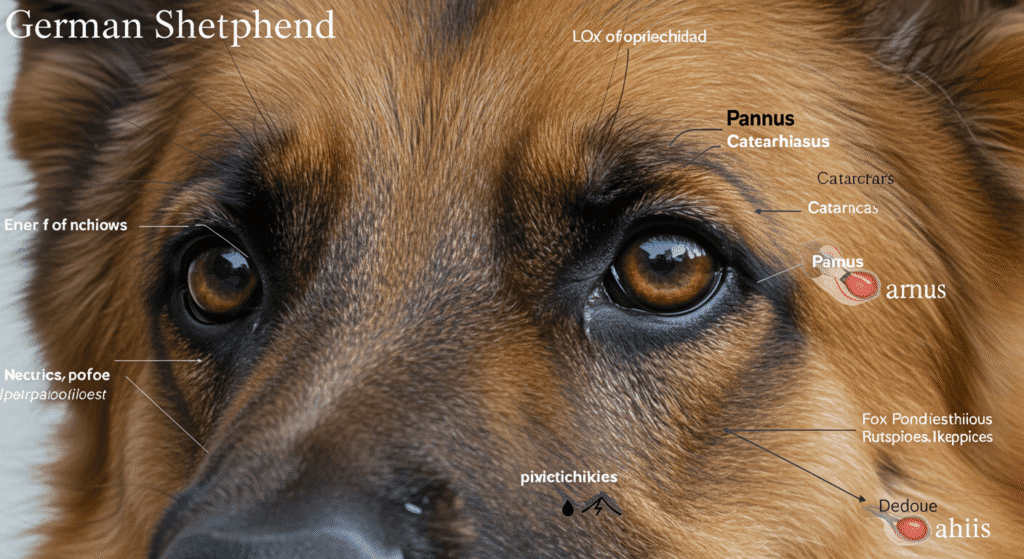
Corneal dystrophy is a genetic eye problem that typically causes opaque, whitish-gray spots or lesions on the corneal surface or within deeper layers of the cornea. These opacities are usually symmetrical, affecting both eyes similarly. Unlike some other eye conditions, corneal dystrophy in German Shepherds often has a minimal impact on vision. While large dystrophic areas could potentially obstruct vision, this is uncommon, and most affected dogs maintain good eyesight. This condition generally does not respond to or require specific medical treatment, making it one of the less concerning German Shepherd eye problems in terms of immediate visual impairment. However, it is still important for veterinarians to differentiate it from other, more serious corneal conditions [3].
Cataracts: A Clouding German Shepherd Eye Problem
Cataracts are a well-known German Shepherd eye problem that involves the clouding of the eye’s lens, leading to blurred or obstructed vision. While cataracts are commonly associated with aging in German Shepherds, they can also develop in younger dogs due to genetic predisposition, diabetes, or other underlying health issues. The severity of vision impairment depends on the size and density of the cataract. Small cataracts may have little impact, while large, dense cataracts can cause significant vision loss or even blindness. Treatment for cataracts in German Shepherds often involves anti-inflammatory medications to prevent secondary complications like uveitis (inflammation inside the eye). In cases where vision is significantly impaired, surgical removal of the cataract can restore sight, offering a positive outcome for this German Shepherd eye problem [4].
Congenital Anomalies: Birth-Related German Shepherd Eye Problems
Some German Shepherd eye problems are present from birth, categorized as congenital anomalies. These conditions arise from the improper development of eye tissues during gestation. Examples include persistent pupillary membrane (PPM), optic nerve hypoplasia, and retinal dysplasia. Persistent pupillary membranes are remnants of fetal blood vessels that fail to reabsorb, potentially causing vision problems if they obstruct the pupil or attach to the cornea. Optic nerve hypoplasia involves an underdeveloped optic nerve, which can lead to varying degrees of vision loss. Retinal dysplasia refers to abnormal development of the retina, which can also impair vision. The impact of these congenital German Shepherd eye problems can range from inconsequential to severe vision impairment. Most congenital conditions are irreversible and may not require treatment unless a painful complication, such as glaucoma, develops secondary to the primary issue. Genetic screening of breeding dogs is crucial to reduce the incidence of these inherited German Shepherd eye problems [3].
Retinal Degeneration: A Progressive German Shepherd Eye Problem
Progressive Retinal Atrophy (PRA) is a group of genetic eye problems that cause the degeneration of the retina, the light-sensitive tissue at the back of the eye. German Shepherds can develop a specific type of PRA that primarily affects the cone photoreceptor cells from a young age. Unlike typical PRA, which affects both rod and cone cells and leads to night blindness followed by day blindness, cone degeneration primarily causes day and color blindness. Despite the vision impairment, the retina may appear normal on a physical examination in the early stages. Dogs affected by this German Shepherd eye problem learn to compensate for their vision loss remarkably well and typically do not require specific treatment for the retinal degeneration itself. However, genetic testing can identify carriers and affected individuals, allowing responsible breeders to make informed decisions to reduce the prevalence of this inherited German Shepherd eye problem in future generations [3].
The Impact of German Shepherd Eye Problems on Quality of Life
Any German Shepherd eye problem, regardless of its severity, can significantly impact a dog’s quality of life. Vision is a primary sense for dogs, influencing their ability to navigate their environment, interact with their surroundings, and maintain their overall well-being. When a German Shepherd experiences impaired vision due to conditions like advanced Pannus, cataracts, or progressive retinal atrophy, their daily activities can become challenging. They may struggle with spatial awareness, leading to bumping into objects, difficulty playing fetch, or hesitancy in navigating stairs. This can result in a decrease in their confidence and an increase in anxiety, especially in unfamiliar environments. Furthermore, painful conditions like severe distichiasis or secondary glaucoma from congenital anomalies can cause chronic discomfort, affecting their appetite, sleep patterns, and general demeanor. A German Shepherd suffering from untreated German Shepherd eye problems may become withdrawn, irritable, or less engaged in activities they once enjoyed. Therefore, addressing these issues promptly is not just about preserving sight but about maintaining the dog’s happiness and overall quality of life.
The Crucial Role of Veterinary Care in Managing German Shepherd Eye Problems
Given the complexity and potential severity of German Shepherd eye problems, the role of professional veterinary care cannot be overstated. Regular veterinary check-ups, ideally on an annual basis, are fundamental for early detection. During these visits, veterinarians can perform routine eye examinations, which may reveal subtle signs of developing conditions before they become advanced. For German Shepherds, especially those with a known family history of eye conditions, more frequent or specialized ophthalmic examinations may be recommended. A veterinary ophthalmologist, a specialist in animal eye care, possesses the advanced diagnostic tools and expertise to accurately diagnose and manage complex German Shepherd eye problems. They can offer specialized treatments, including advanced surgical procedures for conditions like cataracts or severe distichiasis, which are beyond the scope of general veterinary practice. Establishing a strong relationship with a trusted veterinarian and, if necessary, a veterinary ophthalmologist, is paramount for any German Shepherd owner committed to their dog’s long-term ocular health. This proactive approach ensures that any emerging German Shepherd eye problem is identified and addressed as early as possible, maximizing the chances of successful management and preserving the dog’s vision and comfort.
Prevention and Responsible Breeding: Mitigating German Shepherd Eye Problems
While some German Shepherd eye problems are an unfortunate reality due to genetic predispositions, proactive prevention strategies and responsible breeding practices can significantly reduce their incidence and severity. Owners and breeders alike have a crucial role to play in safeguarding the ocular health of future generations of German Shepherds.
Environmental Prevention Strategies for German Shepherd Eye Problems
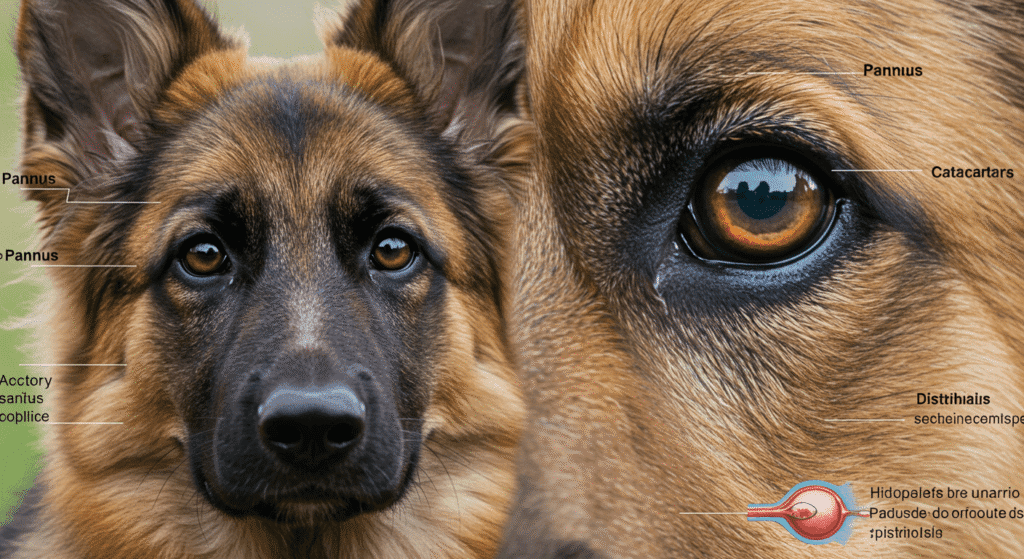
For conditions like Pannus, where environmental factors such as UV light exposure play a significant role, preventive measures are straightforward and effective. Limiting a German Shepherd’s exposure to intense sunlight, especially during peak hours, can help. For dogs that spend a lot of time outdoors, particularly in sunny or high-altitude environments, specialized dog goggles (often referred to as Doggles®) can provide essential UV protection. These are designed to fit a dog’s head comfortably and block harmful UV rays, thereby reducing the risk of Pannus development or exacerbation. Regular cleaning of the eyes to remove irritants and foreign bodies can also prevent minor irritations from escalating into more significant German Shepherd eye problems. Maintaining a clean living environment and ensuring proper grooming, especially around the eyes, can further contribute to ocular hygiene and prevent infections or irritations that might compromise German Shepherd eye health.
The Cornerstone of Prevention: Responsible Breeding Practices
Responsible breeding is arguably the most critical factor in reducing the prevalence of hereditary German Shepherd eye problems. Many of the conditions discussed, such as Pannus, distichiasis, cataracts, congenital anomalies, and progressive retinal atrophy, have a known genetic component. This means that affected dogs, or carriers of the genes responsible for these conditions, can pass them on to their offspring. Responsible breeders prioritize the health of their lines by:
- Genetic Testing: Utilizing available genetic tests to screen breeding stock for known mutations linked to eye diseases, such as certain forms of PRA. This allows breeders to make informed decisions, avoiding pairings that would produce affected puppies.
- Ophthalmic Examinations: Regular eye examinations by board-certified veterinary ophthalmologists for all breeding dogs. Organizations like the Orthopedic Foundation for Animals (OFA) and the American College of Veterinary Ophthalmologists (ACVO) offer certification programs (e.g., Companion Animal Eye Registry – CAER exams) that screen for inherited eye diseases. Dogs found to have significant hereditary German Shepherd eye problems should be removed from breeding programs.
- Pedigree Research: Thoroughly researching the pedigrees of potential breeding pairs to identify any history of eye conditions in their lineage. This helps in making educated decisions about breeding choices, even for conditions without direct genetic tests.
- Transparency: Being transparent with prospective puppy buyers about the health history of the parents and any known predispositions within the breed. Reputable breeders will provide health clearances and be open to discussing potential health concerns, including German Shepherd eye problems.
By adhering to these rigorous standards, responsible breeders play a vital role in reducing the genetic load of eye diseases within the German Shepherd population, contributing significantly to the overall German Shepherd eye health of the breed. This commitment to health over profit is essential for the long-term well-being of these magnificent animals.
Conclusion: A Clear Vision for German Shepherd Eye Health
Understanding and proactively managing German Shepherd eye problems is an essential aspect of responsible pet ownership. From prevalent conditions like Pannus to less common but equally impactful issues such as limbal melanoma or congenital anomalies, each eye condition presents its unique challenges and requires dedicated care. The commitment to lifelong treatment for chronic conditions, vigilance in observing subtle changes in ocular health, and adherence to veterinary recommendations are paramount for preserving a German Shepherd’s vision and ensuring their overall well-being. By embracing preventive measures, such as protecting against excessive UV exposure, and supporting responsible breeding practices that prioritize genetic health screening, we can collectively work towards a future where German Shepherd eye problems are minimized, allowing these remarkable dogs to enjoy a lifetime of clear vision and vibrant health. The journey of caring for a German Shepherd’s eyes is a testament to the bond shared between humans and their canine companions, a bond strengthened by informed care and unwavering dedication.
References
[1] VCA Animal Hospitals. (n.d.). Pannus in Dogs (Chronic Superficial Keratitis). Retrieved from https://vcahospitals.com/know-your-pet/pannus-in-dogs
[2] PetMD. (2024, May 28). Pannus in Dogs: Symptoms, Causes, and Treatment. Retrieved from https://www.petmd.com/dog/conditions/eyes/pannus-dogs-symptoms-causes-and-treatment
[3] Veterinary Vision Center. (2024, May 21). Genetic Eye Conditions: German Shepherd Edition. Retrieved from https://veterinaryvisioncenter.com/genetic-eye-conditions-german-shepherd-edition/
[4] PetMD. (2021, December 2). Does Your Senior German Shepherd Have Cataracts?. Retrieved from https://www.petmd.com/dog/conditions/eyes/cataracts-dogs-symptoms-causes-and-treatment